
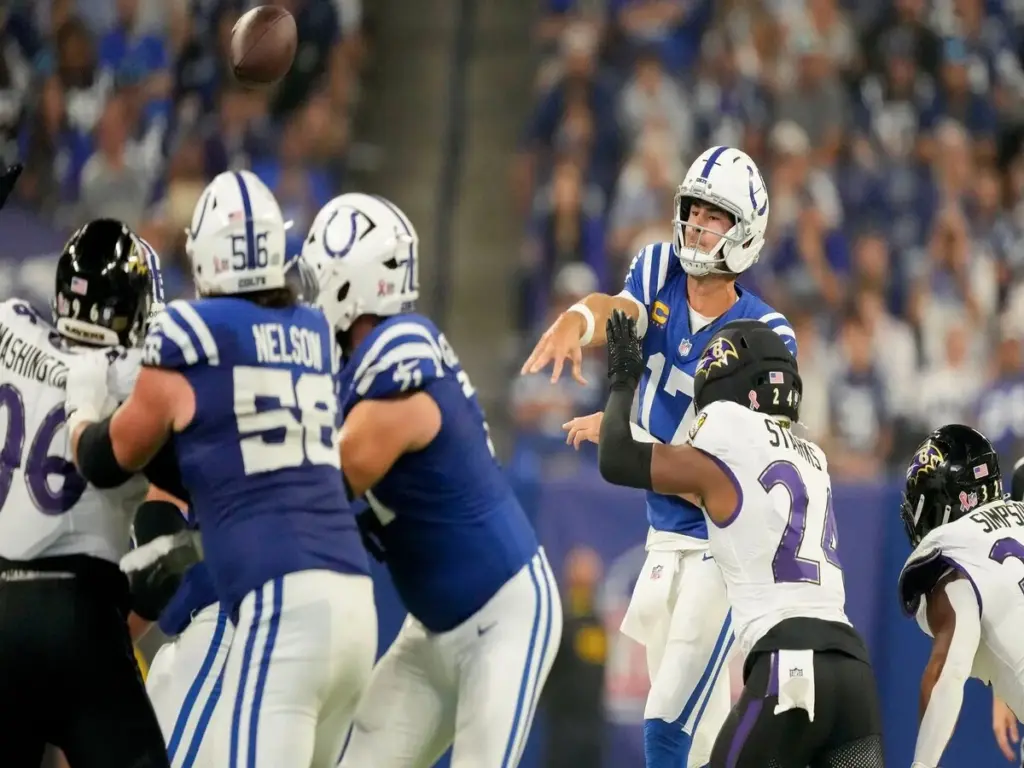
There is a specific, refined brand of torture reserved exclusively for football fans in Indianapolis. It isn’t the soul-crushing despair of a 2-15 rebuild where you expect to lose by three touchdowns before the opening kickoff even touches the turf. No, that would be too merciful. The Indianapolis Colts prefer the slow bleed—the kind of Sunday afternoon where they convince you, for about twenty minutes, that the blueprint is finally coming together.
Then reality hits. In this case, reality looked like a purple-and-black freight train named Derrick Henry, backed up by a two-time MVP in Lamar Jackson, who spent the second half treating the Colts’ secondary like a relaxed walkthrough. The final score—41-23—looks ugly on paper. On tape, it was worse. It was a clinical, agonizing reminder that while the Colts are busy preaching patience and structural growth, the elite teams in the AFC are operating on a completely different planet.
When the Scheme Meets a Brick Wall
For six days leading up to kickoff, the narrative out of West 56th Street was all about discipline, gap integrity, and setting the edge. You could practically set your watch to the press conference clichés. But when the whistle blew, talk met the stark truth of 247 pounds of Derrick Henry running downhill behind a pulling guard.
Early on, Indy managed to keep things interesting. The offense found a brief rhythm, manufacturing a few sustained drives and keeping the scoreboard respectable. For a fleeting moment, Lucas Oil Stadium felt alive, buzzing with that fragile, early-season optimism. Maybe the defense could hold. Maybe the front four could generate enough organic pressure to keep Lamar uncomfortable.Then the second quarter happened, and the illusion shattered into a million tiny pieces.
The turning point wasn’t just a single explosive play; it was the demoralizing ease with which Baltimore dictated terms. Every time the Colts needed a stop on third-and-medium, Jackson either slipped outside the pocket to find a wide-open Zay Flowers or simply tucked the ball and glided past desperate arms for an easy line to gain.
Baltimore’s offense didn’t just beat the Colts; they systematically dismantled whatever defensive game plan had been painstakingly drawn up on the whiteboard all week. Henry ripped off chunk plays almost at will, finishing with an absurd amount of yardage before a defender even managed to lay a hand on his jersey. When your linebackers are taking bad angles and your safeties are forced to make open-field tackles on a runaway locomotive twenty yards downfield, your defensive coordinator isn’t adjusting—he’s just surviving.
Self-Inflicted Wounds and the Quarterback Question
While the defense was getting gashed, the Colts’ offense did what they so frequently do best: act as their own worst enemy.
Against a defense as relentless as Baltimore’s, your margin for error isn’t just thin; it’s practically microscopic. Yet, Indy spent crucial stretches of the game committing the exact sins that lose you football games against tier-one contenders. Dropped passes on manageable third downs, presnap penalties that killed early-drive momentum, and an alarming inability to protect the pocket when the defense brought heat.
When the Ravens’ pass rush cranked up the pressure, the offense cratered. Pass protection broke down along the interior, forcing rushed throws into tight coverage or leading directly to drive-ending sacks. It’s hard to establish a balanced attack featuring Jonathan Taylor when you’re constantly staring at second-and-18 because of a holding call or a blown assignment up front.
Jonathan Taylor broke off a few signature runs, showing flashes of the game-changer he is when given an inch of daylight. But you cannot run your way out of an 18-point deficit when the opposing quarterback is dropping 40-yard dimes on play-action with surgical precision. Once the game script forced Indy to become purely one-dimensional, Baltimore’s front front-runners pinned their ears back and turned the fourth quarter into a pass-rushing clinic.
The Brutal Reality of the AFC Hierarchy
It’s easy to look at a 41-23 loss and dismiss it as “just one game out of seventeen”. That’s the cozy, front-office soundbite you’ll hear throughout the week. But for fans watching from the stands, this wasn’t just a bump in the road—it was a mirror reflecting exactly where this franchise stands in the AFC pecking order. The best way to put it was by Colts Captian DeForesst Bunkner in a post game interview simply saying ” We got our A** Whooped!” storing words from one of the longest tenured players on the roster.
The elite teams in this league don’t just beat you; they expose the fundamental flaws in your roster construction. They reveal whether your depth is real or theoretical. They test whether your secondary can hold up when your pass rush doesn’t arrive in two seconds flat. Against Baltimore, those answers were stark, uncomfortable, and impossible to ignore.
The Colts aren’t a disaster, but they aren’t a threat to the heavyweights either. They remain trapped in football’s most frustrating purgatory: good enough to beat the league’s bottom-feeders on a clean Sunday, but vastly outclassed the second a genuine Super Bowl contender steps onto the field with bad intentions.Until the execution matches the ambition, Sunday afternoons like this won’t be the exception—they’ll remain the standard.