
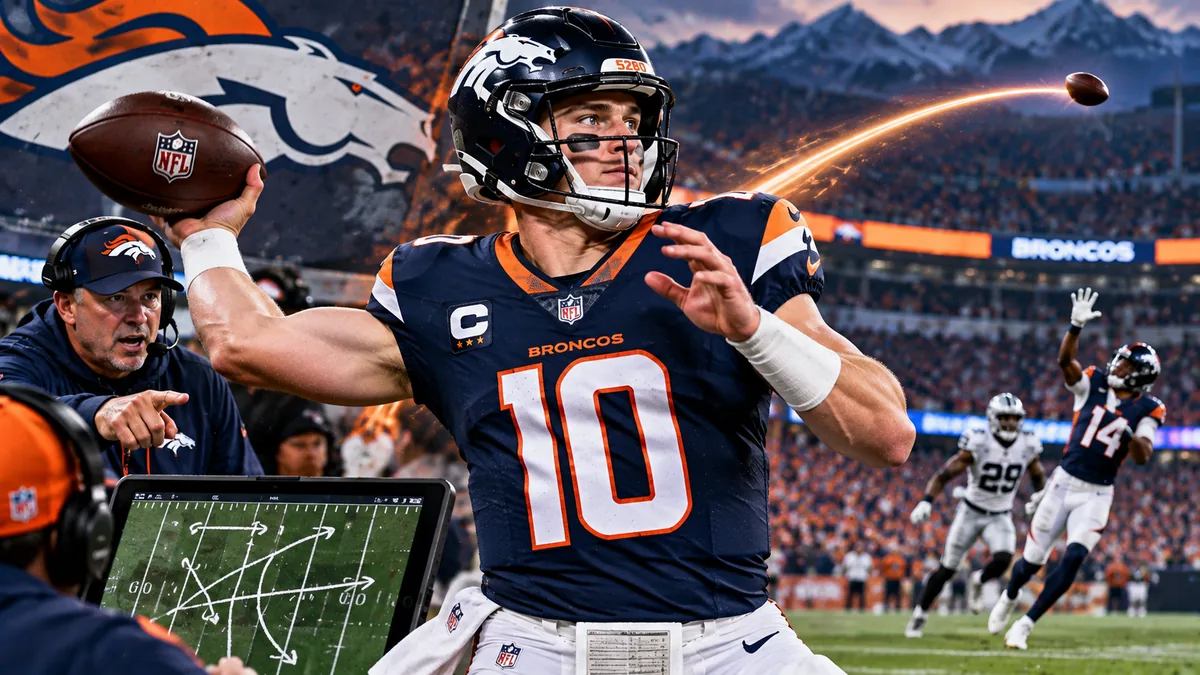
The Denver Broncos won Week 5 against Los Angeles 23-17, but the number that worries the coaching staff isn’t the final score. It’s 4.6, Bo Nix’s air yards per attempt in Week 4, a figure that shows a quarterback who has spent the first month of the season throwing short and hoping the offense finds a rhythm underneath. Denver’s answer so far is simple in theory and harder in practice: get Nix to let it rip downfield, even if that means accepting more risk.
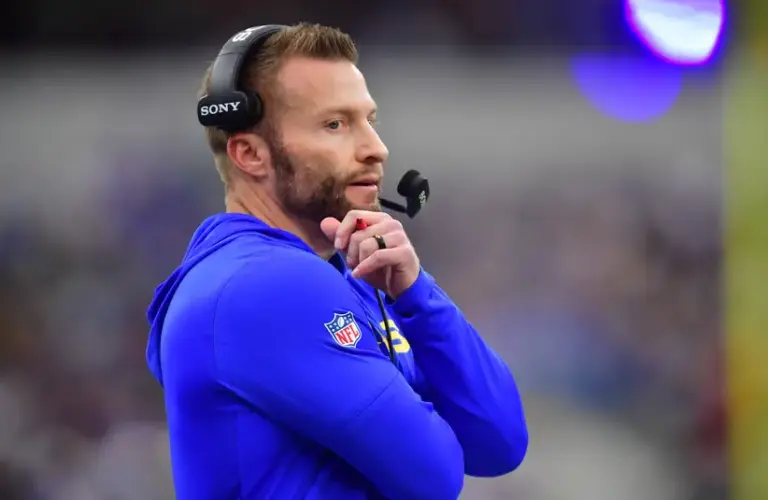
Sean Payton took over play-calling duties from Davis Webb in Week 5 after four games of minimal offensive improvement. The early returns were mixed. Denver won, but Nix completed just 16 of 27 passes for 123 yards, the second-lowest total of his career, and the Broncos converted only one of 12 third downs. The tension between what the coaching staff wants and what is showing up on the field is the central story of Denver’s offense right now.
The Checkdown Problem Behind Denver’s Stalled Drives
Through four weeks, Nix completed 60% of his passes for 819 yards with a 5-3 touchdown-to-interception ratio and an 80.4 passer rating. Those are not disastrous numbers on their own, but the shape of the throws tells the real story. In Week 4, 29 of Nix’s 42 attempts targeted receivers behind the line of scrimmage or short of 10 yards. That is closer to a game manager’s workload than the quarterback who led Denver to the AFC championship a year ago.
Nix has become what one analysis described as a checkdown master, scrambling less frequently than expected and settling for the safe underneath option rather than pushing the ball vertically. The Week 5 opening drive illustrated the pattern in miniature: eight plays, 29 yards, a punt. Of Denver’s first 37 plays against the Chargers, only two gained more than 10 yards. A team built around explosive plays is instead grinding out short-yardage possessions that frequently die before midfield.
What ‘Let It Rip’ Actually Means To Nix
Nix has heard the phrase from his coaching staff and says he understands what it is asking of him. “I think when a coach says ‘let it rip,’ it means trust what you see,” Nix said. “Right now, there’s just a little subtle piece of overall offensive execution that we’re still working towards, because at times, it’s there and we’re really good. At times, for whatever reason, the drive stalls.”
That quote frames the issue as execution rather than scheme. Nix is describing an offense that flashes competence in stretches but cannot sustain it, which matches the box score from Week 5: Jaylen Waddle caught only two passes, and Courtland Sutton was not targeted until the fourth quarter. When the top options are left idle for three quarters, there is little chance for Nix to let anything rip regardless of his mindset.
Payton’s Emphasis On Small Details First
Payton has framed the fix not as a mandate to chuck the ball downfield but as a call for cleaner execution across the board. “I think collectively when you’re playing well on offense, you’re doing a lot of little things well, and then that job for him becomes somewhat easier,” Payton said. “So that’s really the focus this week is the little things, detailing the little things and we’ll see that in the end product.”
That is a notably different message than simply telling Nix to be more aggressive. Payton’s framing suggests the coaching staff believes the conservative, checkdown-heavy tendencies are partly downstream of blocking, route timing and protection issues that make the easy throw the only available throw. Clean up those details, the thinking goes, and the deep shots will present themselves naturally rather than needing to be forced.
The Counterpoint: Is Nix The Real Limiting Factor
Not every read on this situation lands on scheme or supporting cast. Analysts have pointed directly at Nix, noting he has missed open receivers, rarely takes off running and lacks the confidence to drive the offense the length of the field outside of two-minute situations. Nix has multiple touchdowns in a game only once through five weeks, and one assessment went as far as describing him as unable to be counted on as more than a backup quarterback in the short term.
There is also a health dimension worth weighing. Nix’s regression from his AFC championship run a year ago has been connected to two offseason ankle surgeries, which could plausibly affect his mobility and willingness to extend plays. If that is a factor, no amount of play-calling emphasis on little things will fully solve the issue, and the push for more downfield aggression carries real risk of forcing throws into tighter windows than Nix can currently handle.
What Comes Next For Denver’s Offense
The test arrives quickly. Denver hosts Seattle on Thursday night, and at least one analyst has already flagged concern about how Nix and Payton’s offense will hold up against the Seahawks, calling it vulnerable in its current state. The short week gives Payton little time to install new wrinkles, which makes his stated focus on execution rather than wholesale scheme change look like the only realistic path in the near term.
Whether Nix answers by pushing the ball downfield or continues leaning on checkdowns will be the clearest signal of whether Denver’s offense is actually fixing its explosive-play problem or simply surviving behind its defense. Fans can track that shift starting with Thursday night’s kickoff against Seattle, with a preview of Seattle’s turnover issues offering context on Denver’s opponent. The internal dynamics of Denver’s play-calling shift are also detailed in coverage of Davis Webb’s reaction to losing play-calling duties, while Denver’s Week 5 win is broken down further in the Broncos-Chargers matchup recap. Denver’s broader schedule challenges are also visible in the Broncos’ preview against San Francisco.
 Don't stop here
Every Score. Every Story. One Home.
Breaking sports, entertainment and news from across the Total Apex network, updated all day.
Get the Full Story →
Don't stop here
Every Score. Every Story. One Home.
Breaking sports, entertainment and news from across the Total Apex network, updated all day.
Get the Full Story →