
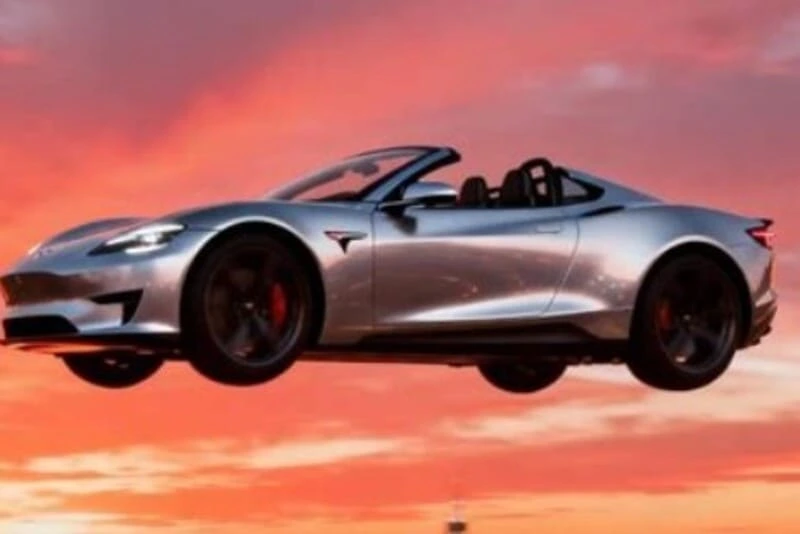
The Tesla Roadster reveal on October 15 has renewed attention on what could come next for electric-vehicle technology. However, John McAlpine is looking beyond traditional sports-car performance. The engineer believes flying vehicles could eventually open the door to a new form of motorsports, using competition to help solve some of the biggest challenges standing between experimental aircraft and practical transportation.
McAlpine discussed that vision in an interview with Total Apex Sports and YourNews Journalist Sarah Talker, explaining how his proposed X1 Racing series could let engineers develop and test flying vehicles under real-world conditions. He acknowledged that he has no inside information confirming Tesla’s new Roadster will have flying capabilities. Yet he believes the announcement could bring greater attention to the technology and the work still needed to make it viable.
For McAlpine, getting a vehicle off the ground is only the beginning. Certification, safety testing, and regulatory approval remain major hurdles, and he sees racing as a way to speed up that process. Instead of relying entirely on simulations and conventional development programs, teams could compete while collecting data that helps engineers refine their designs. As McAlpine explained to Talker, “That’s really where this whole effort kind of fits into.”
The power source presents another challenge. Battery technology has advanced considerably, but weight and energy density can limit the practicality of electric flight. “If you try to design a flying machine with the battery, you can do it,” McAlpine said. However, he is also exploring alternatives, including propane and hybrid systems, that could provide the power required for a car-sized flying vehicle. Depending on its weight and design, he estimates such a machine could need 1,500 to 2,000 horsepower.
How X1 Racing Could Help Develop Flying-Car Technology
The proposed series would also give engineers an opportunity to study how autonomous vehicles behave around one another. Individual aircraft can be tested in simulations, but multiple flying machines operating in close proximity create a more complicated challenge. McAlpine believes racing could supply the real-world information needed to improve autonomous systems, explaining that “the racing becomes that mechanism to feed it the data so that it can learn. In the cheapest, fastest possible way.”
Safety would remain central to the concept. Rather than placing drivers inside vehicles competing at high speeds in the air, McAlpine favors remotely operated machines. That approach could allow competitors to race closely without exposing onboard pilots to the same risks. He also wants the vehicles to be practical to transport, with designs that can fold or be assembled without requiring specialized facilities.
The financial demands, however, would be substantial. McAlpine has outlined a proposed budget of $2.2 billion, with a significant portion dedicated to engine development. He believes backing from someone like Elon Musk or the federal government could bring the project closer to reality, but the funding is not yet secured.
What This Means for the Future of Motorsports
McAlpine is not presenting X1 Racing as a finished product. The series remains a long-term proposal that depends on investment, engineering progress, and overcoming regulatory barriers. Still, his approach places motorsports at the center of a broader technological ambition, using competition to generate data while giving fans something new to follow. The way I’ve designed this sport, it’s entertainment first,” McAlpine told Talker.
Whether the Tesla Roadster reveal connects to flying-car technology remains uncertain. Yet McAlpine sees an opportunity to use racing for more than speed. If the necessary technology and funding come together, X1 Racing could give engineers a new environment to test their ideas while bringing flying vehicles one step closer to practical use.
What’s Next for X1 Racing?
McAlpine’s next step is to turn the X1 Racing concept into a project that can attract the investment and engineering support needed to move forward. That means addressing the technical challenges surrounding power, autonomous control, and certification while finding partners willing to help develop and test the vehicles.
Tesla’s Roadster reveal could draw attention to the possibilities, but McAlpine has made clear that the connection remains speculative. For now, the future of flying-car racing depends on whether his vision can gain the financial backing and real-world testing needed to get off the ground.
 Don't stop here
Every Score. Every Story. One Home.
Breaking sports, entertainment and news from across the Total Apex network, updated all day.
Get the Full Story →
Don't stop here
Every Score. Every Story. One Home.
Breaking sports, entertainment and news from across the Total Apex network, updated all day.
Get the Full Story →