
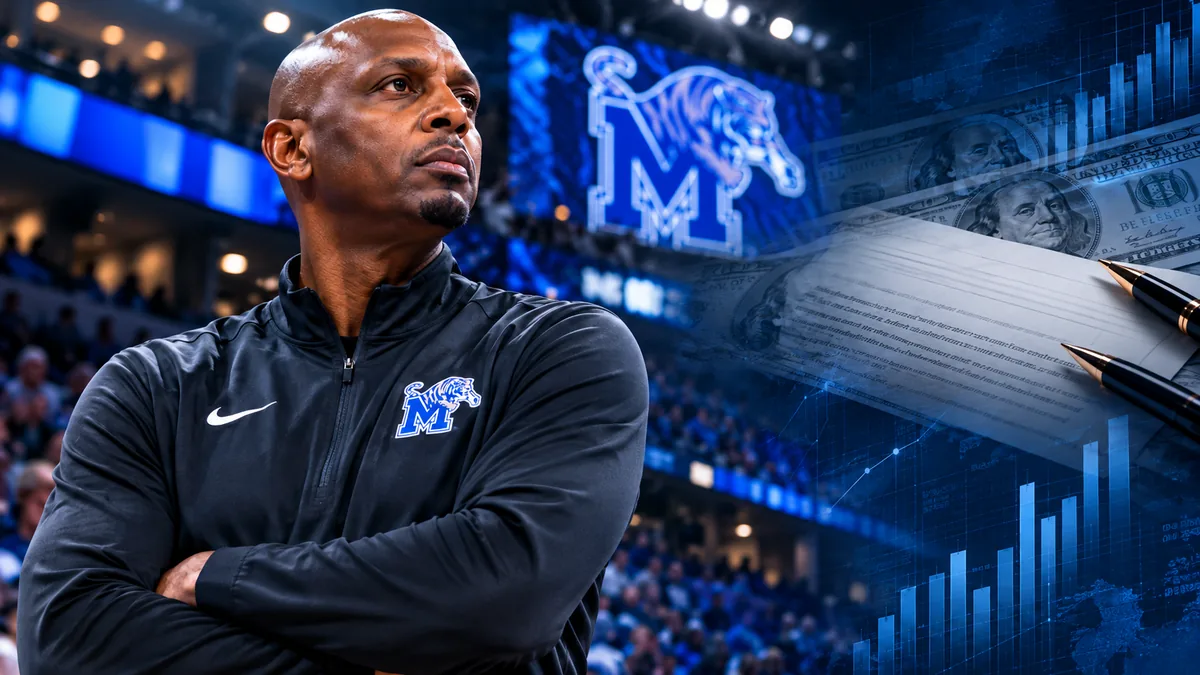
Memphis athletic director Ed Scott clarified this week how coach Penny Hardaway’s $2.6 million pledge toward the Tigers’ revenue-sharing budget actually works, after Hardaway’s initial comments raised questions about whether a coach was directly funding player contracts. The explanation came in a report from Sporting News on Thursday, three days after Hardaway first disclosed the contribution at American Conference Media Day in Tampa.
Hardaway told reporters Monday he put $2.6 million of his own money toward Memphis’ $9 million revenue-sharing pool for the 2026-27 season. Without that contribution, the Tigers could have committed $6.4 million to the roster, an increase of $1.4 million over the prior season. The gap between that figure and the full $9 million Hardaway wanted is where his personal money comes in.
How The Penny Hardaway $2.6 Million Pledge Works
According to Sporting News, Memphis fronted the entire $9 million roster budget based on pledges that fundraising would close the gap by the end of the fiscal year. Hardaway agreed to personally cover any shortfall between those pledges and the money actually raised.
That structure matters because any money Hardaway eventually puts in to cover a shortfall would arrive after the current players’ contracts have already expired. It would not go directly to the players on this season’s roster.
Scott said the program does not route money the way Hardaway’s initial comments suggested. Direct payments from a coach to players could violate rules governing the settlement-era revenue-sharing system, and the athletic director said Memphis has not had Hardaway personally pay players or write a check that the school then used for player compensation.
What It Means For Memphis
Hardaway initially wanted the full $9 million available so Memphis could build a roster capable of reaching the Sweet 16. The spending helped the Tigers land nine transfers over the offseason, including Pitt guard Brandin Cummings and Washington State forward Rihard Vavers, along with four-star guard Fred Smith Jr., the No. 97-ranked player in the 2026 recruiting class, per 247Sports.
The investment follows a rough season on the court. Memphis finished 13-19 overall and 8-10 in the American Conference in 2025-26, missing the NCAA Tournament for the first time since 2024. The 13 wins marked the program’s lowest total in a single season since 1999-2000.
Context: Coaches Redirecting Money Into NIL
Hardaway is not alone among coaches steering personal money toward their programs. DePaul coach Chris Holtmann took a lower salary in a contract extension to redirect funds toward revenue sharing. “Let’s change the last couple of years, really for Years 5, 6 and 7, let’s change the structure of the contract where I’m making less money,” Holtmann told CBS Sports. “I think for me the most important thing is being competitive and in order to be competitive, we need to raise NIL.”
Utah State coach Jerrod Calhoun donated $150,000 to his school’s NIL fund last season, a smaller version of the same trend of coaches supplementing their programs’ spending power as revenue sharing reshapes roster building across college basketball.
Team Impact And What’s Next
Hardaway enters his ninth season as Memphis’ head coach. Before last season’s slide, he had led the Tigers to three NCAA Tournament appearances in four years. The nine incoming transfers and the Fred Smith Jr. signing give Memphis a reshaped roster heading into the 2026-27 campaign, with the program’s financial setup now publicly clarified heading into the season.
 Don't stop here
Every Score. Every Story. One Home.
Breaking sports, entertainment and news from across the Total Apex network, updated all day.
Get the Full Story →
Don't stop here
Every Score. Every Story. One Home.
Breaking sports, entertainment and news from across the Total Apex network, updated all day.
Get the Full Story →