
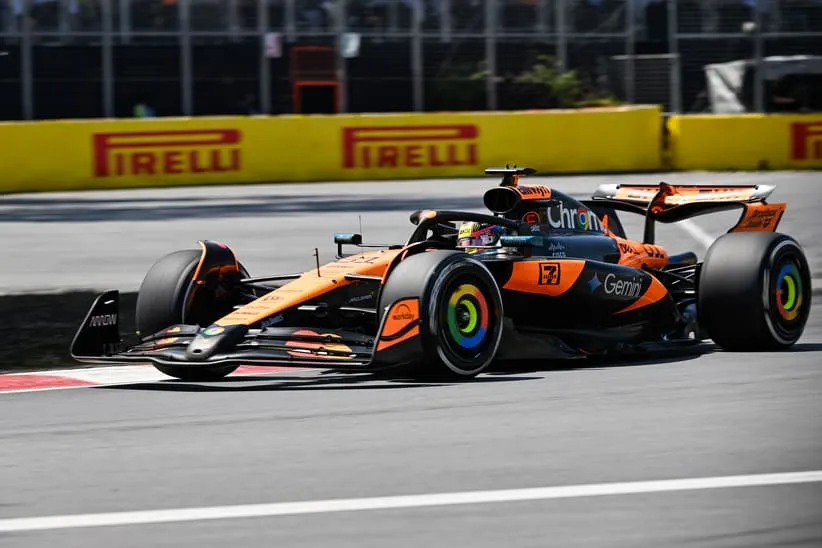
McLaren has made a shocking announcement about their 2026 plans. One that many teams are happy to hear, and fans are now confused. As they announced that they would not upgrade the car until March.
Something that rivals will use to believe they can still steal points from the Paypaya team early in the running. But of course, no one aims to be slow, so there’s a method to the madness. One that could preserve their place at the top of the sport.
Why McLaren Pausing Upgrades Makes Sense
If McLaren really does step off the upgrade treadmill for the rest of this season, it’ll feel like a quiet surrender to some team deciding not to chase every marginal aero tweak while rivals keep piling on bits. But stop for a breath: this is less about defeat and more about priorities.
Short-Term Tradeoffs and Long-term Planning
Formula 1 no longer rewards scattershot development. Between limited wind-tunnel time, CFD budgets, and the looming 2026 regulations, teams have to choose where every euro (and every hour) goes. For McLaren, the calculus is obvious: double down on reliability, software, and next-year concept work rather than waste resources on upgrades that move the needle by only a few tenths. That’s cold, pragmatic engineering, not defeatism.
What Does This Mean On The Track?
The immediate consequence is predictable: McLaren will likely be easier to pick off in single-lap qualifying as rivals add downforce. But race pace is often a different story. If the team can lock down tyre management and pit execution, they still buy themselves points even without the latest winglet. It’s ugly to watch in highlights, but effective over a season.
The Locker Room Test
This is where leadership matters. Drivers expect the car to improve; they also respect honesty. If McLaren sells this as a strategic pivot, “we’re investing in a bigger jump,” that message lands. If it looks like excuses, pressure builds. The team’s challenge is to translate engineering restraint into on-track credibility: neat pit stops, polished race calls, and a narrative that the freeze was a premeditated step toward a stronger future.
The Bottom Line
Not upgrading isn’t glamorous. But F1 is a resource war disguised as a sport. If McLaren is sacrificing short-term window-dressing to place a bigger bet on the future, the decision is defensible and perhaps inevitable. Fans hate patience; championships reward good choices. Time will tell whether this move was cautious wisdom or timid capitulation.
 Don't stop here
Every Score. Every Story. One Home.
Breaking sports, entertainment and news from across the Total Apex network, updated all day.
Get the Full Story →
Don't stop here
Every Score. Every Story. One Home.
Breaking sports, entertainment and news from across the Total Apex network, updated all day.
Get the Full Story →