

World Series roof conditions at both American Family Field and Tropicana Field have become part of the story as the Milwaukee Brewers and Tampa Bay Rays open the 2026 Fall Classic on Friday, Oct. 23. Both franchises play under roofs by design, but the structures themselves differ enough in design and history that they could factor into how specific plays unfold over the series, which is scheduled to run through Saturday, Oct. 31.
Milwaukee enters as the best team in baseball at 103-69, while Tampa Bay finished third overall at 98-64, according to Yahoo Sports. Neither franchise has won a World Series. That shared history adds weight to a series where the playing environment, not just the matchups on the field, has drawn early attention.
Two Different Roof Designs
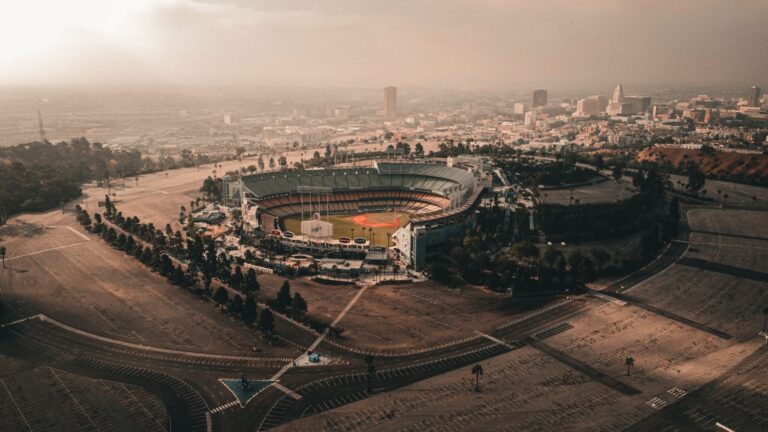
American Family Field has a retractable roof made of green steel, giving the Brewers the option to open or close it depending on conditions, according to MLB.com. Tropicana Field is fixed, built with white polytetrafluoroethylene-coated fiberglass membranes and four rings of catwalks hanging above the field, with no mechanism to open it at all. Milwaukee even runs a Roof Hotline, (414) 902-4636, so fans can check recorded status updates before first pitch.
With temperatures expected around 60 degrees for Games 1 and 2 in Milwaukee, the Brewers’ roof will probably stay closed, per MLB.com. If that holds for the remainder of Milwaukee’s home games, this World Series would be the first played entirely indoors, since Tropicana Field offers no outdoor option for the Tampa Bay games.
A Postseason Precedent In Milwaukee
The Brewers already have a case study for how an indoor structure can alter outcomes. In Game 1 of the 2026 NLDS, a potential home run off the bat of Ty France struck a roof cable or support high over deep left field at American Family Field. Jackson Chourio caught the deflected ball for an out, and Milwaukee held on to win 3-2.
Brewers manager Pat Murphy and third baseman Joey Ortiz both maintained afterward that France’s ball was tracking foul regardless of the roof contact. The moment carried an odd preamble: third-base coach Matt Erickson had called the setup an “Incredible home-field advantage” in a pregame exchange before the play happened, per MLB.com. Whether the comment was prescient or coincidental, it captured how much the structure itself can shape a single at-bat.
Tropicana Field’s Long Catwalk History
Tampa Bay’s venue carries its own track record. Entering the 2026 season, 200 fair balls had struck the catwalks at Tropicana Field, according to the team’s media guide. Five of those have come in the postseason, and all five went for home runs, most recently Nelson Cruz’s shot off the C-ring in Game 1 of the 2021 ALDS.
Not every catwalk strike favors the hitter. In Game 4 of the 2008 NLDS, a fly ball off the bat of Philadelphia’s Jayson Werth hit a truss and dropped back down, where Brewers third baseman Craig Counsell caught it for an out. A similar sequence played out in April 2018, when a fly ball from Cincinnati’s Scooter Gennett struck a truss and fell into the glove of Brewers second baseman Eric Sogard. The pattern shows the catwalks can take away a hit as easily as they can turn one into a homer, with no consistent outcome either way.
The Counterpoint: Recent World Series Precedent
The idea that enclosed venues strip away all outdoor variability is not new territory for the sport, and recent World Series history complicates the “fully indoor” narrative. The 2020 World Series, which featured the Rays, was held at neutral-site Globe Life Field with the roof open for Games 1, 2 and 4. The 2023 World Series between the Rangers and D-backs also used domed venues, but Chase Field’s roof stayed open for Games 3-5 in Phoenix.
Those examples show that even when both teams have roofed home stadiums, league and local conditions have often allowed for at least some open-air baseball during the Fall Classic. If Milwaukee’s roof stays shut as expected because of the cooler forecast, 2026 would break from that recent trend rather than extend it.
What To Watch Next
Game 1 is set for Friday, Oct. 23, with the series scheduled to run through Saturday, Oct. 31 if it goes the distance. The Brewers’ roof status for each Milwaukee game will depend on conditions that day, with temperatures around 60 degrees already pointing toward a closed roof for Games 1 and 2. Once the series shifts to Tropicana Field, the fixed roof removes that variable entirely, leaving the catwalks as the only structural wild card. Fans can track Milwaukee’s roof decisions through the team’s hotline before each home game, while any ball that finds the rings above Tropicana Field will immediately draw comparisons to the five postseason catwalk homers already on the books.
Tampa Bay’s path to the pennant included a tense ALCS Game 5 win over the Guardians, part of a series that also saw the Rays even things up in Game 4.
 Don't stop here
Every Score. Every Story. One Home.
Breaking sports, entertainment and news from across the Total Apex network, updated all day.
Get the Full Story →