
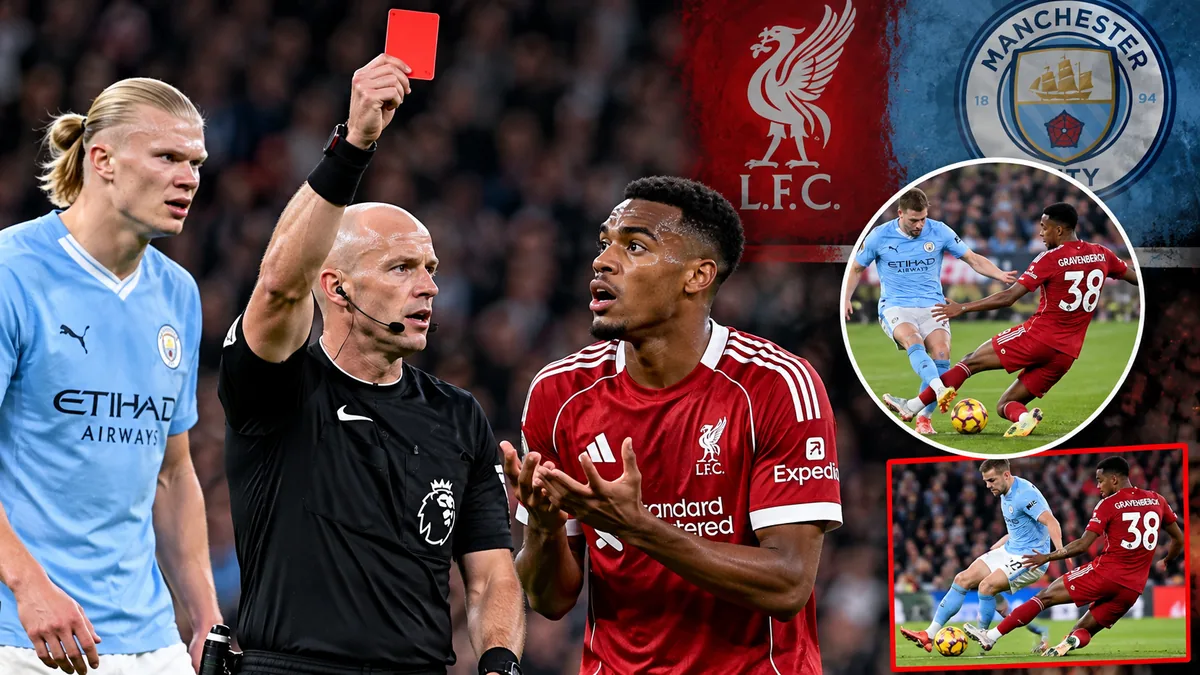
The Gravenberch red card VAR review from ESPN raises a simple question after Liverpool’s 0-3 collapse against Manchester City: did a 62nd-minute dismissal for Ryan Gravenberch turn a tight match into a rout that had nothing to do with the run of play before it? The numbers around the sending off suggest the card changed the game more than the football did.
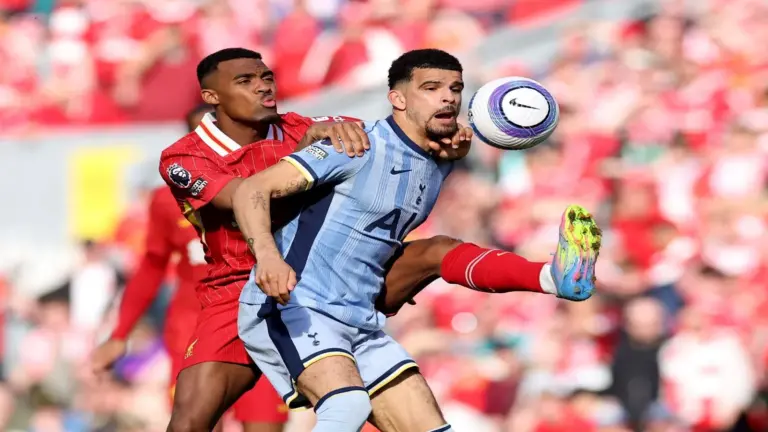
Gravenberch picked up two yellow cards at Anfield on Oct. 11, 2026, the first for a touch on Anderson and the second for a challenge on Jeremy Doku. The second booking triggered an automatic red, sending Liverpool down to 10 men with roughly half an hour still to play. ESPN‘s headline on the incident put the issue directly: “Premier League VAR review: Liverpool’s Gravenberch wrongly sent off vs. Man City?”
The Challenge On Doku That Triggered The Second Yellow
The dismissal hinged entirely on the second card for the foul on Doku. Gary Neville called the decision “very soft” in commentary, a notable reaction given the broadcaster’s standing as one of the sport’s more prominent former defenders turned analysts. His comment reflects a broader read on the incident: a foul that, on a different day, with a different referee, might not have even drawn a yellow, let alone end Gravenberch’s afternoon.
That framing matters because the first booking, for the Anderson incident, was not in dispute. The entire controversy sits on the second card and whether the challenge on Doku met the threshold for a bookable offense at all.
Gravenberch’s Form Before The Red Card
Before his dismissal, Gravenberch was controlling Liverpool’s midfield. He carried the ball through midfield and distributed from deep positions, the kind of performance that suggested he was the most influential player on the pitch for either side. One rating of the sending off called it “naive” on his part, while also describing the card itself as “desperately unlucky,” a pairing of judgments that captures the split nature of the reaction. The player’s conduct could be criticized for putting himself at risk of a second booking even as the decision to actually issue the card is questioned.
The Numbers That Expose The Turning Point
The statistical case for why this red card matters is stark. Manchester City’s expected goals total sat at just 0.16 before Gravenberch walked off, a figure that shows City had created almost nothing of note in the opening 62 minutes. Two minutes and 36 seconds after the sending off, Erling Haaland had the ball in the net. City went on to score three goals in total, turning a goalless, closely matched game into a 3-0 defeat for the hosts.
That swing from a 0.16 xG match to a three-goal margin is the strongest evidence that the red card, not City’s attacking quality up to that point, was the pivot of the afternoon. Numbers alone cannot prove a refereeing error, but they do establish that whatever happened on the pitch before minute 62 was not heading toward a three-goal City win.
The Counterpoint: A Second Yellow Still Followed The Letter Of The Law
The fairest pushback on the controversy is that Gravenberch earned two separate yellow cards for two separate fouls, and the rule for a second yellow leading to a red is automatic regardless of how soft either individual card looks in isolation. A player who already has one yellow carries the responsibility to avoid any further risk, and the “naive” label applied to his challenge on Doku acknowledges that he put himself in that position. A soft call that still meets the technical definition of a foul is a different problem than a call that should never have been given at all, and the sources available do not include any explanation from the referee or VAR about why the second yellow was upheld.
What To Watch Next
ESPN’s review raises the question without a stated resolution. No official ruling, overturned call or disciplinary review has been reported on the Gravenberch dismissal, and no referee or VAR explanation has been made public. The result stands as City’s first Premier League match since an independent commission found the club guilty on all charges tied to breaches of the league’s financial rules, a context that added weight to City’s statement win at Anfield. Liverpool and the Premier League have not announced any further action on the red card, and any update would likely come through the league’s standard disciplinary channels in the days following the match.
 Don't stop here
Every Score. Every Story. One Home.
Breaking sports, entertainment and news from across the Total Apex network, updated all day.
Get the Full Story →
Don't stop here
Every Score. Every Story. One Home.
Breaking sports, entertainment and news from across the Total Apex network, updated all day.
Get the Full Story →