
Coco Gauff Agrees With Aryna Sabalenka On Grand Slam Boycott Threat Over Revenue Dispute

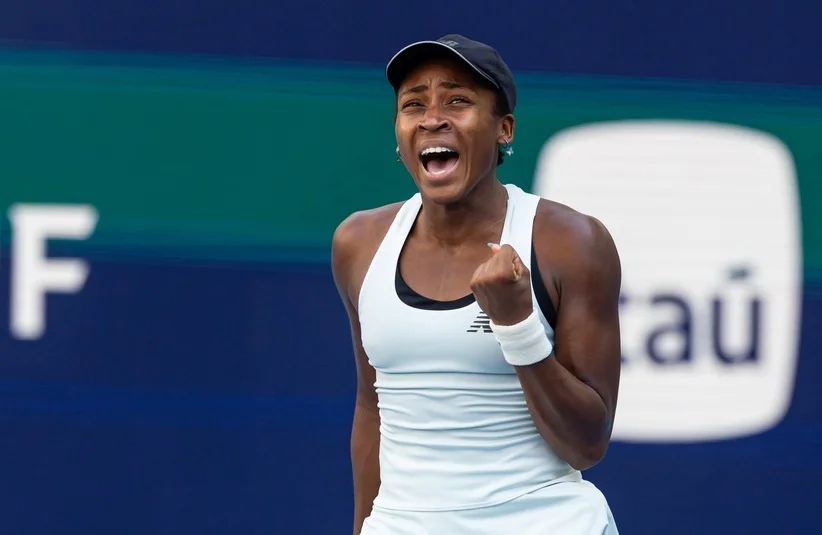
The biggest stars in professional tennis are drawing a hard line in the sand, openly floating a potential boycott of upcoming Grand Slam tournaments if demands for a larger, more equitable share of event revenues are not met.
This looming standoff threatens to disrupt the sport’s most prestigious calendar, pitting elite athletes against the historic institutions that host them. At the core of the dispute is a stark financial disconnect. While the four major tournaments continue to generate record-breaking profits and command massive global audiences, the players who drive that entertainment value argue their compensation percentage is shrinking relative to the sport’s overall growth.
Who Is Behind This Plan?
The escalating labor dispute was brought to light this week at the Italian Open in Rome, with the Associated Press reporting that World No. 1 Aryna Sabalenka and a unified coalition of top players are prepared to take unprecedented collective action.
The group, which includes defending French Open champion Coco Gauff and men’s No. 1 Jannik Sinner, recently issued a joint statement expressing deep disappointment with the current prize-money distribution model at Roland Garros.
Sabalenka Sounds the Alarm
Sabalenka did not mince words when addressing the media in Rome, putting the Grand Slam organizers on notice. She firmly asserted that the athletes are the foundational asset of the sport, and their compensation must reflect that reality.
“Without us, there wouldn’t be a tournament, and there wouldn’t be that entertainment,” the four-time Grand Slam champion stated. “I feel like we definitely deserve to be paid a higher percentage.”
The Belarusian star went a step further, acknowledging that standard negotiations might not be enough to force the hands of tournament directors. Making the ultimate threat on her 28th birthday, Sabalenka admitted that a walkout might be the only leverage the locker room has left. “At some point, we will boycott it,” Sabalenka said. “I feel like that’s going to be the only way to fight for our rights.”
Gauff Looks To Other Leagues For Inspiration

While tennis has historically operated as an individual sport with independent contractors, a collective mindset is rapidly taking shape. Coco Gauff has been vocal about the need for structural change, pointing to recent labor victories in other professional leagues as a blueprint for tennis players.
Gauff specifically highlighted the landmark collective bargaining agreement reached by the WNBA earlier this year. For Gauff, the lesson is clear: True financial progress requires a unified front.
“From the things I’ve seen with other sports, usually to make massive progress like this, it takes a union,” Gauff said. “We have to become unionized in some way. We definitely can move more as a collective.”
When pressed on whether she could envision a full-scale boycott materializing, Gauff was direct. She noted that while she hasn’t been part of immediate walkout planning, the willingness to strike is there if the locker room moves as one. “If everyone were to move as one and collaborate, yeah, I can 100% see that,” Gauff said.
For the young American phenom, the fight extends beyond her own bank account. Gauff views this as a foundational issue for the sport, emphasizing the financial strain on lower-ranked competitors who struggle to fund their travel and coaching out of pocket. “I want to leave the sport better than I found it,” Gauff noted. “If I can say I played my part when I retire, that’s something I can be proud of.”
The Math Behind the Discontent
On paper, the Grand Slams have touted massive increases in prize money. Last month, French Open organizers proudly announced a 10 percent bump to their overall prize pool, bringing the total to roughly 61.7 million euros. Singles champions will walk away with 2.8 million euros.
However, the players’ underlying data tells a much different story. According to the player statement, Roland Garros generated 395 million euros in revenue last year for a massive 14 percent year-over-year increase.
During that same window, the prize money only rose by 5.4 percent. The athletes claim their actual share of the tournament revenue is steadily declining, dropping from 15.5 percent in 2024 to a projected 14.9 percent in 2026.
The players are demanding a 22 percent revenue share. This specific number was not chosen at random; it is the exact percentage that aligns the Grand Slams with the compensation models currently used by the ATP and WTA combined 1000 events.
Secondary Grievances Add Fuel to the Fire
The frustration extends beyond the raw baseline payout. Players are increasingly frustrated with the lack of safety nets provided by the sport’s richest events. Jasmine Paolini, who recently reached the finals of the French Open and Wimbledon, noted that the daily tour events run by the ATP and WTA offer far greater overall benefits than the four majors.
Maternity leave structures, pension plans, and long-term health benefits remain glaring blind spots for the Grand Slams. Two-time Grand Slam champion Elena Rybakina echoed the call for action, pointing out the hidden costs that fans rarely consider.
Rybakina noted that the massive tax burdens levied by host countries often gut the advertised prize money before it ever reaches a player’s bank account. “If the majority say we are boycotting, we are not playing, then of course I’m up for it,” Rybakina said.
Swiatek Preaches Patience Amid the Rebellion
Not every top player is ready to pick up a picket sign just yet. World No. 1 Iga Swiatek, a four-time Roland Garros champion, prefers a diplomatic approach. While she supports the push for better compensation and a fair revenue split, Swiatek believes that halting play should be an absolute last resort.
“The most important thing is to have proper communication and discussions with the governing bodies so we have space to talk and maybe negotiate,” Swiatek said, calling a boycott an “extreme situation.”
Frequently Asked Questions
1. Who started the prize money dispute?
Ans: Aryna Sabalenka brought the idea forward of a potential Grand Slam boycott.
2. What is Coco Gauff’s stance on this?
Ans: Coco Gauff has agreed with Sabalenka over this situation.
3. What is Coco Gauff’s next tournament?
Ans: Coco Gauff will play the Italian Open next before heading to Roland Garros, where he is the defending champion.
What Comes Next
The clock is ticking for tournament organizers to address the growing unrest. The French Open is slated to begin on May 24, leaving a narrow window for meaningful dialogue. Swiatek and the rest of the players are hoping to hold face-to-face meetings with Roland Garros leadership before the first ball is struck in Paris.
If those talks stall, or if tournament officials refuse to open their books and negotiate a fair revenue-sharing model, the sport could be hurtling toward a historic labor stoppage. The tennis world will be watching closely over the next two weeks to see if the sport’s biggest stars follow through on their threat to step off the court entirely.
