

Shai Gilgeous-Alexander walked into the postgame interview room with the look of someone carrying more than a loss. This wasn’t just the end of a playoff run. This was the end of a mission he believed he should have completed.
He didn’t dance around it. He didn’t hide behind the MVP trophy that will sit on his shelf for the rest of his life. Instead, he delivered a line that echoed through the room with the kind of honesty only the truly elite ever dare to say out loud: “I failed at my goal. I didn’t achieve what I wanted to achieve.” For a player who just authored one of the most dominant seasons in the league, it was a raw, unfiltered admission.
A Historic Season Overshadowed by One Missing Piece
The Thunder didn’t just lose a game. They lost the chance to defend their crown. And for Shai, that erased any personal accolades. MVP? Scoring brilliance? Leadership? None of it mattered to him in that moment. He made it clear: the standard in Oklahoma City isn’t individual success. It’s championships.
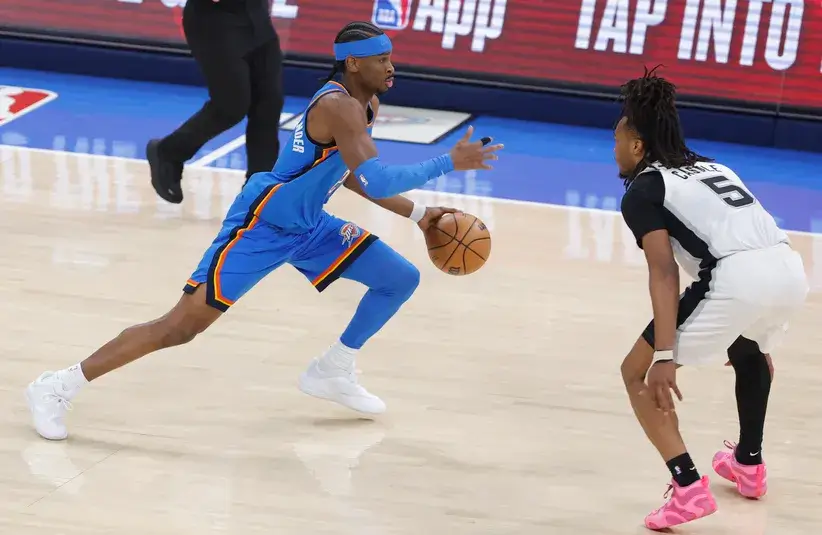
Shai dropped 35 points in Game 7, doing everything he could to drag a shorthanded roster across the finish line. The Thunder were missing Jalen Williams and Ajay Mitchell — two major pieces who would’ve changed the complexion of the series. But Shai refused to lean on that. “We didn’t get it done,” he said. “That’s on me.” It wasn’t self‑pity. It was accountability, the kind that separates stars from superstars, and superstars from legends.
Spurs’ Defense Turned the Series
Give San Antonio credit: they built a wall around the paint and funneled everything toward Victor Wembanyama, who played like a generational anchor in the middle. Every drive, every pull‑up, every attempt to create space came with a shadow, a 7‑foot‑4 shadow with arms that seemed to stretch into next week. Shai acknowledged it without hesitation. “They funneled everything to him,” he said. “He changes the game.”
And yet, even with Wembanyama altering shots and swallowing up possessions, Shai kept coming. He hit tough mid‑range jumpers. He attacked angles most players don’t even see. He kept the Thunder alive until the final minutes. But in a Game 7, effort isn’t always enough. Sometimes the margins decide everything.
No Excuses — Only Lessons
What stood out most wasn’t the disappointment. It was the clarity. Shai didn’t blame the injuries. He didn’t blame the officiating. He blamed himself, and then immediately shifted toward what comes next. “I learn the most from moments like this,” he said. That’s the mindset of someone who isn’t satisfied with being great. Someone who wants to be remembered.
What This Means for the Thunder’s Future
Oklahoma City’s season didn’t end the way they wanted, but the foundation remains rock‑solid. They have a franchise player who treats an MVP season like a failure because it didn’t end with a parade. They have a young core that battled through adversity. They have a front office that knows how to build around a superstar. And most importantly, they have Shai, a player whose hunger only grows when he falls short. The Thunder will be back. And if Shai’s words are any indication, they’ll return with a sharper edge, a deeper purpose, and a superstar who refuses to let this be the story of his career.
The Fire That Fuels What Comes Next
Shai didn’t hide from the pain. He embraced it. He let it sit with him. He let it define the moment, but not the future. This wasn’t the ending he wanted. But it might be the beginning of something bigger. Because when a player of Shai’s caliber calls an MVP season a failure, it tells you one thing: He’s not chasing awards. He’s chasing banners.
 Don't stop here
Every Score. Every Story. One Home.
Breaking sports, entertainment and news from across the Total Apex network, updated all day.
Get the Full Story →
Don't stop here
Every Score. Every Story. One Home.
Breaking sports, entertainment and news from across the Total Apex network, updated all day.
Get the Full Story →