
Minnesota Vikings Kyler Murray Has Interesting Clause In His New Contract

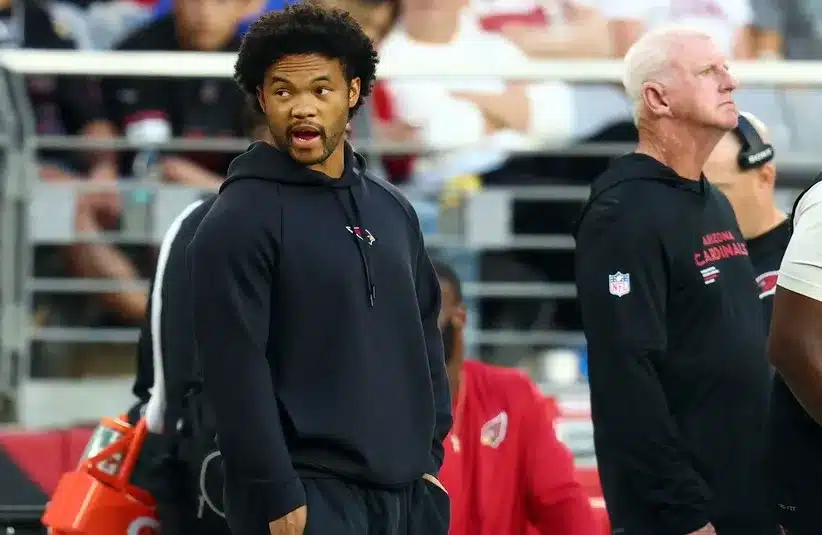
It wasn’t a surprise when Kyler Murray signed with the Minnesota Vikings. He was rumored to be joining the NFC North team for weeks. However, the details of the contract did raise some eyebrows. Murray’s contract comes with a no-tag clause, which has massive implications for Murray beyond the 2026 season.
This specific contractual provision alters Murray’s career trajectory, reshapes the Vikings’ quarterback room, and sets a fascinating precedent for future NFL negotiations.
Minnesota Vikings Kyler Murray No-Tag Clause Explained
To understand this contract, we first need to look at how the NFL franchise tag works. Teams regularly use the franchise or transition tag to retain star players whose contracts have expired, effectively forcing them into a fully guaranteed one-year deal while preventing them from hitting the open market.
A no-tag clause legally prevents a front office from using this mechanism. For Murray, this guarantees unrestricted free agency in 2027. If he performs at an elite level this season, the Vikings cannot force him to stay on a predetermined salary. Instead, he will dictate his own market value. This places the leverage entirely in the hands of the player, ensuring that a successful “prove-it” year results in a massive payday on the open market, rather than another restrictive one-year commitment.
Shaping the Vikings’ Quarterback Situation
For Minnesota, bringing Murray aboard is a brilliant, low-risk maneuver. The team drafted J.J. McCarthy in the first round of the 2024 draft, viewing him as the franchise cornerstone. However, after McCarthy experienced growing pains during his first year as a starter in 2025, the organization clearly felt the need for veteran insurance.
Murray’s arrival creates immediate, high-level competition in the quarterback room. If Murray wins the starting job and thrives, the Vikings secure a top-tier offense capable of a deep playoff run. If McCarthy retains the job, Minnesota holds one of the most talented backup quarterbacks in the league. However, the no-tag clause ensures that if Murray does lead the team to success, the Vikings must negotiate a fair, long-term extension to keep him. They cannot simply apply the tag to delay a long-term financial commitment.
Broader Implications for NFL Player Contracts
When we analyze Murray’s contract structure, it serves as a masterclass in leveraging a difficult situation. Because the Cardinals still owe him $35.5 million in guaranteed money for 2026, Murray could easily afford to sign with Minnesota for the veteran minimum of $1.3 million. By combining this offset language with a no-tag clause, he essentially engineered a fully-funded gap year to rebuild his reputation on a competitive roster.
This move highlights a growing trend among elite players who prioritize contractual autonomy. Athletes are increasingly aware that the franchise tag heavily favors team management by suppressing long-term earning potential and exposing players to injury risks without long-term security. By negotiating a no-tag clause up front, players secure the ultimate prize in professional sports: complete control over their career destinations.
Kyler Murray’s transition to the Minnesota Vikings represents much more than a simple roster update. The one-year deal provides him with a dynamic offensive environment to reignite his career, while the no-tag clause guarantees he will reap the financial rewards if he succeeds. As the 2026 season unfolds, this contract will undoubtedly influence how future NFL stars navigate their own paths to free agency.
