
Green Bay Packers Matt LaFleur Vows Change After Subpar NFLPA Report Card Grade

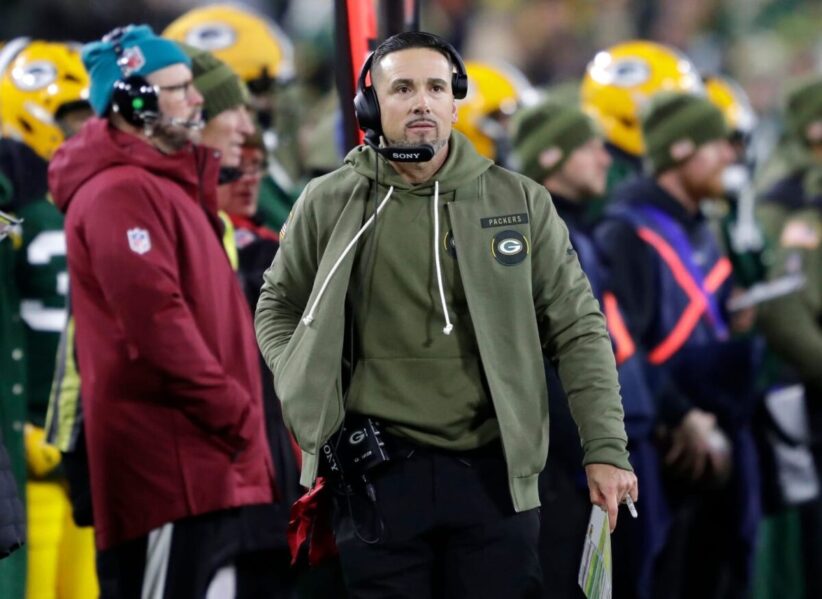
The annual NFLPA report cards give professional football players a direct platform to evaluate their organizations. For the Green Bay Packers, the 2026 survey results revealed a surprising internal shift. Head coach Matt LaFleur saw his overall approval rating drop from an A- down to a B-. This score placed him among the six lowest-regarded coaches in the league.
A significant factor in this decline was a low mark regarding his “respect for players.” Instead of deflecting the criticism or making excuses, LaFleur addressed the feedback head-on at the Annual League Meeting.
Green Bay Packers Matt LaFleur Addresses Bad Grades
To understand the subpar grade, you have to look at how the previous season unfolded. The 2025 campaign ended in deep frustration for Green Bay. Despite holding a strong winning record late in the year, the team suffered a severe four-game losing streak in December.
The collapse culminated in a devastating playoff loss to the Chicago Bears, where the Green Bay Packers blew a massive 18-point lead. Surrendering double-digit advantages became an unfortunate theme for the team down the stretch. Losing winnable games naturally breeds frustration. When a promising season ends on such a bitter note, locker room morale inevitably takes a hit. The poor report card grade likely reflects the underlying tension and disappointment that built up during that difficult final month.
LaFleur Takes Ownership of the Feedback
Speaking to reporters, LaFleur displayed a strong sense of self-awareness. When asked about the “respect for players” metric, he did not dismiss his team’s feelings.
“I don’t feel that way, but unfortunately some guys did,” LaFleur stated. He recognized that perception shapes reality in an NFL locker room. If his players felt a lack of respect, he needed to accept that reality and adjust his approach.
“I don’t feel that way, but unfortunately some guys did. That tells me I’ve got to do a better job of communicating. It goes back to the relationship piece. I think it’s so critical. We always talk about connected teams are powerful teams, and we have to grow that connection.”
The head coach pinpointed role clarity as a major source of the disconnect. He admitted that several players felt unhappy with their specific roles last season. Instead of addressing these concerns effectively, the dissatisfaction lingered and ultimately took a toll on the entire football team. When players do not understand why they are sidelined or utilized in specific ways, they quickly feel undervalued by the coaching staff.
Steps Toward Better Communication
To fix this issue, LaFleur plans to prioritize clear, direct communication moving forward. He wants to ensure every player understands their exact role from the moment they step onto the practice field.
If a player feels unhappy with their current assignment, LaFleur wants to empower them to change it. He stressed that coaches must clearly tell players what they need to do to carve out a larger role on the team. By laying out clear expectations, he removes the guesswork that leads to resentment.
LaFleur also emphasized the broader philosophy that “connected teams are powerful teams.” He plans to invest more time in the relationship-building aspect of coaching. This connection directly translates to on-field execution. LaFleur noted that the team failed to close out opponents late in games last year. To fix this, he wants to instill a start-and-finish mentality in every single practice drill. Getting players to fully buy into this demanding culture requires mutual respect and unwavering trust.
Looking Ahead to Next Season
A B- grade serves as a clear wake-up call for a coach who previously enjoyed high marks. Re-establishing trust will be a critical priority for the Green Bay Packers as they prepare for the new season. LaFleur clearly understands that strategic game plans mean very little if the players executing them do not feel respected. By improving role clarity and opening better lines of communication, he aims to turn this negative feedback into a foundation for a stronger, unified team.
