
Green Bay Packers GM Makes Stance Clear On Aaron Banks

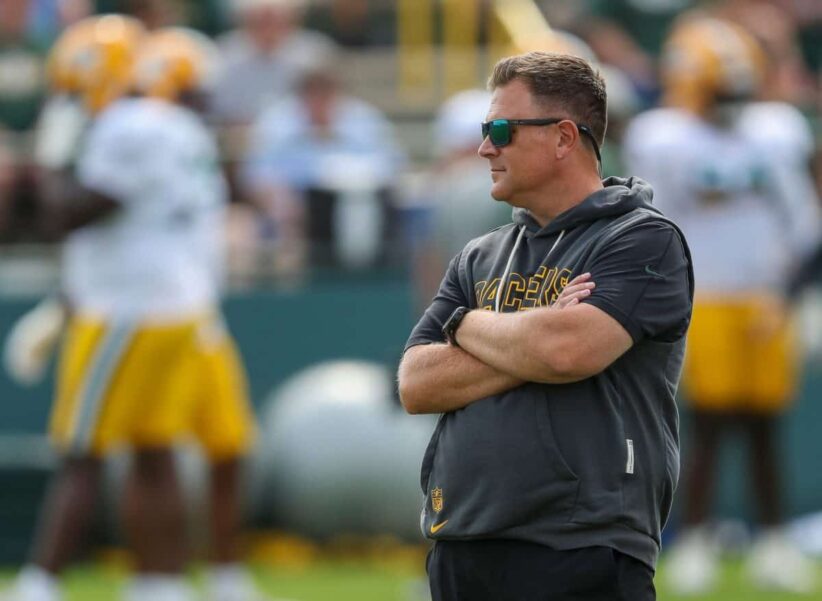
The NFL offseason is filled with uncertainty, especially when large roster bonuses loom on the calendar. For the Green Bay Packers, one of the biggest financial questions of the spring revolved around left guard Aaron Banks. With a hefty $9.5 million roster bonus due shortly after the new league year begins in March, the team faced a distinct fork in the road: cut ties to save money or double down on their investment.
According to General Manager Brian Gutekunst, the decision has already been made. Speaking at the NFL Scouting Combine, Gutekunst shut down speculation about Banks’ future with a simple, decisive statement: “I wouldn’t expect him to go anywhere.”
Green Bay Packers Aaron Banks Contract Structure
The context of this decision is rooted in the massive contract Banks signed last offseason—a four-year, $77 million deal intended to solidify the interior of the Packers offensive line. However, the structure of NFL contracts often forces teams to re-evaluate players a year in.
Banks is scheduled to count for nearly $25 million against the salary cap in 2026, a figure that ranks him among the highest-paid guards in the league. The upcoming $9.5 million roster bonus was seen by many analysts as a potential exit ramp for the franchise if they wanted to move on. By committing to pay it, Gutekunst is signaling that the Packers are not looking for a reset button, but rather looking for a return on their initial investment.
However, keeping Banks doesn’t necessarily mean the Packers will swallow that massive cap hit as is. Front office wizardry often involves converting roster bonuses into signing bonuses to spread the financial hit over future years. This restructuring could save the team roughly $6 million in 2026 cap space, giving them breathing room to address other needs while keeping their starting guard.
Betting on a Bounce-Back
It’s no secret that Aaron Banks’ first season in Green Bay fell short of the lofty expectations set by his paycheck. Injuries disrupted his rhythm early—he dealt with back, ankle, and groin issues that cost him valuable practice time and game reps. When he was on the field, the results were inconsistent.
Banks ranked 57th in pass-blocking efficiency among qualified guards according to Pro Football Focus, a stat that surely caused some concern within the coaching staff. Yet, Gutekunst’s comments suggest the organization views 2025 as an anomaly rather than the new norm.
“Some of the things he went through were unexpected,” Gutekunst noted, referencing the injuries. “I really thought he played well toward the end of the season once he got healthy.”
The Packers are betting that a healthy Banks, with a full year of the system under his belt, will look more like the dominant player they paid for and less like the banged-up lineman they saw last autumn.
Stability Amidst Change
The decision to retain Banks becomes even more logical when looking at the rest of the Packers offensive line. Rumors are swirling that veteran lineman Elgton Jenkins could be a cap casualty, which would leave a massive leadership and talent void up front.
If Jenkins departs, retaining Banks shifts from a luxury to a necessity. Losing two veteran starters on the interior line in the same offseason would be a recipe for disaster, especially with a young quarterback needing protection. By keeping Banks, the Packers ensure continuity at left guard, providing a stabilizing presence for whoever takes over at center or tackle.
Gutekunst is banking on continuity and health to fix the line’s issues, rather than a complete overhaul. It’s a $9.5 million vote of confidence that Aaron Banks is the right man for the job.
