
Rain Resets The O’Reilly Script At Watkins Glen After Extended Practice, Canceled Qualifying

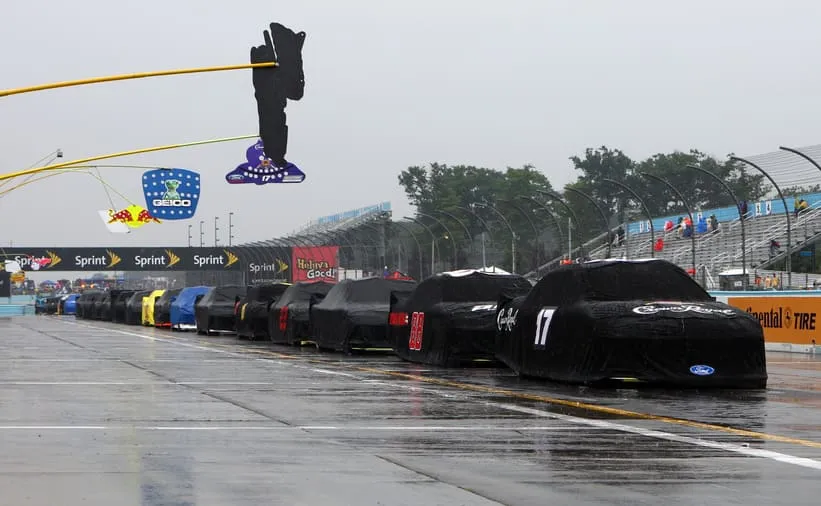
Watkins Glen International woke up under gray skies Saturday morning, and before long, teams knew the day was going to become a battle against the weather instead of the stopwatch. Persistent rain forced NASCAR officials to cancel qualifying for the NASCAR O’Reilly Auto Parts Series race at the historic road course.
This changed the entire feel of the weekend before the green flag had even waved. With conditions refusing to improve, the starting lineup for the Mission 200 at The Glen was set using NASCAR’s performance metric formula. For teams hoping to make a late qualifying run or steal track position, the news was frustrating.
For others, especially those already sitting comfortably near the top of the standings, it was the kind of break that can shape an entire weekend. At Watkins Glen, track position matters. Passing opportunities exist, but clean air still carries enormous value, especially on restarts where the field funnels aggressively into Turn 1.
Losing qualifying meant drivers never got the chance to push their cars to the limit before race conditions began. That uncertainty now hangs over the entire garage. Teams are guessing at balance instead of fine‑tuning it, and that’s a dangerous place to be this deep into the season.
Rajah Caruth Lands On Pole Position
When qualifying was officially called off, Rajah Caruth inherited the pole position through NASCAR’s rule book formula, putting the rising JR Motorsports driver at the front of the field for one of the most challenging races of the season.
Caruth has quietly built momentum throughout 2026, and this weekend presents another major opportunity to continue that climb. Starting from the pole at Watkins Glen is not just about leading the opening lap. It is about visibility, rhythm, and staying ahead of the chaos that tends to erupt deeper in the pack.
Beside him on the front row at Watkins Glen will be teammate Justin Allgaier, giving JR Motorsports complete control of the starting grid when the race begins. That front-row sweep says plenty about where the organization stands right now.
JR Motorsports continues to show speed nearly everywhere the series unloads, and the group has become especially dangerous at road courses, where balance and discipline matter as much as raw horsepower.
Extended Practice Became Critical
Once qualifying disappeared from the schedule, practice suddenly became the most important session of the weekend.NASCAR extended practice in hopes the weather would eventually cooperate enough to allow qualifying laps, but teams ultimately used that extra time trying to gather every bit of information they could before race day.
At a place like Watkins Glen, every lap matters. Drivers worked through changing grip levels while crew chiefs searched for adjustments that would hold up in both wet and dry conditions. One corner might feel stable while another remained slick and unpredictable. That inconsistency forces drivers to constantly adapt behind the wheel.
Road-course racing already places enormous demands on braking zones, tire wear, and shifting points. Rain only magnifies those challenges. Several drivers spent portions of practice simply trying to learn where they could attack and where they needed to be patient.
The curbs in the Inner Loop become especially dangerous when moisture accumulates on the racing surface. One aggressive move can quickly lead to a wheel hop, missed braking points, or a trip through the grass. That is why Saturday’s lack of qualifying could create problems once the race begins.
Road-Course Veterans Could Benefit
Canceled qualifying sessions often create strange races, and Watkins Glen has a history of rewarding experience when conditions become unpredictable. That could open the door for several proven road-course racers to make noise once the green flag waves.
Connor Zilisch enters the weekend with plenty of confidence at road courses, and his ability to attack corners aggressively without overdriving the car makes him dangerous whenever NASCAR visits a technical circuit.
Ross Chastain also becomes a major factor. His style behind the wheel can look chaotic at times, but Watkins Glen rewards drivers willing to commit fully to entering braking zones. If Chastain finds rhythm early, he could become difficult to contain.
Then there is Shane van Gisbergen, whose road-racing background immediately makes him one of the biggest threats in the field whenever NASCAR turns right and left. Drivers know they cannot afford mistakes around him because he rarely gives away opportunities once he reaches clean air.
The weather could also create strategic gambles throughout the field. Crew chiefs may roll the dice on pit timing, especially if cautions interrupt the race at key moments. Sometimes road-course races come down less to outright speed and more to who reacts fastest when conditions suddenly change.
Watkins Glen Punishes Mistakes
There are tracks where drivers can recover from small errors. Watkins Glen usually is not one of them.Missing a braking point into Turn 1 can cost multiple positions instantly. Getting too aggressive when entering the bus stop can damage suspension pieces or destroy momentum for an entire lap.
Every corner demands precision, especially when the surface remains unpredictable. That pressure becomes even heavier after a shortened weekend schedule. Without qualifying, drivers head into the race with less information than usual, and that uncertainty often produces mistakes early in the event.
The opening laps could become especially tense as drivers try to judge grip levels while surrounded by traffic. Patience will matter just as much as speed. Some drivers will likely spend the first stage protecting their equipment and waiting for the race to settle down.
Others may attack immediately, hoping to gain track position before the cautions shuffle the order. Both approaches carry risk. One wrong move can bury a fast car in traffic before the race even settles in. And with so much on the line, nobody wants to be the one who misjudges the moment.
What This Means
Saturday’s qualifying cancellation at Watkins Glen changed far more than the starting lineup.It shifted pressure onto crew chiefs, forced drivers to adapt quickly, and created an atmosphere where strategy may become more important than outright pace.
Teams that normally rely on qualifying speed lost an important advantage, while experienced organizations suddenly gained opportunities through execution and decision-making. For JR Motorsports, the rainout could become a major advantage.
Locking out the front row gives the organization early control of the race and a cleaner path through the opening laps. For the rest of the field, it means chasing track position at one of NASCAR’s most technical circuits.
The weather also adds another layer of unpredictability to a weekend that already carried plenty of intrigue. Watkins Glen races rarely stay calm for long, especially when drivers have limited preparation time. That combination usually produces drama.
What’s Next
Rain changed the schedule at Watkins Glen, but it may have also created a more compelling race. With qualifying washed out and the lineup set by NASCAR’s formula, teams now head into the Mission 200 with fewer answers and far more pressure.
Rajah Caruth and Justin Allgaier will lead the field to green for JR Motorsports, but several proven road-course racers remain fully capable of stealing the spotlight before the day is over. At Watkins Glen, conditions can shift quickly.
For More Great Content
Stay plugged in with more race analyses, features, and behind‑the‑garage storytelling. Follow Sarah on Facebook, LinkedIn, and X at Sarah Talker, where the conversation keeps rolling long after the checkered flag drops.
