
Las Vegas Puts Chevy’s 2026 Gamble Under The Brightest Lights In NASCAR

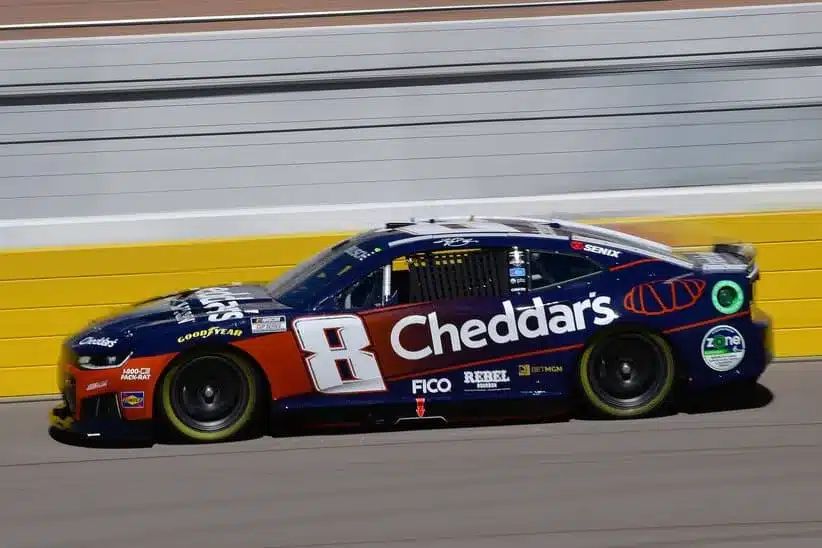
Chevy’s 2026 redesign walks into Las Vegas Motor Speedway with the kind of pressure only this track can apply. Vegas has always been a separator and a place where engineering bravado either proves itself or gets exposed under relentless, high‑speed scrutiny. This weekend, it becomes the first true referendum on Chevrolet’s new bodywork and aero philosophy.
Three races into the season, the Bowtie camp still doesn’t know whether they built a contender or a compromise, and Las Vegas is the one place that refuses to let anyone bluff their way through uncertainty. The stopwatch here doesn’t care about potential; it cares about execution.
Vegas As The First Real Litmus Test
Las Vegas is the first traditional 1.5‑mile oval of the year, making it the opening bell for the part of the schedule that actually defines competitive identity. Daytona was chaos, COTA was precision, and Phoenix was its own oddball ecosystem. None of those tracks reveals the truth about a manufacturer’s aerodynamic foundation. Vegas does.
It’s the template for Kansas, Charlotte, Michigan, and the entire summer stretch that decides who’s building toward a title and who’s scrambling for answers. If Chevy misses here, it’s not a one‑week anomaly. It’s the beginning of a pattern that becomes harder to correct with every passing race.
And unlike Chevy, Ford and Toyota show up with continuity, not reinvention. They’re leaning on proven notebooks, stable aero maps, and a year’s worth of data that still applies. Chevy is writing its notebook from scratch, and Vegas is the worst place to be guessing.
Practice Reveals Promise And Turbulence
Saturday’s practice sessions delivered a picture that was neither triumphant nor alarming, just brutally honest. Ricky Stenhouse Jr. put a Chevy third on the single‑lap board, and William Byron, Kyle Larson, and Carson Hocevar all delivered top‑10 qualifying efforts. Those numbers look encouraging on paper, but single‑lap speed at Vegas is a handshake, not a contract.
The real truth lives in the long‑run averages, and Byron’s second‑fastest 20‑lap pace behind Ty Gibbs was the first meaningful sign that Chevy’s new platform might have legitimate legs. Still, the optimism was tempered by Hocevar’s struggles. Sixteen practice laps. A 19th‑place qualifying run. A car he described as having “no grip.”
His frustration was a reminder of what happens when a manufacturer enters a season without a deep notebook. The simulator can only get you so far before reality punches back. Yet even Hocevar carried a flicker of hope into this afternoon, knowing that Vegas has a way of flipping expectations once the track rubbers in and the balance evolves.
Larson As The Benchmark For Chevy’s Ceiling
If there’s one driver capable of validating Chevy’s redesign through sheer adaptability and racecraft, it’s Kyle Larson. He clawed his way to a third‑place finish at Phoenix after wrestling an uncooperative car early, and that kind of resilience is exactly what Vegas demands.
Long runs, shifting balance, and the ability to diagnose what the car needs before the engineers even plug in the laptop, that’s Larson’s wheelhouse. His Vegas résumé borders on absurd: laps led in nine of the last ten races, three wins, and 819 laps led more than any active driver and more than legends like Harvick, Johnson, and Gordon ever managed here.
When Kyle Busch says intermediates each require their own setup philosophy, he’s right, but Larson is the rare driver who can transcend those nuances. If Chevy’s new body has speed in it, Larson will be the one to extract it first, and his performance Sunday will be the clearest indicator of whether the redesign is a breakthrough or a miscalculation.
What’s Truly At Stake For Chevrolet
Chevy’s season won’t collapse if this afternoon’s race goes sideways, but this is the first race where the stopwatch delivers a verdict that actually matters. If Larson, Byron, or another Chevy runs up front, the new body earns a passing grade, and the engineers can build forward with confidence. If the Bowties settle into the fifth‑to‑15th range, while Ford and Toyota dictate the race.
The concerns become louder not because of panic, but because intermediates shape the competitive arc of the entire season. Every lap this afternoon will become data, every adjustment becomes a clue, and the setups for Kansas, Charlotte, and the entire summer will be built off what Chevy learns here. This race isn’t just a checkpoint. It’s the foundation of their 2026 identity.
All Eyes On The Grid
Las Vegas rewards commitment, clarity, and courage, which are three things Chevy leaned on heavily when it chose to reinvent its car for 2026. Today is where that gamble gets judged by the only metric that matters in motorsports: speed over time.
The Bowties aren’t just racing Ford and Toyota. They’re racing their own blueprint, their own assumptions, and their own ambition. By sundown in the desert, they’ll know whether they built a weapon or a work‑in‑progress.
