
F1 Penalty Points 2026: Who’s Already in Trouble After Australia?

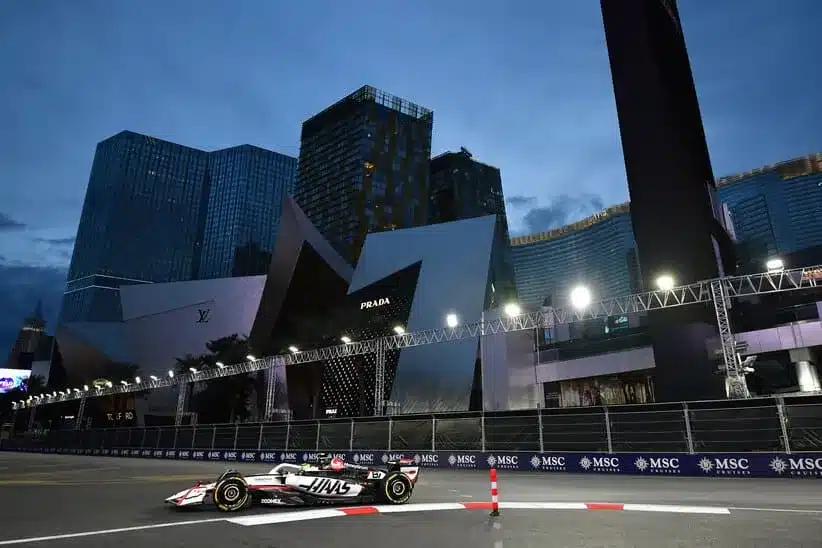
One race into the 2026 Formula 1 season, and the penalty‑points table is already doing what it always does, exposing who’s skating on thin ice before the year even gets going. No new points were handed out in Melbourne, but the leftovers from 2025 are more than enough to set the tone. Some drivers start this season with a clean slate.
Others are already staring down consequences that could derail their year before it properly begins.The rule is simple: twelve penalty points within a rolling 12‑month window equals a one‑race ban. No appeals. No wiggle room. And for at least one driver, that reality is uncomfortably close.
Ollie Bearman Is One Misstep Away From Disaster
Let’s start with the name everyone is watching: Ollie Bearman. The Haas rookie enters 2026 with 10 penalty points just two shy of an automatic race ban. Ten points isn’t an accident. It’s a pattern. Bearman picked up those points across five different race weekends in 2025: Monaco, Silverstone, Monza, São Paulo, and Abu Dhabi.
That’s a spread that tells its own story. These weren’t isolated moments. There were repeated lapses in judgment, and the stewards don’t hand out points unless they believe a driver crossed a line. There is a bit of relief on the horizon.
Two of his Monaco points expire on May 23, and four more from Silverstone drop off on July 5. If he keeps his record clean until then, his situation improves dramatically. But until those dates arrive, every overtake, every defensive move, every split‑second decision carries extra weight. For a young driver trying to establish himself, that’s a heavy way to start a season.
Lawson and Stroll Aren’t Far Behind
Right behind Bearman sit Liam Lawson and Lance Stroll, each with six penalty points. That’s half the threshold for a ban not panic territory, but definitely not comfortable. Lawson’s tally comes from a string of collisions in 2025.
He built a reputation for being bold to the point of recklessness, and the stewards responded accordingly. Three of his points from the 2025 Bahrain Grand Prix expire on April 13, which helps. But expiration dates only matter if he stops adding new ones.
Stroll’s six points come from a different mix of incidents: contact with Charles Leclerc, a separate clash with Esteban Ocon, and forcing Pierre Gasly off track in Canada. One of his Monaco points expires on May 23, but the rest linger. Stroll has always been a polarizing figure, and his penalty‑point record heading into 2026 isn’t doing much to shift that narrative.
The Middle of the Pack Has Its Own Pressure Points
Behind the top three, the numbers get smaller but are still meaningful. None of these drivers is in immediate danger, but these are F1 things that escalate quickly. A clumsy restart, a misjudged lunge, a defensive move that goes a little too far, and suddenly a driver jumps from “fine” to “questionable” in a single afternoon. Antonelli’s five points stand out the most.
- Kimi Antonelli: 5 points
- Oscar Piastri: 4 points
- Carlos Sainz: 4 points
- Lewis Hamilton: 3 points
- Max Verstappen: 3 points
- Alex Albon: 3 points
- Pierre Gasly: 2 points
- Gabriel Bortoleto: 2 points
He’s a rookie at Mercedes, carrying the weight of expectation and the workload of learning a brand‑new car under brand‑new regulations. Five points isn’t a crisis, but it’s a number worth keeping an eye on.Further down the list, Franco Colapinto, Charles Leclerc, and Esteban Ocon each sit on one point, but there’s nothing to worry about, at least for now.
Who Starts 2026 With A Clean Sheet
A handful of drivers begin the season with zero penalty points, and that’s a real advantage over a 24‑race calendar. These drivers can race aggressively without constantly calculating risk versus consequence. Over a long season, that freedom matters.
- George Russell
- Lando Norris
- Fernando Alonso
- Nico Hülkenberg
- Arvid Lindblad
- Isack Hadjar
- Valtteri Bottas
- Sergio Pérez
What This Means For The 2026 Season
Penalty points aren’t just a list on a spreadsheet. They shape how drivers behave. A driver sitting on 10 points doesn’t attack a corner the same way someone with zero does. They hesitate. They pick their battles. They avoid marginal moves that could trigger a steward review. That caution can be good for safety, but it can also cost positions, points, and momentum.
And in a season that already looks unpredictable, 120 overtakes in Melbourne says plenty hesitation can be the difference between a podium and a pointless afternoon. For Bearman, the stakes are especially high. A race ban would be brutal for a young driver trying to prove he belongs.
It would disrupt Haas’s strategy, cost him valuable seat time, and leave a mark on his reputation that won’t fade quickly. Lawson and Stroll aren’t in immediate danger, but they’re close enough that one messy weekend could change everything.
What’s Next
The penalty‑points picture after Australia doesn’t bring new drama, but it highlights the pressure points already baked into the 2026 season. Bearman is the most vulnerable, sitting just two points from a mandatory race ban.
Lawson and Stroll aren’t far behind. And with the racing already more chaotic than last year, the opportunities for trouble are only going to increase. Drivers carry their 2025 decisions into 2026. The consequences are already here, and for some, the margin for error is razor-thin.
