
Brent Crews Claims First Career Pole at Watkins Glen With a 70.222‑Second Stunner

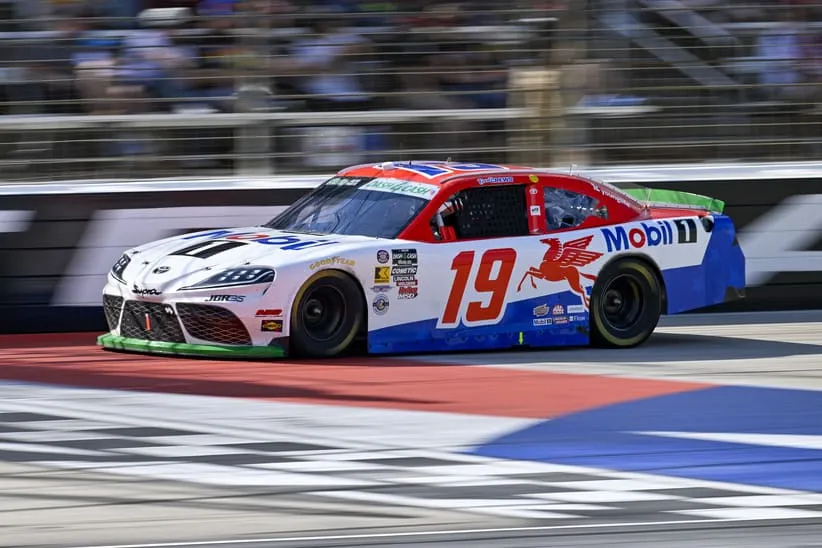
The atmosphere at Watkins Glen International always carries a distinct charge, the kind that builds as engines echo off the blue guardrails and the speeds climb past 120 miles per hour. On Friday afternoon, that energy centered on eighteen‑year‑old Brent Crews, who delivered the most complete qualifying performance of his young career.
In damp, unforgiving conditions, Crews put down a 70.222‑second lap to secure the pole for the Bully Hill Vineyards 176, becoming the 150th different pole winner in the history of the NASCAR Craftsman Truck Series.
A Precision Lap That Set The Standard
Crews approached the thirty‑minute session with the composure of a veteran despite entering the weekend as a part‑time driver for TRICON Garage. Watkins Glen is one of the fastest road courses in North America, with average speeds above 120 mph and barriers that sit only feet from the racing line.
NASCAR sent all thirty‑eight trucks out on slick tires despite lingering moisture, creating a session where even a minor slip could end the day. Driving the No. 1 Mobil 1 Toyota Tundra TRD Pro, Crews attacked the esses with confidence and carried remarkable momentum through the bus stop chicane.
When he crossed the line, the stopwatch confirmed a lap at an average speed of 125.602 miles per hour. It was not only the fastest lap of the session; it was the kind of precision run that instantly elevates a young driver’s profile across the garage.
Majeski Leads the Veterans, But Crews Controls The Day

Ty Majeski came closest to matching Crews’ pace. Piloting the No. 88 Menards ThorSport Racing Ford F‑150, Majeski posted a 70.536‑second lap at 125.043 miles per hour, earning his second front‑row start of the season. Daniel Hemric, Connor Mosack, and Connor Zilisch completed the top five, with Zilisch carrying over the speed he showed in practice.
The top ten also featured Giovanni Ruggiero, Kaden Honeycutt, and road‑course specialist Shane van Gisbergen, whose presence always raises the competitive bar at any road‑course event. Further back, Layne Riggs managed to qualify thirteenth despite a last‑minute transmission change that left his team scrambling.
On the opposite end of the results sheet, Toni Breidinger and Dystany Spurlock failed to qualify. Spurlock’s attempt carried historical significance, as she was seeking to become the first African American woman to start a race in any of NASCAR’s top three national series. Missing the field underscored the unforgiving nature of a thirty‑eight‑truck entry list.
What This Means For Toyota And Crews
For Toyota and TRICON Garage, Crews’ pole marked their first of the 2026 Truck Series season, a breakthrough after months of searching for single‑lap speed. Achieving it on a track that rewards driver skill and mechanical grip over raw horsepower is a meaningful boost for the organization.
For Crews, the implications are even more significant. Team owners evaluate part‑time drivers on how they perform when the pressure is highest, and the equipment is elite. By outrunning champions, road‑course specialists, and full‑time contenders, he demonstrated an ability to adapt quickly to heavier, high‑horsepower trucks.
One lap does not guarantee a full‑time opportunity, but it can dramatically accelerate the conversation. It forces decision‑makers to reevaluate their depth charts and reconsider timelines they thought were set in stone. It also proves that his speed isn’t a fluke, but a repeatable skill that translates under pressure.
What’s Next
Friday at Watkins Glen belonged to Brent Crews. He mastered a damp track, a compressed qualifying window, and a field stacked with road‑course talent. When the Bully Hill Vineyards 176 goes green, the No. 1 Toyota will lead the field into Turn 1, and every driver behind him knows they will need something exceptional to match the pace he showed in qualifying.
If that 70.222‑second lap is any indication, the rest of the field may be chasing him deep into the afternoon in upstate New York. It showed he could extract speed from the truck even when the track offered almost nothing in return. It also signaled that his pace wasn’t a one‑corner flash, but a full‑lap rhythm that will be difficult for anyone else to match.
For More Great Content
Stay plugged in with more race analyses, features, and behind‑the‑garage storytelling. Follow Sarah on Facebook, LinkedIn, and X at Sarah Talker, where the conversation keeps rolling long after the checkered flag drops.
