
New York Knicks Face Harsh Reality: Karl-Anthony Towns and Mikal Bridges Losing Trade Value

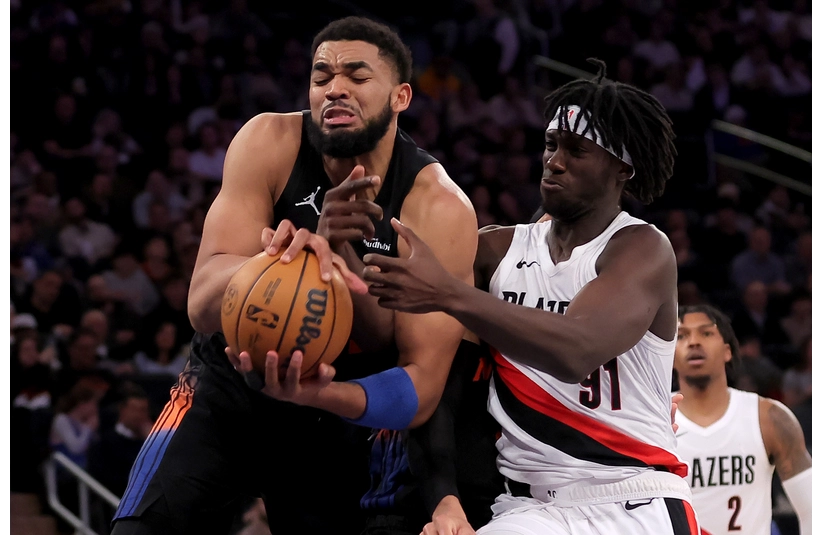
The New York Knicks went all‑in on their Villanova‑driven roster overhaul, assembling a team built to contend immediately. As the front office continues to monitor the possibility of a Giannis Antetokounmpo pursuit, an uncomfortable truth has surfaced: the league’s perception of Karl-Anthony Towns and Mikal Bridges has cooled, and that shift threatens to complicate New York’s long‑term plans.
Recent reporting indicates rival executives no longer value either player at the level the Knicks expected when they acquired them. New York paid premium prices for both, banking on upside, fit, and the belief that each would thrive in a new environment. Months later, the market has adjusted—and not in the Knicks’ favor.
The Declining Value Of Karl-Anthony Towns
Towns’ situation is especially complicated. The Knicks envisioned him as the offensive anchor who could stretch the floor, punish mismatches, and elevate the team’s efficiency. While his skill set remains impressive, the league no longer views him as an ascending star. He is now seen as a high‑priced veteran with a massive contract and a résumé that hasn’t shifted public opinion.
Milwaukee’s stance in any hypothetical Antetokounmpo deal has been clear: they want elite young players and a significant draft haul. Towns does not fit that profile. His contract limits the pool of interested teams, and his recent play has not boosted his stock. If the Knicks hope to include him in a superstar package, they need the league to see him as a centerpiece rather than a salary‑matching necessity.
Bridges and the “Nova Tax”
Bridges faces a similar challenge. Once considered the ideal two‑way wing, versatile, durable, and universally admired, his value has dipped since arriving in New York. The Knicks paid a steep price to reunite their Villanova core, effectively acquiring him at peak market value. Since then, the shine has faded. He remains a strong player, but not the untouchable asset the Knicks hoped he would be.
Any pursuit of a superstar requires matching significant salary, which means Bridges, OG Anunoby, and Towns would all be in play. But if opposing teams don’t value Bridges at the level New York paid, the Knicks are boxed in.
Did Their Stats Play a Role?
Towns has seen dips in efficiency and defensive impact. His three‑point percentage, once elite for a big man, has fluctuated. His rebounding numbers have trended downward, and his defensive metrics have raised concerns. For a player on a max contract, teams expect consistent star‑level production. When that production wavers, so does trade value.
Bridges has shown noticeable regression. His scoring efficiency has dipped, particularly from three, and his defensive numbers haven’t matched the standard he set in Phoenix. His usage has climbed in New York, but the added responsibility hasn’t produced a corresponding jump in impact. Teams now view him as a good starter rather than a premium asset.
What This Means For New York’s Future
The Knicks have built a strong team, but the front office clearly believes they are one transformative piece away. If Towns and Bridges continue to lose value, the path to acquiring that final piece narrows dramatically. New York gambled on this core. Now they need Towns and Bridges to reestablish their value on the court, or they risk being locked into a roster that is competitive, but not quite championship‑caliber.
