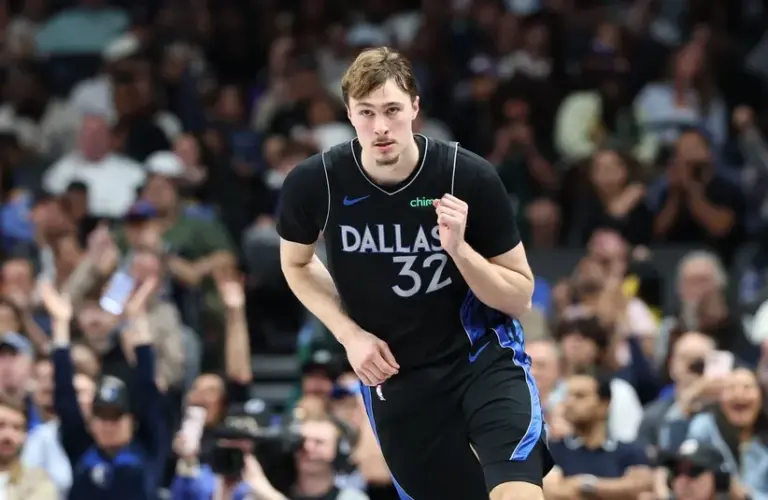


The Mavericks have never been afraid to make a statement. On the court, it’s Cooper Flagg and late‑game drama. Off the court, it’s bold decisions that reshape the franchise’s future. Their latest move might be one of the most defining yet: a plan to leave downtown Dallas and build a new arena and entertainment district on the former Valley View Mall site in Far North Dallas.
For the first time in franchise history, the Mavericks are preparing to step outside the downtown footprint that has defined their identity for decades. And the emotions around the decision—hope, nostalgia, excitement, and a little uncertainty—are all swirling at once.
Why the Mavericks Are Leaving Downtown
The Mavericks’ lease at American Airlines Center runs through 2031, but the organization has been signaling for nearly two years that it wanted a basketball‑only arena and a long‑term home that better fits the franchise’s vision. According to ESPN’s reporting, the team had narrowed its search to two locations: the current Dallas City Hall site downtown and the old Valley View Mall property roughly 10 miles north. The Valley View site ultimately checked more boxes.

The land is 104 acres of open space after the mall’s demolition, gives the Mavericks room to build not just an arena, but an entire district. Restaurants, green spaces, family‑friendly attractions, and a modern entertainment hub are all part of the blueprint. The team described the project as a “vibrant mixed‑use destination,” one that could serve as an economic engine for the city.
FOX4’s reporting added another layer: accessibility. Former owner Mark Cuban praised the location’s proximity to major highways like the LBJ Freeway and the Dallas North Tollway. For fans driving in from across the Metroplex, that matters.
A Franchise Rooted in Dallas—And Staying There
One thing the Mavericks made clear: they wanted to stay within Dallas city limits. That was non‑negotiable. City leaders echoed that sentiment. Dallas Mayor Eric Johnson and City Manager Kim Tolbert publicly applauded the team’s commitment to remain in the city. Councilman Adam Bazaldua went even further, calling the decision “great news” for both the Mavericks and the long‑stalled redevelopment of the Valley View area.
For longtime fans, the emotional weight is real. Since 2001, American Airlines Center has been home, a place where Dirk Nowitzki became a legend and where Luka Dončić was writing his own story. Leaving downtown isn’t just a logistical shift. It’s a symbolic one. But the franchise believes the move is necessary to build something that matches its ambitions.
The Vision: A Modern Arena for a Modern Mavericks Era
Rick Welts, the Mavericks’ CEO and the architect behind the Golden State Warriors’ move to Chase Center, was brought out of retirement for one reason: to lead this project. His track record speaks for itself. Chase Center didn’t just give the Warriors a new arena, it transformed an entire neighborhood. The Mavericks want that same impact.
The Valley View site offers the space and flexibility to create a basketball‑first arena with cutting‑edge technology, improved fan experiences, and the kind of amenities that modern NBA franchises now consider essential. The team’s statement emphasized community engagement and long‑term economic benefits, signaling that this isn’t just a building, it’s a destination.
Local businesses near the site are already imagining the ripple effects. One restaurant owner told FOX4 he hopes to become a go‑to pregame spot. That’s the kind of grassroots excitement the Mavericks are banking on. This move marks a turning point. A new arena means new revenue streams, new fan experiences, and a new identity shaped around a modern entertainment district. It also positions the franchise to compete with the NBA’s most forward‑thinking organizations.
There will be nostalgia for downtown. There will be debates about tradition versus progress. But the Mavericks are betting big on a future where their home isn’t just a place to watch basketball, it’s a place to gather, celebrate, and build community. And if history tells us anything, it’s that when the Mavericks make a bold move, they usually find a way to make it work.
 Don't stop here
Every Score. Every Story. One Home.
Breaking sports, entertainment and news from across the Total Apex network, updated all day.
Get the Full Story →
Don't stop here
Every Score. Every Story. One Home.
Breaking sports, entertainment and news from across the Total Apex network, updated all day.
Get the Full Story →