
WÜRTH 400 At Texas Motor Speedway Cup Series, Entry List

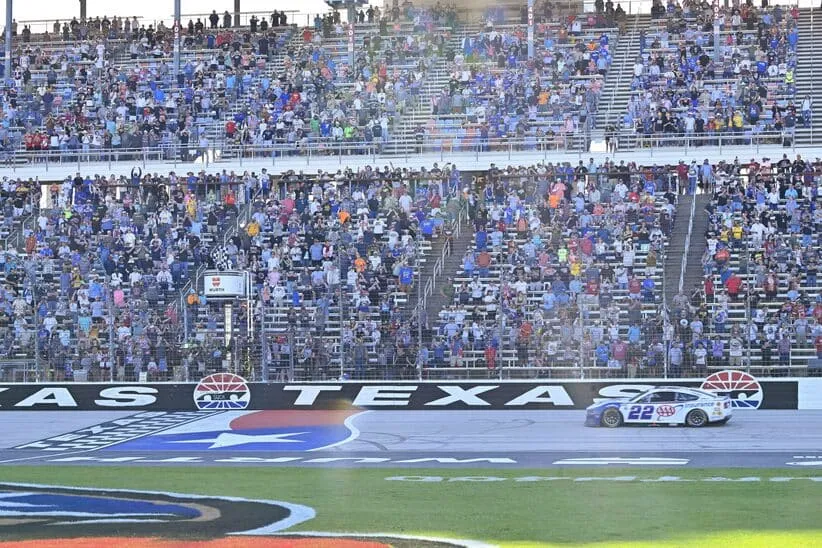
Texas Motor Speedway returns as one of the most demanding intermediate tracks on the NASCAR Cup Series schedule, hosting its 11th race of the 2026 season. The 1.5-mile quad-oval produces average speeds above 180 mph, forcing drivers to maintain precision across long green-flag runs.
Since the 2017 reconfiguration, Turns 1 and 2 have remained flatter than Turns 3 and 4, creating a handling imbalance teams must manage throughout a run. Texas has produced 23 different winners in its last 30 races, reinforcing its unpredictability.
A missed entry by inches can cost multiple positions before drivers reach the backstretch. Tire wear remains a defining factor. Falloff often exceeds 1.5 seconds per fuel run, underscoring the need for long-run balance. Drivers must commit fully; those who hesitate lose ground quickly as grip fades.
With Talladega in the rearview, the series arrives in Fort Worth at a key point in the season. Historically, eight of the last ten Texas spring winners were already inside the top eight in points. Early execution will dictate who controls the race.
Where Speed, Balance, And Track Position Decide Everything

Texas demands control over long runs. Over the past five races, green-flag stretches have averaged more than 40 laps, forcing teams to balance short-term speed with tire conservation. A mistake entering Turn 1 can cost several positions instantly.
Drivers outside the top 15 after Stage 1 rarely recover into the top five without a strategy. Managing right-side tire wear, especially off Turn 2, becomes critical as runs extend. Dirty air limits passing opportunities. Since 2021, more than 60% of laps at Texas have been led by drivers starting inside the top 10.
Clean air allows consistent lap times, while traffic can cost several tenths per lap.Pit road execution becomes a deciding factor. A slow stop or penalty can trap drivers deep in traffic, leaving them with limited ability to recover. Texas rewards teams that minimize mistakes.
Texas: A Technical Fight Disguised As A Speed Track
Despite its speed, Texas is a technical challenge. The asymmetrical corners force teams to compromise setup between stability and outright pace. Multiple grooves develop during long runs, but the preferred line shifts as rubber builds.
Over the last five races, the track has averaged 26 lead changes per event, reflecting constant adjustments. Aero balance becomes increasingly sensitive in traffic. Long runs test both equipment and drivers. Engine temperatures rise in dirty air, requiring adjustments in line and throttle input.
Drivers who maintain balance over 30 laps tend to gain positions late in runs. Restarts remain unpredictable. Three-wide moves into Turn 1 are common, and races since 2020 have averaged six to eight cautions. Late restarts often determine the outcome.
A Season Building Toward Separation
The 2026 season reaches a transition point at Texas. Drivers outside the top 16 in points after this race historically face lower playoff qualification rates. Separation typically begins around this stage. Over the past five seasons, multiple drivers secured their first win between races 10 and 13.
Texas often serves as a turning point for teams building momentum. A win provides security in the playoff format. Teams can shift focus toward playoff points rather than points racing. For others, the margin for recovery continues to shrink.
Execution becomes critical. Intermediate tracks reward consistency, and mistakes carry greater consequences as the season progresses. The teams that stay disciplined through long green‑flag cycles usually separate themselves when the field stretches out. One lapse in judgment at this point in the year can undo weeks of steady progress.
Breaking Down The Entry List
The 38-car field includes a mix of contenders and developing drivers, with intermediate-track performance serving as a key indicator. Denny Hamlin enters as the favorite at +400, backed by consistent speed on 1.5-mile tracks. Tyler Reddick (+550) follows, bringing one of the strongest average running positions on intermediates this season.
His ability to maintain momentum in the high lane is a clear advantage. Kyle Larson (+650) remains a threat, having led more than 500 laps at Texas since 2021. William Byron (+1100) and Chase Elliott (+1400) add depth to Hendrick Motorsports, which has controlled a significant share of laps on intermediate tracks.
Joey Logano returns as the defending winner after leading 27 laps last year. His ability to manage restarts and track position keeps him in contention. He’s also shown a knack for adjusting to Texas’s changing grip levels over the course of a run. If he settles into clean air early, he tends to dictate the tempo rather than chase it.
Cup Series At Texas Motor Speedway
WÜRTH 400: Full Entry List
(i) indicates any driver deemed ineligible for championship and or playoff points
- 1. Ross Chastain — No. 1 — Trackhouse Racing
- 2. Austin Cindric — No. 2 — Team Penske
- 3. Austin Dillon — No. 3 — Richard Childress Racing
- 4. Noah Gragson — No. 4 — Front Row Motorsports
- 5. Kyle Larson — No. 5 — Hendrick Motorsports
- 6. Brad Keselowski — No. 6 — RFK Racing
- 7. Daniel Suárez — No. 7 — Spire Motorsports
- 8. Kyle Busch — No. 8 — Richard Childress Racing
- 9. Chase Elliott — No. 9 — Hendrick Motorsports
- 10. Ty Dillon — No. 10 — Kaulig Racing
- 11. Denny Hamlin — No. 11 — Joe Gibbs Racing
- 12. Ryan Blaney — No. 12 — Team Penske
- 13. A.J. Allmendinger — No. 16 — Kaulig Racing
- 14. Chris Buescher — No. 17 — RFK Racing
- 15. Chase Briscoe — No. 19 — Joe Gibbs Racing
- 16. Christopher Bell — No. 20 — Joe Gibbs Racing
- 17. Josh Berry — No. 21 — Wood Brothers Racing
- 18. Joey Logano — No. 22 — Team Penske
- 19. Bubba Wallace — No. 23 — 23XI Racing
- 20. William Byron — No. 24 — Hendrick Motorsports
- 21. Todd Gilliland — No. 34 — Front Row Motorsports
- 22. Riley Herbst — No. 35 — 23XI Racing
- 23. Zane Smith — No. 38 — Front Row Motorsports
- 24. Cole Custer — No. 41 — Haas Factory Team
- 25. John Hunter Nemechek — No. 42 — Legacy Motor Club
- 26. Erik Jones — No. 43 — Legacy Motor Club
- 27. Tyler Reddick — No. 45 — 23XI Racing
- 28. Ricky Stenhouse Jr. — No. 47 — HYAK Motorsports
- 29. Alex Bowman — No. 48 — Hendrick Motorsports
- 30. Cody Ware — No. 51 — Rick Ware Racing
- 31. Ty Gibbs — No. 54 — Joe Gibbs Racing
- 32. Ryan Preece — No. 60 — RFK Racing
- 33. Chad Finchum (i) — No. 66 — Garage 66
- 34. Corey Heim (i) No. 67 — 23XI Racing
- 35. Michael McDowell — No. 71 — Spire Motorsports
- 36. Carson Hocevar — No. 77 — Spire Motorsports
- 37. Connor Zilisch — No. 88 — Trackhouse Racing
- 38. Shane van Gisbergen — No. 97 — Trackhouse Racing
Drivers to Watch And Emerging Storylines
Carson Hocevar enters following his first Cup Series win at Talladega. First-time winners often show improved performance in subsequent races, making his progression worth tracking. His aggressive style fits Texas, particularly on restarts.
Maintaining tire discipline over long runs will determine whether he can sustain that momentum. Corey Heim continues to gain Cup experience, showing steady improvement in limited starts. Additional track time will be critical to his development. Chad Finchum returns after leading laps for the first time in his career.
That experience can build confidence, though maintaining a position at Texas presents a greater challenge. He’ll need to manage the pace of the race without burning up his equipment early. If he can stay composed through the long green‑flag stretches, he’ll give himself a real chance to settle into the fight.
What This Means
Texas marks a point where execution becomes non-negotiable. Teams must adapt quickly to changing track conditions. Temperature shifts can significantly impact handling, requiring constant adjustments. A strong practice setup may not translate directly to race conditions. Crew chief decisions will play a major role.
Track position is difficult to regain once lost. Pit strategy, clean stops, and avoiding penalties will heavily influence results. A win provides a major advantage in the playoff race. Poor finishes, however, can create setbacks that extend beyond a single weekend.
Track position is difficult to regain once lost. Pit strategy, clean stops, and avoiding penalties will heavily influence results. A win provides a major advantage in the playoff race. Poor finishes, however, can create setbacks that extend beyond a single weekend.
What’s Next
Texas marks the start of a stretch where intermediate-track performance becomes increasingly important. Teams that find speed here often carry it forward. Consistency and tire management will define the next phase of the season. Texas serves as a benchmark for both.
Momentum gained here can shape upcoming races. Momentum lost can take weeks to recover. The impact extends well beyond this weekend. A strong run at Texas often becomes the anchor team’s lean on when the schedule tightens and pressure spikes.
