
Journalist Sarah Talker’s Question Puts The Spotlight On Austin Dillon’s Texas Edge

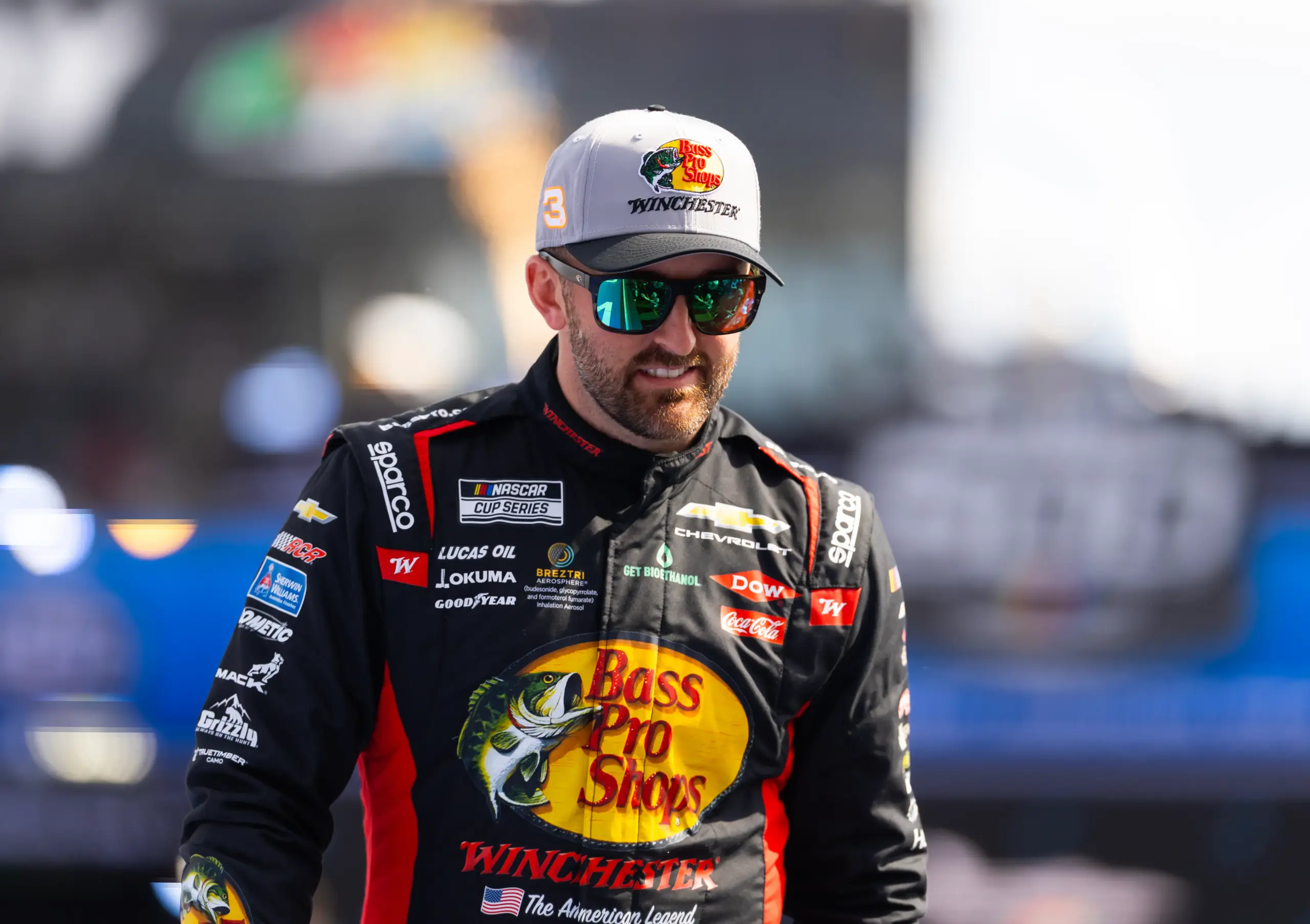
Texas Motor Speedway has never been a place where drivers can ease into a weekend, and for Austin Dillon, that reality carries even more weight this time around. The NASCAR Cup Series schedule has reached a point where effort alone is no longer enough. Results have to follow.
Dillon enters Fort Worth still searching for consistency with Richard Childress Racing. The No. 3 team has shown flashes, but not enough to stay in the conversation with the front-running organizations. That makes every possible advantage worth chasing. At a track like Texas, even a small edge can change the direction of a race.
Dillon Looks To Maximize Extra Track Time
Dillon will run double duty this weekend, competing in both the Cup race and the O’Reilly event. That added track time is not something he takes lightly, especially at a track where rhythm is hard to find. With limited practice in today’s format, those extra laps can help shorten the learning curve.
During the media session, Total Apex Sports journalist Sarah Talker’s question zeroed in on that exact point and what it could mean for his weekend. It was direct and grounded in the reality of how drivers prepare for a place like Texas.
Austin, you’re pulling a double this weekend with O’Reilly and Cup. What advantages do you think that gives you?
Dillon didn’t overcomplicate the answer. The benefit comes from seeing the track earlier, feeling every bump, and figuring out how much he can push the corners before the car pushes back.
It’s about getting comfortable faster than everyone else and removing some of the unknowns before the race even starts. That kind of preparation doesn’t guarantee speed, but it gives a driver a better starting point. In Texas, that matters more than most tracks.
Texas Motor Speedway Rewards Repetition

Texas Motor Speedway continues to challenge drivers with its uneven layout and changing grip levels. Turns 1 and 2 demand patience, while Turns 3 and 4 force drivers into a tighter groove, leaving little margin for error. The difference between a stable car and a loose one can come down to a single lap.
That is where repetition matters. Each lap provides more information about how the surface is reacting and where the limits are. Dillon’s extra time on track allows him to build that understanding earlier in the weekend.
The benefit shows up as the race progresses. Drivers who know where to push and where to hold back tend to maintain position more effectively. Texas rewards those who can adjust without overcorrecting.
Dillon And RCR Searching For Gains
The No. 3 team is still working to turn effort into consistent results. Dillon has acknowledged that the group is maximizing what it currently has, but that the ceiling needs to rise. Running mid-pack is not enough for a team with its history.
There is urgency inside the organization, even if it has not turned into panic. Team members continue to push for improvements, knowing that small gains can lead to meaningful results. Dillon believes those gains are within reach.
Extra track time offers a chance to accelerate that process. It gives the team more data and a clearer direction before the race begins. In a season where progress has been incremental, that matters.
Understanding The Limits Of The Car
Dillon has been clear about one of the biggest challenges facing the team. The car lacks a comfortable adjustment window, making it difficult to fine-tune during a race. Small changes can quickly swing the balance too far.
More laps help define that edge. They allow Dillon to feel how far he can push the car before it becomes unstable. In Texas, that line is thin and constantly shifting. He has to read the surface as it changes, because the track never gives the same feedback twice.
Each lap forces him to adjust his approach, trusting his feelings over the data. Confidence comes from understanding those limits. Without it, drivers are forced to be cautious, and that costs positions. The goal is to create a car that can be driven aggressively without crossing the threshold of instability.
Track Position Still The Deciding Factor
Even with additional laps, execution remains the most important factor at Texas. Track position continues to dictate how races unfold, especially with dirty air limiting passing opportunities. Starting near the front makes the entire race easier to manage.
Drivers who fall back often struggle to recover. Traffic disrupts airflow and makes the car harder to control. That puts additional pressure on qualifying and pit-road performance. A small mistake in either area can trap a driver in dirty air for an entire run.
For Dillon, the extra track time must translate into better execution. The advantage only matters if it leads to a stronger track position. Otherwise, it becomes just another missed opportunity.
What This Means
This weekend offers Dillon a chance to turn preparation into results. The added laps give him a clearer understanding of the track, but they also raise expectations. At this stage of the season, progress has to show up in the finishing order.
A strong run could shift momentum for the No. 3 team. It would validate the work being done behind the scenes and provide a foundation moving forward. That kind of result can change how a team approaches the next stretch of races.
A disappointing finish, however, would reinforce the challenges the team has faced. The margin for recovery continues to shrink as the season moves forward. Texas becomes more than just another race when viewed through that lens.
What’s Next
Texas Motor Speedway rarely offers easy weekends. It demands precision, awareness, and the ability to adapt in real time. Drivers who come prepared tend to separate themselves early. Austin Dillon has given himself an added opportunity through extra track time.
Now the focus shifts to execution. The laps are there. The question is what he does with them. He knows every lap has to matter. He doesn’t have the luxury of easing into the weekend, not at this track. Any hesitation will show up on the stopwatch long before it shows up on the scoreboard.
For More Great Content
Stay plugged in with more race analyses, features, and behind‑the‑garage storytelling. Follow Sarah on Facebook, LinkedIn, and X at Sarah Talker, where the conversation keeps rolling long after the checkered flag drops.
