
Four Tires, One Mission: Goodyear’s High‑Stakes Pressure Strategy Behind NASCAR’s Fastest Cars

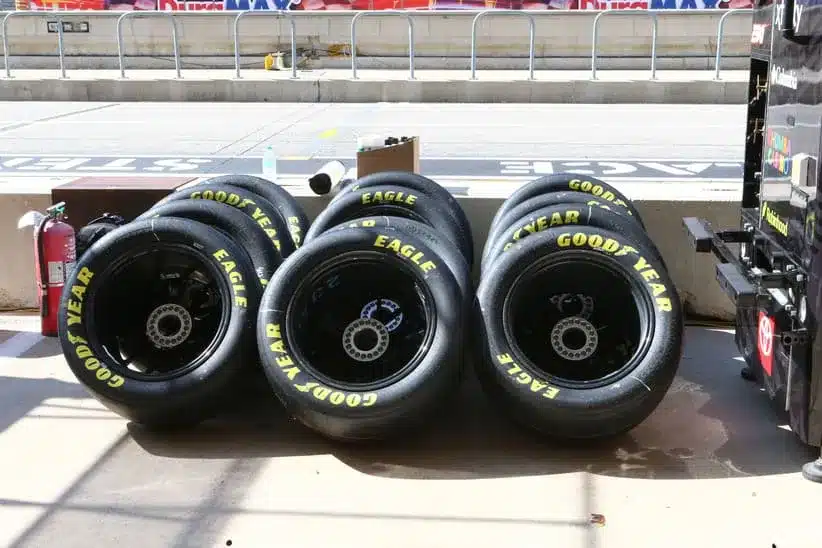
Tire pressure might sound like a simple number on a digital gauge, but in NASCAR, it’s one of the most sensitive and hotly debated variables in the entire garage. Every crew chief, tire specialist, and engineer knows that the air inside those four Goodyear Eagles can make or break a race weekend.
Behind every pit stop and every green‑flag run, there’s a team calculating exactly how much pressure the tires need to survive the load, heat, and abuse of 500 miles. Get it wrong, and you’re watching your driver limp back to pit road with a shredded tire and a ruined day.
Get it right, and you’ve got a car that turns, grips, and stays fast deep into a run the kind of setup that wins races. Tire pressure isn’t just a number. It’s a weapon.NASCAR Cup Series Managing Director Brad Moran recently joined SiriusXM to break down how teams and NASCAR work together to manage Goodyear tire pressure.
His insight peeled back the curtain on a process most fans never see, but every team obsesses over. It’s the kind of detail that separates casual viewers from people who truly understand what makes these cars dance.
Why Tire Pressure Matters So Much In NASCAR
Every track on the NASCAR schedule is its own beast. Superspeedways like Daytona and Talladega load the right‑side tires with massive sustained forces, while short tracks like Bristol and Martinsville punish tires with constant braking and acceleration.
Road courses like Watkins Glen and Sonoma introduce lateral loads that oval setups never experience. Because of that, tire pressure can’t be a one‑size‑fits‑all number. It has to be tailored to the track, the car, and the conditions. Teams spend hours studying how each surface, banking angle, and corner radius affects the tire.
When pressure is too low, the tire flexes excessively, generating heat that breaks down the rubber and weakens the sidewall. That’s how blowouts happen, and they happen fast. When pressure is too high, the contact patch shrinks, reducing grip and making the car skate across the surface.
Drivers feel that instantly, often before the crew chief even sees it on the data. A tire outside its ideal pressure window is a disaster waiting to happen, and everyone on pit road knows it. Goodyear doesn’t just drop off tires and wish teams luck.
Their engineers study each track months in advance, analyzing surface wear, temperature trends, and historical data. They establish baseline pressure recommendations designed to keep the tire in its optimal temperature range throughout a run. Those baselines are the starting point for every team’s strategy.
How Teams Approach Tire Pressure Adjustments
Teams have some flexibility within NASCAR’s rules to fine‑tune tire pressure based on their setup and driving style. A car with more rear weight might run different pressures than a car trimmed for straight‑line speed. Track temperature changes throughout the day, rubber builds up, and cloud cover can swing grip levels dramatically.
Crew chiefs have to read the track like a living thing, adjusting pressures to match its mood. Every pound of pressure affects how the car rotates, how it launches off the corner, and how it handles over a long run. During pit stops, teams study tire wear patterns and temperature strips to understand what the tires are telling them.
A quarter‑pound adjustment can be the difference between a car that plows through traffic and one that carves through it. Veteran crew chiefs can feel these changes in their bones. Decades of experience let them predict what the car needs before the engineer even finishes reading the data. It’s part science, part instinct, and part controlled chaos.
NASCAR monitors tire pressure as well, ensuring teams stay within safe limits. Minimum pressure thresholds are enforced to protect drivers from catastrophic failures. Teams can’t simply drop pressures to gain grip if it puts the tire and the driver at risk. Safety always wins that battle.
The Las Vegas Test And What It Signals
Brad Moran also discussed an upcoming Goodyear tire test at Las Vegas Motor Speedway. These tests are anything but casual. They’re full‑throttle science sessions. Goodyear brings multiple tire compounds, and teams run hundreds of laps to gather data on heat cycles, wear rates, and pressure behavior.
Engineers track how the tire evolves over long runs, how it reacts to different setups, and how it handles the track’s unique demands. Las Vegas is a 1.5‑mile intermediate track, a category that accounts for a large portion of the Cup Series schedule.
What Goodyear learns there often shapes the tire strategy for Charlotte, Kansas, Homestead, Michigan, and more. The data accumulates over time. Building a knowledge library to inform future tire construction and pressure recommendations is paramount in these circumstances.
These tests also give teams a chance to understand how the new tire behaves before race day, a luxury they don’t take lightly. There are no throwaway laps at a tire test. Every run matters, every data point counts, and every adjustment teaches teams something they’ll use when the season is on the line.
What This Means For The 2026 Season
The heightened focus on tire pressure management reflects a broader shift happening inside NASCAR. The sanctioning body is paying closer attention to tire safety than ever before, especially after recent seasons produced high‑profile failures that altered race outcomes and raised concerns among drivers.
When a tire blows at 180 mph, the consequences can be severe, and NASCAR knows it. Moran’s willingness to address tire pressure publicly signals a push for transparency. Fans deserve to understand that tire pressure isn’t incidental. It’s foundational to performance and safety.
A tire outside its ideal pressure range can turn a routine run into a dangerous moment in seconds. The difference between a controlled slide and a catastrophic crash often comes down to whether the tire was properly inflated. Goodyear and NASCAR are working more closely than ever to ensure consistency across all track types.
The goal is simple: fewer failures, more predictable performance, and safer racing for everyone involved. If they get it right, the 2026 season could see fewer tire‑related incidents and more races decided by strategy and speed not blowouts.
What’s Next
Tire pressure is one of those topics that separates casual fans from those who truly understand the craft of NASCAR. It sits at the intersection of engineering, instinct, and trust between the driver, crew chief, and manufacturer. The work Brad Moran described isn’t glamorous. Nobody puts tire pressure adjustments on a highlight reel.
But when a driver takes the white flag with a car that still turns, still grips, and still has speed, those four Goodyear tires made it possible. In a sport where inches decide championships, the air inside those tires might be the most important element of all.
