
Bristol Braces As These Cup Series Heavyweights Hit The Craftsman Truck Series Lineup

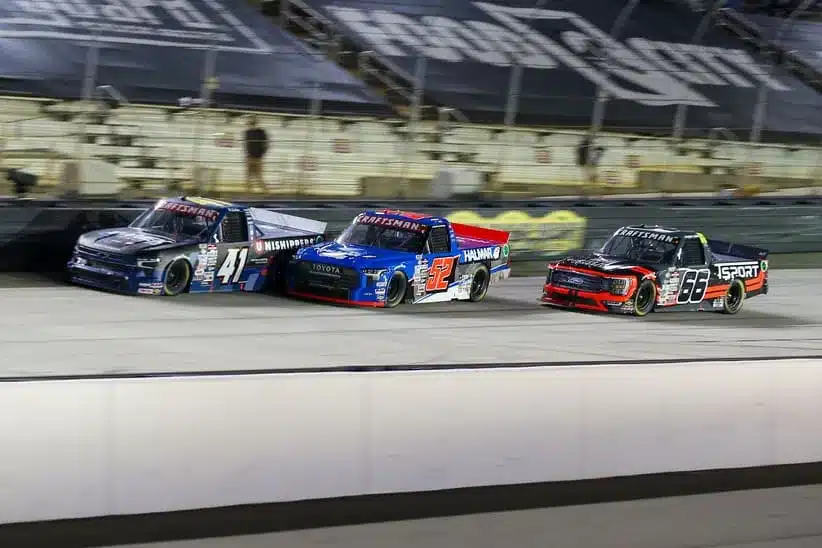
A night race at Bristol Motor Speedway doesn’t feel like a typical race. It feels like an event. The place is loud, tight, and unforgiving. With 30-degree banking and laps clicking off in about 15 seconds, drivers barely get a moment to breathe.
Add in a packed grandstand of more than 140,000 fans, and it turns into one of the most intense environments in motorsports. This weekend’s Tennessee Army National Guard 250 has more going on than usual.
A wave of Cup Series drivers is dropping into the field, and that changes everything. Bristol is just 0.533 miles long, which means drivers hit heavy traffic in under 10 laps. Races here often feature 10 or more caution flags, so staying out of trouble is just as important as raw speed.
Why This Race Matters Early In The Season
Even this early in the NASCAR Craftsman Truck Series schedule, Bristol can set the tone for the rest of the year. A win here all but guarantees a playoff spot, and in recent seasons, a majority of playoff drivers already had at least one victory locked up before the halfway point.
Getting that done now takes a lot of pressure off teams heading into the summer stretch. Bristol also has a way of exposing issues quickly. Teams that miss the setup here, especially with tire wear or long-run balance, tend to run into those same problems again at other short tracks.
On the other side, a strong run usually isn’t a fluke. It’s often a sign that a team has found something that will carry over for weeks. It usually means the setup is close across different tracks. Teams can build off that instead of starting from scratch.
How Cup Drivers Change The Entire Field
When Cup Series drivers show up in a Truck race, the pace changes right away. These are drivers used to racing 300–500 miles per week, and that experience shows in how they manage races. They’re usually more comfortable making adjustments on the fly.
Even with limited starts, Cup drivers have consistently won a solid chunk of the Truck races they enter over the years. That forces everyone else to step it up. Full-time Truck drivers suddenly have to deal with competitors who make fewer mistakes and take advantage of every opening.
It usually leads to tighter racing, especially near the front, and pushes the whole field into a more aggressive style just to keep up. The margin for hesitation disappears fast when everyone is fighting for the same inch of track. One bold move can flip the entire running order in a heartbeat.
The Short Track Factor
Bristol’s size and layout change everything. At just 0.533 miles, the field stacks up quickly, and drivers start dealing with traffic almost immediately. It doesn’t take long for leaders to be working through slower trucks, and one mistake in traffic can cause multiple vehicles to pile up.
That’s part of why races here tend to get chaotic. Cautions are frequent, and lead changes can happen in bunches, especially on restarts. It’s not unusual to see a driver fall from the top five to mid-pack in a handful of laps.
Keeping track of position and holding onto it is one of the toughest parts of racing at Bristol. The field stacks up fast, and one missed corner can drop a driver five spots in seconds. Every restart feels like a fight just to survive the next lap.
Kyle Busch
Kyle Busch doesn’t just show up to Truck races. He usually takes them over. His 68 wins in the series are the most all-time, and he’s been winning in Trucks for nearly two decades. That kind of experience matters at Bristol, where knowing how to handle traffic is half the battle.
He’s also won multiple times at this track across NASCAR’s top series. If he gets into a rhythm near the front, he can control the race and force everyone else to react to him. Busch has led thousands of laps in the Craftsman Truck Series alone, a number few drivers even come close to.
In past Bristol races, he’s been able to lead 100+ laps in a single event, which shows how quickly he can take over once he finds clean air. Once he gets control of a race here, it’s tough for anyone to take it back without a caution.
Ross Chastain
Ross Chastain races as if every lap matters, and at Bristol, that style can work. He’s a multi-time Cup Series winner who isn’t afraid to lean on other drivers to gain position. That aggression can move him forward quickly, especially on restarts where positions change fast.
If things get chaotic, and they usually do here, Chastain tends to be right in the middle of it, often coming out ahead. He’s known for gaining 5–10 spots on restarts when the field bunches up.
At a track where track position can flip in a matter of laps, that kind of movement is a big deal. Gaining spots that quickly can be the difference between staying in the lead pack or getting stuck in traffic.
Christopher Bell
Christopher Bell has always been strong on short tracks. He’s a former Truck Series champion and has won at Bristol before. What stands out is how smoothly he drives.That smoothness helps over longer runs.
While others burn up their tires trying to gain spots, Bell usually stays consistent. If the race stretches out without too many cautions, he’s one of the drivers who can quietly work his way to the front.
During his Truck title season, he won 7 races, many of them on shorter tracks. He’s also posted top-5 finishes in more than half of his Bristol starts across series, which says a lot about his consistency.
Chase Briscoe
Chase Briscoe proved how dangerous he can be with his nine-win Xfinity season in 2020. He’s the kind of driver who adapts quickly, which is important at a place like Bristol where conditions change as rubber builds up on the track.
He doesn’t always dominate early, but he tends to get better as the race goes on. That makes him someone to watch in the second half, especially if strategy or timing comes into play. That 2020 season also included 16 top-5 finishes, showing how often he ran up front.
On short tracks, he’s known for improving his lap times over a run rather than fading, which can pay off late. That usually shows up in the final stage when others start to slow down. It gives him a chance to make passes without taking big risks.
Carson Hocevar
Carson Hocevar is still early in his career, but he’s already shown he can run up front in the Truck Series. He’s led a lot of laps for someone his age and isn’t shy about racing aggressively. Bristol suits that mindset, but it can also punish it.
If he keeps things under control, he has the speed to mix it up with the veterans. If not, things can go sideways quickly. Hocevar has already led hundreds of laps in a single season, which shows he can control races, not just survive them.
He’s also recorded multiple finishes inside the top 10 at Bristol, proving he can handle the track when things stay clean. He’s shown he can stay consistent over long runs without falling off. That kind of stability matters when the race starts to get stretched out.
Daniel Suárez
Daniel Suárez brings a more measured approach. As a former Xfinity Series champion and Cup winner, he’s used to long races where patience pays off. At Bristol, that patience can make a difference.
While others get caught up in contact or push too hard, Suárez tends to stay steady. Over time, that usually moves him forward as the race wears on. During his Xfinity championship season, he finished in the top 10 in over 70% of races, showing his consistency.
He also has multiple strong runs at Bristol in Cup competition, often finishing better than where he started. That kind of progress usually comes from staying out of trouble early. He’s been able to pick off positions steadily as the races go on.
Ricky Stenhouse Jr.
Ricky Stenhouse Jr. built his career on being aggressive, especially in close-quarters racing. He’s a two-time Xfinity champion and has won at the Cup level, often in unpredictable races. This is still new territory for him in Trucks, but his style fits Bristol.
He’s comfortable running tight to other drivers and making quick moves in traffic, which can help him gain track position when it matters most. During his Xfinity title runs, he combined for 13 wins across two seasons, many on shorter tracks.
He’s also known for finishing strong in races with high attrition, which Bristol often delivers. Stenhouse tends to keep his car in one piece while others run into trouble. That usually helps him move up several spots late in the race.
Corey Heim
Corey Heim is the one all of these drivers have to deal with. He’s the defending Truck Series champion and won this race last year. On top of that, there’s a $500,000 bonus on the line if he wins again. He’s already one of the winningest drivers in the series over the past two seasons.
Heim has been one of the most consistent drivers in the series, regularly running up front and leading laps. He knows how to manage a race at Bristol, and he’s not going to be intimidated by the Cup guys. If anything, this is a chance for him to prove he belongs with them.
He’s already put together seasons with multiple wins and double-digit top-5 finishes, showing week-to-week speed. In races where he leads early, he often converts that into a finish inside the top 3, which makes him a serious threat to close it out.
What It Means For Full-Time Truck Series Drivers
For younger drivers, this race is a real test. Running up front against established Cup winners is one of the clearest ways to measure progress. A top-five finish in a field like this tends to carry more weight than a typical result earlier in the season.
At the same time, it adds pressure. With more experienced drivers taking up space near the front, the chances of gaining track position shrink. That’s why restarts get so intense on a track this short.
Picking up just two or three spots can be the difference between contending and fading back. Track position is tough to recover once it’s lost here. Drivers know those small gains add up quickly over a run.
What’s Next
Bristol doesn’t really allow for quiet races. Things happen too fast, the track is too tight, and drivers are constantly dealing with traffic. Add in this mix of Cup veterans and top Truck regulars, and it’s hard to predict how it will play out. What’s certain is that it won’t stay calm for long. At Bristol Motor Speedway, it never does.
Over the past several races here, the average margin of victory has often been under 1 second, showing how tight the finishes can be. It’s the kind of place where a race can flip in the final 20 laps, and that’s exactly why drivers and fans keep coming back.
