
Old Enough To Win, Not Old Enough To Race: Brent Crews’ Unfair Fight With The NASCAR Rulebook

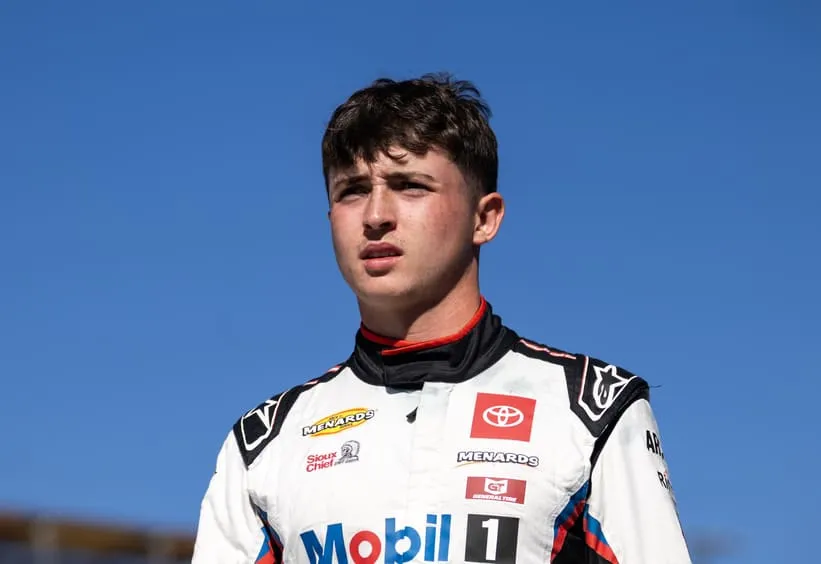
There’s a certain sting that comes with watching someone else climb into your race car. Drivers don’t talk about it much, but you can see it in their eyes that mix of frustration, impatience, and helplessness.
Brent Crews is living that reality right now. Joe Gibbs Racing believes in him enough to put him in one of the most competitive seats in the series, yet he’s stuck on the sidelines because of something he can’t control: his age.
The garage feels different when a young driver is forced to step aside, almost as if the team’s rhythm is thrown off. Crews has the speed and the instincts, but the rulebook doesn’t care about potential. It’s a strange limbo where he’s both a full‑time driver and a part‑time participant.
The Prodigy Sidelined
When Joe Gibbs Racing revealed its driver lineup over the winter, Brent Crews was the name that made people stop and pay attention. Getting the No. 19 Toyota at his age is rare, almost unheard of, and it signaled how much confidence the organization has in him. He backed that up immediately with a sixth‑place finish at Circuit of the Americas, showing poise well beyond his years.
Phoenix wasn’t as flashy, but bringing the car home in eighteenth proved he could grind through a tough day. Just as he was starting to build momentum, the calendar stepped in and shut the door. Crews doesn’t turn eighteen until late March, and that birthday might as well be a finish line he can’t reach fast enough. It’s a tough break for a kid who’s already shown he belongs.
Understanding The Age Limits
NASCAR’s age rules aren’t suggestions. They’re firm, and they’ve been in place for years. Anyone under eighteen is barred from racing on ovals longer than 1.25 miles. The speeds are higher, the racing is tighter, and the stakes are bigger, and NASCAR believes those tracks require a level of maturity that only comes with age.
Whether fans agree or not, the rule is the rule. That’s why Gio Ruggiero handled the opening superspeedway races at Daytona and Atlanta. Now, as the series heads west, the same rule forces another driver swap. It’s a reminder that even the most talented young drivers have to wait their turn, no matter how ready they feel behind the wheel.
Heavy Hitters Stepping In
Las Vegas Motor Speedway is a fast, sweeping 1.5‑mile oval and exactly the kind of track Crews isn’t allowed to race yet. Joe Gibbs Racing isn’t taking any chances with owner points, so they’re putting Chase Briscoe in the No. 19 this weekend.
Briscoe brings experience, consistency, and a Cup‑level understanding of how these cars behave at high speed. For Crews, though, it’s another weekend spent watching someone else drive the car he’s supposed to be learning in. And the hits keep coming.
The following week, the series heads to Darlington Raceway, a 1.366‑mile track that chews up rookies and veterans alike. Once again, Crews is sidelined, and Christopher Bell will step in. Seeing Cup drivers take your seat is tough for any young racer, especially when you’re trying to build a season, a rhythm, and a reputation.
The Playoff Picture And Points Pressure
Missing races is brutal for a driver’s place in the standings. Crews sits twentieth right now, 35 points below the provisional playoff cut line. Every race he misses is another chance for his competitors to widen the gap. It’s not a performance issue. It’s an absence issue, which makes it even more frustrating.
Fortunately, NASCAR is expected to grant him a playoff waiver, acknowledging the unique situation. That keeps his championship hopes alive, but it doesn’t erase the pressure. He still needs to claw his way into the top twelve or win a race outright. Every start he gets from here on out becomes more important than the last.
The waiting finally ends in late March. Martinsville Speedway, measuring just 0.526 miles, falls under the size limit, meaning Crews is fully cleared to race. The timing is almost poetic. The event takes place just two days before his eighteenth birthday. From there, the schedule becomes far more forgiving.
Rockingham’s 0.94‑mile layout and Bristol’s 0.533‑mile bullring offer no age‑related obstacles. His first real test on a high‑speed intermediate track will come in mid‑April at Kansas Speedway. That race will be the first true chance to see how he stacks up against the field on equal footing. It’s a moment he’s been waiting for since the season began.
What This Means
This disjointed schedule is a major test of mental toughness. For Brent Crews, it means treating every race he’s allowed to run as a must‑perform situation. He doesn’t have the luxury of easing into the season or building a notebook on intermediate tracks. Instead, he must rely heavily on the feedback from Briscoe and Bell to understand how the No.19 Toyota behaves on larger ovals.
For the team, it means juggling multiple driving styles and communication patterns while maintaining consistency. It’s a challenge for everyone involved, but it also shows how much faith Joe Gibbs Racing has in Crews’ long‑term potential. They’re willing to navigate the chaos because they believe the payoff will be worth it.
A Young Driver’s Biggest Test
Brent Crews has the speed. He has the racecraft. What he’s learning now is patience, the kind that separates raw talent from long‑term success. These early weeks will feel slow, frustrating, and unfair, but they’re shaping him in ways the stopwatch can’t measure.
When he finally gets the green light to run the full slate of tracks, he’ll be sharper, hungrier, and more determined than ever. And when that day comes, the rest of the field will have a very motivated teenager to deal with.
