
The Ultimate No-Brainer: Why Caitlin Clark’s Contract Extension is a WNBA Game Changer

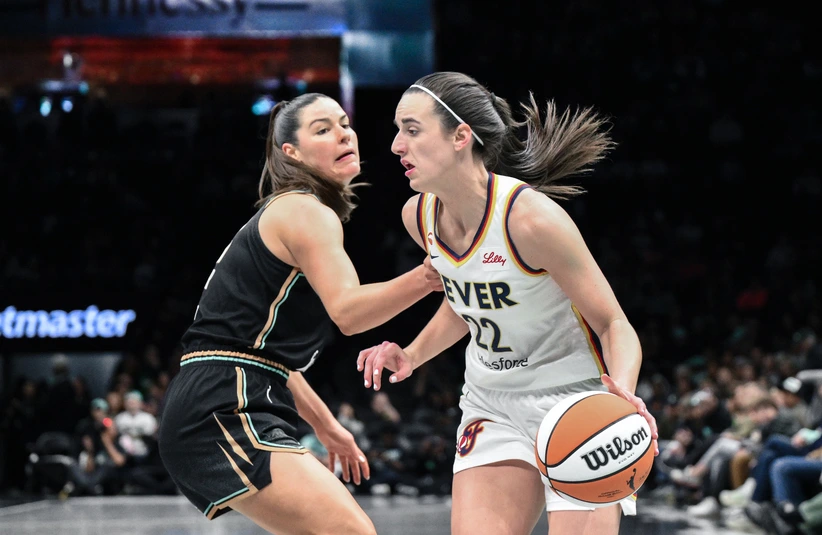
Let’s be real for a second. In the wild, unpredictable world of professional sports, there are very few absolute certainties. A 15-to-1 underdog might win the Kentucky Derby. A wild-card team might win the Super Bowl. But the Indiana Fever picking up Caitlin Clark’s fourth-year option? That was about as guaranteed as the sun coming up tomorrow morning.
In a move that surprised absolutely zero people from Indianapolis to Iowa, the Fever officially exercised their team option on Tuesday afternoon to keep the generational point guard under contract through the 2027 season. If there was a button in the front office that said “Keep the franchise savior,” Indiana’s brass probably broke their fingers smashing it.
But while this transaction was a mere formality on paper, the ripples it creates across the WNBA’s financial landscape are massive. Let’s break down the dollars, the cents, and the historic collective bargaining agreement (CBA) quirks that make this contract extension a fascinating piece of sports business.
The Easiest Decision in Basketball History
Let’s put this into perspective. When you draft a player who single-handedly turns your franchise into prime-time television royalty, sells out arenas across the country, and has fans buying merchandise faster than the servers can handle, you don’t let her walk. You staple her contract to the desk.
Standard WNBA rookie-scale contracts are built on a three-year foundation with a team option for a fourth year. By rule, the front office has to trigger that fourth-year option before the player’s third season tips off. The Fever didn’t just pick up the option; they locked in the cornerstone of their future.
For the current season, Clark is pulling in $528,846. Thanks to the newly elevated rookie scales baked into the latest CBA, her base salary for the 2027 team option is $597,596. But here is where the story shifts from a standard contract update into a masterclass on WNBA contract negotiations.
The “EPIC” Loophole: Show Me the Money
That $597,596 figure? Consider it a placeholder. It is highly unlikely that Clark will actually play for that amount in 2027, and she has a brand-new CBA stipulation to thank for it.
Enter the EPIC clause, which stands for “Exceptional Players on Initial Contracts.” It sounds like an acronym out of a Marvel movie, and for players like Clark, it’s just as powerful. The EPIC provision allows franchise-altering players to completely tear up and renegotiate their fourth-year salary in 2027 while simultaneously tacking on a long-term extension.
Because Clark dazzled the league and earned an All-WNBA First-Team nod in her historic 2024 rookie campaign, she is already eligible to command the max salary, which eats up 17% of the team’s total salary cap. But wait, it gets better. If she captures the MVP trophy this season—and let’s be honest, nobody is betting against her at this point—she becomes eligible for the supermax. That bumps her piece of the pie up to a whopping 20% of the team’s salary cap in 2027.
To unlock that renegotiated mountain of cash for her fourth year, she simply needs to agree to a long-term extension. Those extension years can also be inked at the supermax level. It’s a brilliant move by the players’ union that finally allows the league’s top-tier young talent to get paid what they are actually worth without waiting half a decade.
A Dynasty in the Making: Clark and Boston Cash In
If you are a fan of any of the other eleven WNBA teams, here is the part that should terrify you. The Indiana Fever is currently the only franchise in the entire league boasting two EPIC-eligible superstars.
Aliyah Boston, the powerhouse in the paint who earned All-WNBA Second-Team honors in 2025, already set the blueprint. Boston used her EPIC eligibility to renegotiate her fourth-year salary for 2026 up to a cool $1 million, locking in supermax money each season from 2027 through 2029.
Now, the Fever have the opportunity to secure their dynamic duo for the foreseeable future. Keeping Clark and Boston happy, paid, and playing together in Indianapolis isn’t just a win for the Fever; it’s a terrifying reality for the rest of the league.
At the end of the day, picking up Caitlin Clark’s option was just administrative paperwork. But the emotional weight it carries for a fanbase that has been utterly revitalized is immeasurable. Indiana has its star, the WNBA has its ratings juggernaut, and Clark is poised to break the bank.Buckle up, basketball fans. The Fever is building something special, and they’ve got the checkbook to prove it.
