Social Media Explodes Over Texas QB Arch Manning’s Performance Against Ohio State

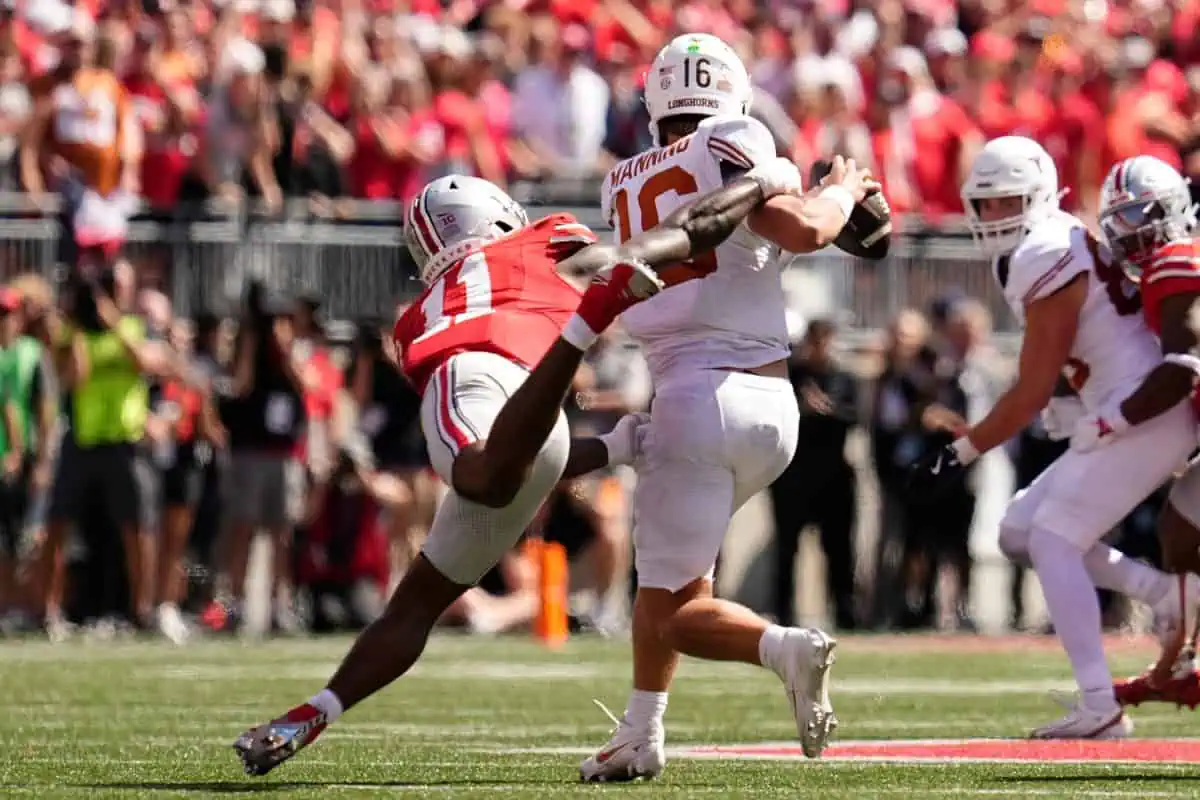
Arch Manning’s first major college football test didn’t go according to plan. The highly touted Texas quarterback struggled in a 14-7 loss to Ohio State, completing just 16 of 29 passes for 167 yards with one touchdown and one interception. But perhaps more telling than the box score was the immediate social media firestorm that followed his performance at Ohio Stadium.
The game represented Manning’s first true spotlight moment as Texas’s starting quarterback, and the internet had plenty to say about it. From harsh criticism to defensive support, and everything in between, social media painted a complex picture of expectations, reality, and the pressures facing college football’s most famous surname.
The reactions revealed much about how we consume sports in the digital age and what happens when enormous expectations meet the harsh reality of elite competition. Manning’s performance became a lightning rod for broader discussions about media hype, quarterback development, and the impossible standards placed on young athletes.
Social Media Reacts to Arch Manning’s Performance
The most viral reaction came from former NFL offensive lineman Mark Schlereth, who delivered perhaps the harshest assessment: “Arch Manning has more commercials in this game than he has completions.” The tweet quickly garnered over 10,000 likes and hundreds of retweets, perfectly capturing the disconnect between Manning’s marketing presence and his on-field production.
ESPN’s Peter Burns took a different approach, focusing on systemic issues rather than individual blame. He posted a GIF showing Texas’s goal-line struggles against Ohio State over the past two years, suggesting the problems ran deeper than quarterback play. This perspective gained significant traction among fans looking for context beyond Manning’s individual performance.
College Football Nerds provided detailed film analysis, breaking down specific plays where Manning appeared to miss open receivers. Their technical breakdown, complete with route diagrams, showed Manning bypassing an open receiver underneath for a more difficult corner route. The analysis suggested fundamental decision-making issues rather than just execution problems.
David Eckert, covering the game for the Austin American-Statesman, captured the hostile environment Manning faced, noting that Ohio State fans were chanting “overrated” at the young quarterback. This detail added crucial context about the pressure-cooker atmosphere Manning experienced in his biggest game to date.
The reaction wasn’t entirely negative. Some users defended Manning, pointing out that he was making his first road start against the defending national champions. These voices emphasized his youth and the difficulty of the situation rather than focusing solely on the statistical output.
Criticism and Praise: A Mixed Bag
The social media discourse revealed sharp divisions in how people viewed Manning’s performance. Critics focused heavily on the disconnect between his pre-season hype and actual production. Many pointed to his extensive NIL deals and media coverage as evidence that expectations had been artificially inflated.
College Sports Only delivered one of the more measured takes: “Don’t ridicule Arch Manning for struggling in his 1st real start at the defending national champion, ridicule the media that handed him the Heisman & named him the 1st pick of the NFL Draft for clicks.” This perspective gained significant engagement, suggesting many fans understood the difference between player criticism and media criticism.
Supportive voices emphasized Manning’s age and experience level. They argued that judging any quarterback harshly after one difficult road game was premature and unfair. These defenders noted that even elite quarterbacks often struggle in hostile environments early in their careers.
The humor aspect couldn’t be ignored. Memes and jokes flooded Twitter, with many users creating content around Manning’s commercial appearances versus his completion percentage. While sometimes cruel, this humor reflected how social media processes disappointment and unmet expectations in real-time.
Technical analysts provided the most constructive criticism, breaking down the film to show specific areas for improvement. These voices focused on decision-making, pocket presence, and reading defenses rather than simply mocking the performance.
What This Means for Manning’s Future
The social media reaction to Manning’s Ohio State performance illuminated several important themes about modern college football and athlete development. First, it demonstrated how quickly narratives can shift in the digital age. Manning went from Heisman favorite to overhyped prospect in the span of one game, at least in some corners of the internet.
The criticism also revealed the impossible standards facing high-profile recruits in the NIL era. Manning’s commercial success and media attention created expectations that few young quarterbacks could realistically meet, especially against elite competition. This dynamic will likely follow him throughout his college career.
However, the mixed nature of the reactions also showed that many fans and analysts understand the development process for young quarterbacks. The voices calling for patience and perspective suggest that Manning will receive opportunities to grow and improve, despite the initial stumble.
The technical analysis embedded within social media reactions provides a roadmap for Manning’s development. Issues with reading defenses, decision-making under pressure, and pocket presence are all correctable with coaching and experience. The fact that these specifics were identified publicly might actually accelerate his improvement process.
Looking ahead, Manning’s social media treatment will likely depend heavily on his response to this adversity. Quarterbacks who bounce back from early struggles often see their narratives completely reversed. The same platforms that criticized him harshly after Ohio State could become his biggest advocates if he shows improvement.
The broader lesson extends beyond Manning to how we evaluate young athletes in the digital age. Social media’s immediate reaction cycle doesn’t always align with the patient development process that creates successful quarterbacks. Manning’s Ohio State performance will be remembered, but it won’t define his career unless he allows it to.
The internet’s reaction to Arch Manning’s debut reminds us that expectations and reality often collide in spectacular fashion. How he responds to this collision will determine whether social media becomes his critic or champion moving forward.