Caleb Williams and the Chicago Bears: When Hope Meets Harsh Reality

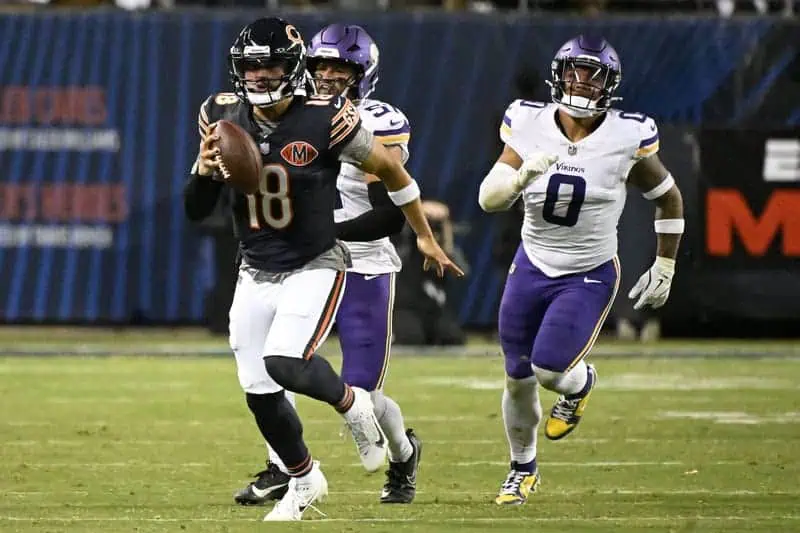
Picture this: You’re a Chicago Bears fan watching your young quarterback light up Monday Night Football, completing his first 10 passes like he’s playing catch in the backyard. Caleb Williams looked every bit the franchise savior, scoring his first career rushing touchdown and leading the Bears to a commanding 17-6 lead over their division rivals. Then, like a cruel joke from the football gods, it all came crashing down in spectacular fashion.
The Bears’ 27-24 collapse against the Minnesota Vikings wasn’t just another loss—it was a masterclass in how to snatch defeat from the jaws of victory. For the fourth time since 2023, Chicago managed to blow a double-digit fourth-quarter lead. That’s not just bad luck; that’s a trend more consistent than death, taxes, and Aaron Rodgers complaining about something. Can the Bears get back on track?
Williams Shows Promise Before Reality Hits
Williams started the game looking like the second coming of Tom Brady, completing passes with surgical precision and scrambling for scores when needed. His opening drive was a thing of beauty—10 plays, 61 yards, capped off with a 9-yard touchdown run that had Bears fans dreaming of January football.
The rookie’s hot start included the longest completion streak by a Chicago quarterback to open a season opener since 1978. For perspective, that’s back when disco was still cool and the Bears actually knew how to finish games. Williams’ first-half performance (13 of 16 passes) had him looking like the franchise quarterback Chicago has been desperately seeking since the Reagan administration. But then the second half happened, and reality came knocking harder than a debt collector on payday.
The Collapse That Defines Chicago Football
What happened next was quintessentially Bears football—a combination of self-inflicted wounds, questionable decisions, and the kind of fourth-quarter meltdown that would make a Cubs fan feel sympathy pains. Williams’ accuracy fell off a cliff, posting an NFL-worst off-target rate of 29.4% in Week 1. His completion percentage dropped from an impressive 81% in the first half to something that would make a high school JV coach cringe.
The turning point came with an intentional grounding penalty that killed a promising drive, followed by Cairo Santos missing a 50-yard field goal that would have extended the lead to 20-6. From there, the Vikings scored 21 unanswered points while the Bears’ offense sputtered like a car running on fumes.
Minnesota’s Defensive Coordinator Brian Flores deserves credit for his halftime adjustments. After bringing pressure on just 25% of Williams’ drop backs in the first half, the Vikings cranked up the heat, blitzing 44% of the time in the second half. It was like watching a seasoned poker player exploit a rookie’s tells.
Penalties: The Gift That Keeps On Giving
If there’s one thing the Bears do consistently, it’s shoot themselves in the foot with penalties. Twelve flags for 127 yards isn’t just sloppy—it’s borderline criminal. Four false starts in the first half alone showed a team that wasn’t mentally ready for primetime, despite having all offseason to prepare. Coach Ben Johnson’s postgame comments about penalties being a training camp issue suggest this wasn’t exactly a surprise. When your head coach is already making excuses for discipline problems in Week 1, you know you’re in for a long season.
The most painful part? Two defensive pass interference penalties that directly led to 10 Vikings points. In a three-point loss, those penalties weren’t just costly—they were season-defining moments that showcased Chicago’s inability to get out of its own way.
What This Means Moving Forward
Williams showed enough in the first half to suggest he can be special, but the second-half struggles reveal the growing pains ahead. His 29 completions were impressive, but when you’re missing targets by wide margins in crucial moments, completion numbers become meaningless.
The bigger concern is Chicago’s continued inability to close games. This isn’t just about one bad night—it’s about a culture that seems allergic to finishing what it starts. When you have twice as many fourth-quarter collapses as any other team over the past four seasons, that’s not bad luck; that’s a systemic problem.
For Bears fans, Monday night was both encouraging and infuriating. Williams looked like everything they hoped for in stretches, but the team’s familiar demons, penalties, poor execution, and fourth-quarter meltdowns reared their ugly heads when it mattered most. The good news? It’s only Week 1, and Williams showed flashes of brilliance that should have Chicago excited about the future. The bad news? Some things never change in the “Windy City,” and watching the Bears find new ways to lose games they should win might be the most consistent thing about this franchise.
As Williams himself admitted after the game, “That didn’t happen today,” referring to the team’s ability to execute when it mattered. For a quarterback who’s supposed to change the culture, those are the moments that define careers—and so far, Chicago’s culture is doing more changing of him than he’s doing of it.