
Nico Williams Faces World Cup Risk As Pubalgia Worsens – Surgery May Be Only Option

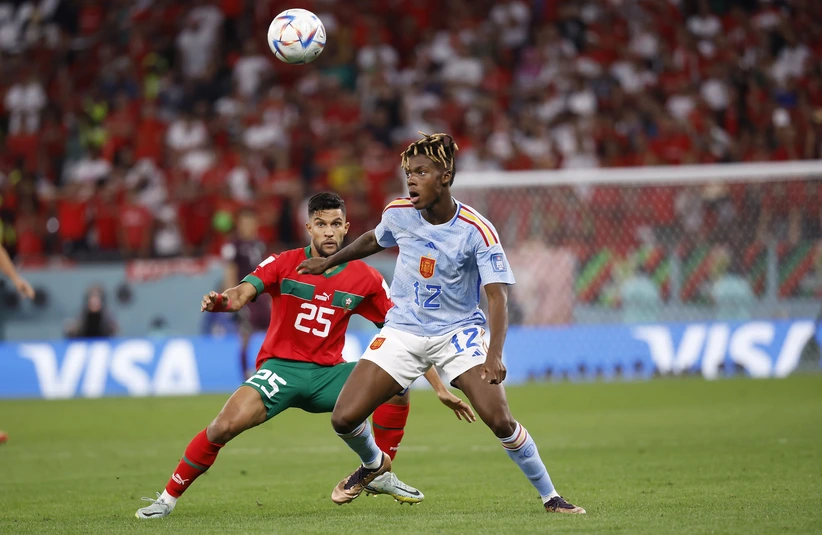
Spain and Athletic Club fans are waking up to worrying developments regarding one of their brightest attacking talents. Athletic Bilbao’s Nico Williams, the electric Spanish winger who lit up Euro 2024 and has become one of La Liga’s most feared wide players.
He’s now grappling with a persistent injury problem that threatens not only Athletic’s campaign but his participation in the upcoming 2026 FIFA World Cup in the United States and Mexico.
Recent reports indicate that Williams has not recovered from his pubalgia, and the situation may be deteriorating rather than improving. Pubalgia is a complex and stubborn sporting injury affecting the groin‑abdomen junction.
It saps explosiveness, slows down acceleration, and undermines confidence, precisely the traits that define Williams’ play. What was hoped to be a temporary setback has morphed into a lengthy ordeal, forcing the player, club, and medical staff to reconsider their entire approach to recovery.
Why Nico Williams’ Pubalgia Has Become A Serious Concern For Spain And Athletic Club
At 23 years old, Nico Williams should be in the peak years of his development. Instead, he finds himself battling an injury that refuses to fully heal. The issue first resurfaced in September 2025, when Williams pulled up during Spain’s World Cup qualifier against Turkey, suffering discomfort in his left adductor.
Initial reports described this as a moderate muscle injury, with an expected absence of a few weeks. However, that short‑term estimate turned out to be overly optimistic.
Williams struggled through the early months of the 2025‑26 season, managing sporadic appearances without ever looking fully fit. Despite flashes of quality when he returned, such as a match‑winning goal in November, he openly admitted that he wasn’t at 100 per cent.
While a muscle injury and pubalgia are related, the reason this specific condition is dangerous for elite footballers is its tendency to become chronic if improperly managed. The interplay between abdominal and adductor muscles means that repetitive high‑intensity actions, sprints, cuts, feints, re‑irritate the area. Williams’ style of play relies precisely on those elements.
The latest reports from Spanish media, including Marca, confirm what many feared: his pubalgia has not improved, and the discomfort appears to be getting worse. This is no longer a short interruption to his season but a persistent issue that now jeopardises his fitness in a World Cup year.
What Pubalgia Means For Williams’ Playing Style And Season Progress
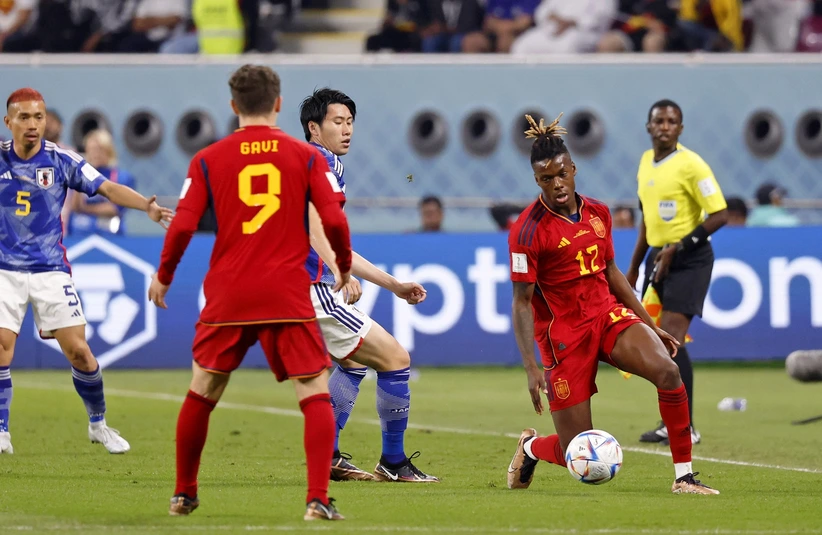
Pubalgia, sometimes called a sports hernia, isn’t a simple tear that heals with rest. It involves chronic strain at the junction of the lower abdomen and groin, weakening stabilising muscles and often causing pain under stress.
For a player like Williams, whose game revolves around pace, sharp directional changes, and explosive take‑ons. This condition directly targets his strengths. Even when he tries to play through the pain, pubalgia can reduce stride length, delay reactions and make defensive tracking a gamble.
Teams exploit this by letting him drive up the pitch before closing him down, knowing he can’t turn on a dime like before. From a club perspective, Ernesto Valverde and Athletic Bilbao have had to manage these fitness issues delicately.
Williams has been left out of crucial Champions League and league fixtures due to ongoing concerns over his readiness. There have also been instances where the Spain head coach, Luis de la Fuente chose to call up other injured but higher‑risk players like Lamine Yamal.
While leaving Williams out because his physical condition was considered more concerning. Even when Williams has featured, such as in the match where he scored against Oviedo. His total season output has been muted compared to what fans and pundits expected before the injury, four goals in 22 appearances with limited explosive threat.
Surgery Versus Conservative Treatment: The Tough Choice Ahead
The most dramatic twist in Williams’ injury saga is the growing consideration of surgery. Traditionally, pubalgia is managed with conservative treatment, rest, physiotherapy, targeted strengthening and gradual return to play.
Many athletes, including some of Williams’ Athletic teammates, have cleared similar complaints with this approach without going under the knife. However, public reports from Marca and other outlets now suggest that Williams and Athletic’s medical staff are evaluating surgical intervention as a possible path forward.
This is no small decision. Surgery, often involving hernia repair or reinforcing the groin area, carries a significant recovery timeline, typically at least two months but in some cases extending to three or four months.
For a player already behind schedule, that kind of absence could mean missing the rest of the club season and arriving at the World Cup only just fit, if he makes it at all. Yet, without surgery, the risk remains that pubalgia becomes a chronic setback that limits his explosiveness and availability indefinitely.
It’s a classic case of short‑term pain versus long‑term career impact. If the conservative route continues without results, surgery might be the only way to restore him back to his best. This dilemma pits Athletic’s hopes of domestic and European success against Williams’ personal future. Especially as he has emerged as a key component of Spain’s attack, linking superbly with fast players like Lamine Yamal.
World Cup Impact And Spain’s Tournament Prospects Without Williams
Spain arrive at the 2026 World Cup as one of the favourites. They have young talent coming through alongside established stars, and their tactical balance under De la Fuente has drawn praise from pundits.
Still, losing Nico Williams would leave a glaring void on the right flank, forcing tactical reshuffles and player replacements. Williams’ direct style, ability to stretch defences and create chances off the dribble makes him a nightmare for opposition fullbacks.
Without that unpredictability, Spain could become easier to defend,particularly against organized teams with disciplined wide defenders like Portugal, England or even Uruguay. There are alternative options, but few offer the exact blend of raw pace and attacking invention that Williams brings.
Should surgery delay his return until late spring or early summer, Spain’s coaching staff may have to plan without him entirely, reshuffling wide roles and possibly asking midfielders to push wider. This is a tactical headache that could affect Spain’s deep run ambitions.
Conclusion: A Season On A Knife Edge For Nico Williams
What began last summer as a supposedly manageable muscle issue has turned into the defining challenge of Nico Williams’ season and potentially his international future. The winger is widely admired for his high‑octane approach and explosive drives, but pubalgia has stolen that edge from him at a critical moment.
With the World Cup looming and recovery stalling, surgical intervention has gone from being a fringe consideration to a serious option. If Williams opts for surgery, he risks several months on the sidelines and possibly missing out on representing Spain on the biggest stage in football. If he continues to rehab conservatively and fails to heal fully, his effectiveness could remain limited even if he manages to play.
