Why Tom Brady Sees Lamine Yamal as the Key to Soccer’s U.S. Revolution

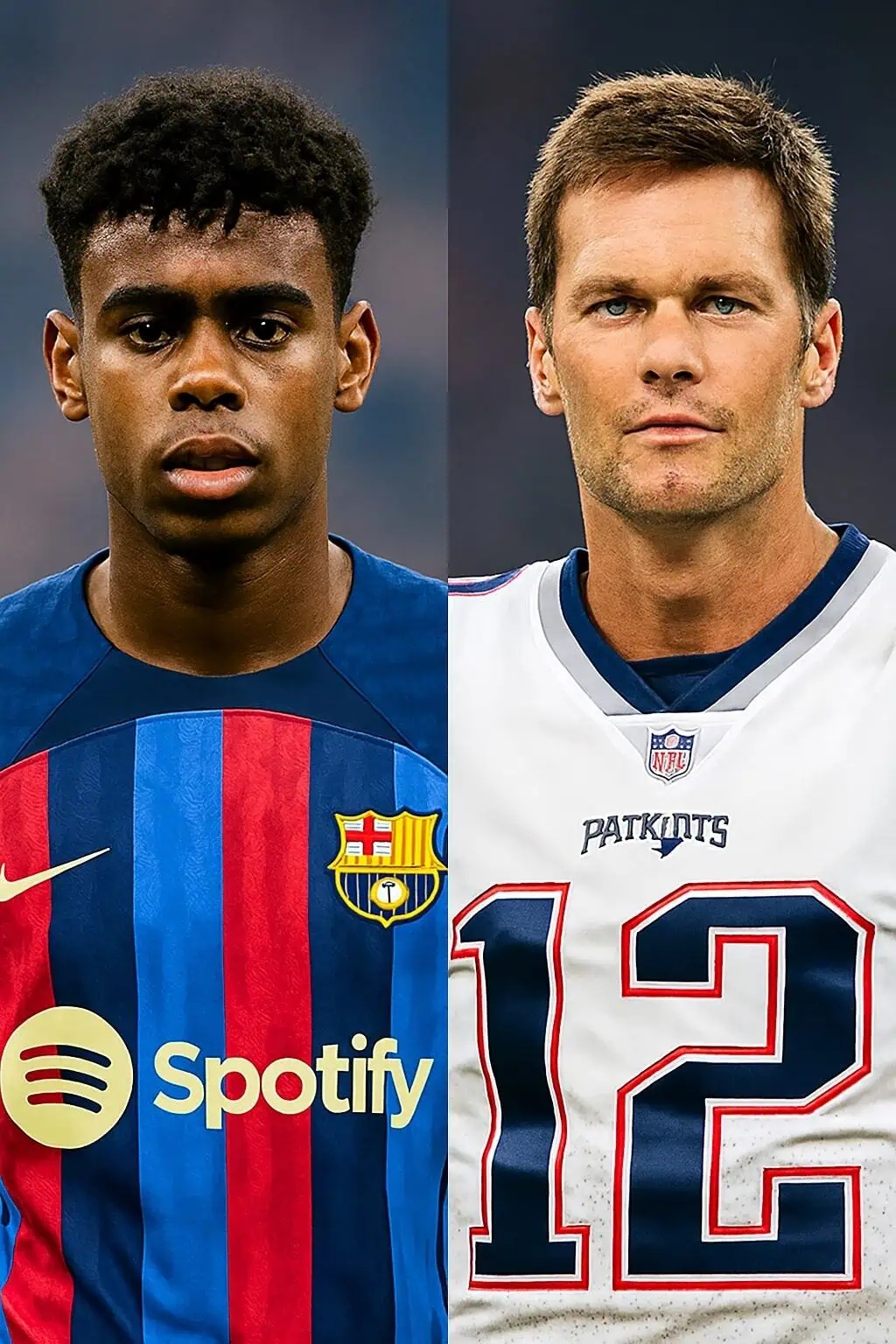
In a recent appearance on the Men in Blazers podcast, NFL legend and Birmingham City minority owner Tom Brady delivered a message that cuts straight to the heart of American soccer’s biggest dilemma, the lack of a cultural superstar. “The youth in America … we need a young phenom like Lamine Yamal or a young Lionel Messi to take over,” Brady said. “I believe there would be the most amazing kind of cultural revolution for soccer here in America.”
It’s not just about having a technically gifted player. What Brady is pushing for is a figure who can ignite imaginations across playgrounds, media outlets, sportswear brands, and living rooms. Someone who can be idolized the way young Americans obsess over NBA stars or NFL quarterbacks. With the U.S. set to co-host the 2026 World Cup alongside Canada and Mexico, the timing has never been more ripe. Without a homegrown prodigy leading the way, that moment could pass without the impact it deserves.
Who Is Lamine Yamal and Why He’s the Blueprint

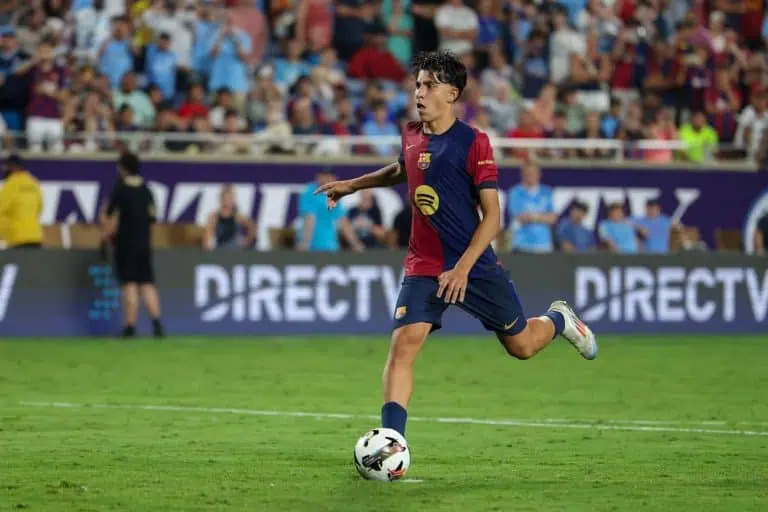
Lamine Yamal, born in 2007, is a generational talent who rose through the ranks of FC Barcelona’s famed La Masia academy and has already made history on multiple fronts. By the age of 16, he became the youngest starter in La Liga, the youngest scorer in an El Clásico, and was recently awarded the UEFA Euro 2024 Young Player of the Tournament. He’s not just a young star, he’s a symbol of what happens when elite training, infrastructure, and a footballing culture converge to support raw talent.
Yamal’s game is fearless. He cuts inside with the confidence of a veteran, delivers crosses with maturity, and carries a natural flair reminiscent of early Lionel Messi. He’s the kind of player who forces defenders to hesitate and fans to lean forward. While comparing any young player to Messi is always a risk, Yamal’s impact, both technically and emotionally is exactly the sort of effect Brady believes a U.S. player must have to revolutionize soccer here.
What makes Yamal’s rise so compelling is that he was given the opportunity and environment to thrive. That’s exactly what is missing in the current American system, and Brady knows it.
The Cultural Vacuum Soccer Needs to Fill in America
Brady wasn’t simply calling for a technically skilled player, he was identifying a missing cultural element. In the U.S., sports like basketball, football, and baseball dominate because of the stories built around individual athletes. LeBron James wasn’t just a talent, he was a high school legend whose games were nationally televised before he turned pro. Patrick Mahomes isn’t just a quarterback, he’s the face of a movement, a brand, a lifestyle.
Soccer doesn’t have that in America, not yet. Despite millions of kids playing the sport in their early years, very few grow up with dreams of becoming the next big soccer icon. That’s because there’s no face to rally around. There’s no one breaking through from the streets of Atlanta or the suburbs of Chicago who can match the flair and fire of a Lamine Yamal. That absence makes the sport feel foreign, even when its global popularity is at an all-time high.
Brady also subtly criticized the pay-to-play model that has plagued U.S. soccer development for decades. While youth participation is high, the barrier to elite training and exposure is often financial. That means countless talented players never get the chance to break through. So while the pipeline exists, it’s broken at key junctures. As Brady noted, until a truly elite, charismatic talent emerges from the American system, the cultural spark simply won’t ignite.
How a Lamine Yamal-Type Star Could Transform Soccer in the U.S.
A homegrown phenom in the mold of Lamine Yamal could be a turning point in American sports culture. If such a player were to emerge just before the 2026 World Cup, hosted in part by the United States, it could be a once-in-a-generation opportunity to create national obsession around soccer.
Think about the 1999 U.S. Women’s National Team. Brandi Chastain’s iconic celebration and that team’s heroics changed the course of women’s soccer forever in America. Now imagine that level of cultural explosion tied to a male prodigy delivering match-winning performances in front of home crowds during a World Cup. Ratings would skyrocket, merchandise would fly off shelves, and kids in every corner of the country would start dreaming in cleats rather than sneakers.
The presence of a breakout star wouldn’t just boost the men’s national team, it would lift Major League Soccer, grassroots programs, and media coverage. With celebrities like Brady and Beckham already involved in club ownership and promotion, the platform exists. What’s missing is the face. Someone with the audacity to challenge defenders, the personality to go viral, and the humility to carry the weight of a nation’s hope.
This kind of transformation won’t happen overnight. The infrastructure must support it. Youth soccer needs reform, not just in affordability, but in accessibility to high-level coaching and competition. Scouts and development academies must focus on diverse communities, most importantly, sports media must learn how to tell these players’ stories while they’re still rising, not just once they’ve “made it.”
Final Thoughts
Tom Brady isn’t known for stepping into conversations without a purpose. His comments about American soccer’s need for a Lamine Yamal type player carry weight because they come from someone who understands what it takes to build cultural momentum. In the NFL, Brady was that icon. He understands that greatness isn’t just about talent, it’s about timing, visibility, and capturing a nation’s imagination.
If American soccer wants to move from a niche passion to a mainstream phenomenon, it’s going to take more than infrastructure, investment, or hosting a World Cup. It’s going to take a story. A face. A young talent with the aura of Messi and the swagger of Yamal. Only then can soccer truly explode in the United States.