
Why Red Bull Racing Failed To Make It’s Mark in NASCAR

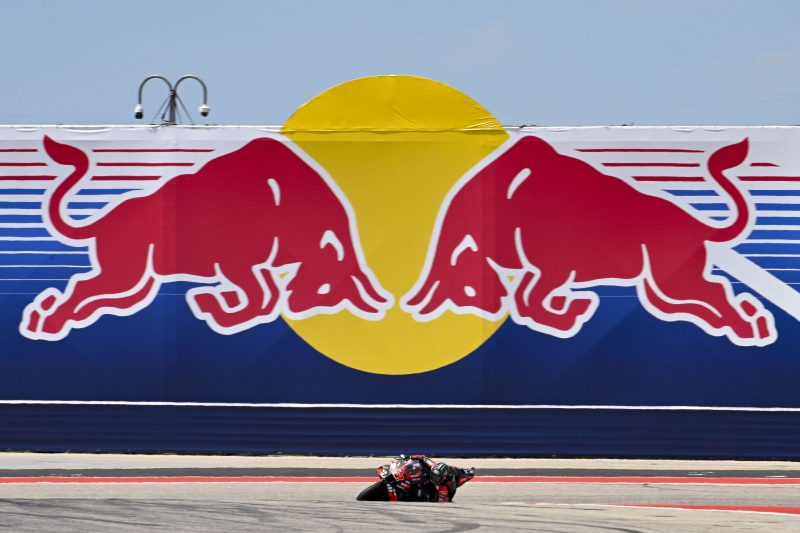
Red Bull Racing has made its mark on most motorsports. Putting their brand everywhere and winning a ton of races and championships in F1, V8 Supercars, Rally, etc. Well, everywhere except NASCAR. They’re trying to fix that by sponsoring Zilisch and SVG, but it wouldn’t be their first attempt, however.
Red Bull Racing’s Failed Targets
The beginnings of Red Bull Racing in NASCAR were rough to say the least. While all of 2007 was tough for Toyota in its debut year in the sport. But the No.83 finished thirty-eight, and the No.84 finished forty-third in owners’ points were not a part of their plan. And we know that because of some of the big names they were linked to before the 2007 season started.
Red Bull Racing in all its forms has never lacked in ambition, and NASCAR was no exception. Being linked to drivers like Kevin Harvick, Juan Pablo Montoya, Elliott Sadler, and even crew chief Chad Knaus.
History will tell you, however, that Red Bull Racing did not get a single one of these names. Brian Vickers was a notable pull, stealing a promising Hendrick development driver and ex Busch Series champion. But compare this to the F1 team, which started at the same time, and you’ll see why things went south so fast.
Red Bull F1 Did It, Why Couldn’t NASCAR?
Red Bull Racing in F1 secured the signatures of the big names it wanted. Signing Andrew Newey, the most fantastic car designer in F1 history, and David Coulthard, a driver who spent years on McLaren and had 10+ career wins. Building around all that talent and experience, Red Bull Racing went from midpack fodder to competing for a championship in only four years.
Harvick and Knaus would’ve been the ideal combo that would’ve turned Red Bull Racing into champions in a similar timeframe. But without such giant names to help them get up to speed with NASCAR, they would have left them floundering.
Not to mention it didn’t help that Toyota was struggling to understand the COT and then finding that understanding through Joe Gibbs Racing, which decided to pair up the Japanese car company the next year, in 2008. Making Red Bull Racing and the rest of the original Toyota teams the second priority.
So all of them struggled even past 2007. But Red Bull Racing was the first team to land back on its feet. Making the chase in 2009 with Brian Vickers, with the team’s first ever win at Michigan, and even earned the most poles out of any driver that season.
Were Bad Luck And Poor Drivers To Blame?
Before Vickers achieved his major success, though, Red Bull Racing had already cut its other original full-time driver, AJ Allmendinger. A former rising star in the American open wheel scene, he had been convinced by the energy drink manufacturer to switch from open wheel to stock cars.
Now that’s a big switch. If you’ve looked at both types of cars before, then you can imagine that driving them both is a different challenge. But that’s something Red Bull Racing forgot, as they gave AJ no time to prep for the top tier of stock car racing.
As the only NASCAR experience he had before going full-time was three truck series races with BDR. And two Cup Series races with Red Bull Racing in 2006, when they dipped their toes into the Cup Series part-time to start.
So it wasn’t a shock to anyone when, after 2008, AJ was fired from Red Bull Racing, as almost all teams wouldn’t be happy with a driver who only had one top ten in their two years with them. But it wasn’t the end of AJ Allmendinger in NASCAR. he’s still in the sport today, now a four-time Cup Series winner and has even won at ovals in Xfinity, including winning the greatest finish in Xfinity Series history at Bristol.
Seeing him develop into a very good driver and a good road-course driver makes it clear that if Red Bull Racing had given him two to three years in the developmental series by 2009 or 2010, he could’ve been a great driver for the team.
Now, driver development and developing younger talent in sports is a huge thing for the Red Bull brand. Both of Red Bull Racing’s F1 world champions, Vettel and Verstappen, were developed by Red Bull. Plus Red Bull’s many soccer teams, they’ve developed world-class players like Haaland and Szoboszlai.
So, of course, Red Bull Racing was going to replace Allmendinger with another driver they developed. So did they learn from their mistake? No, they replaced Allmendinger with Scott Speed, who, before going full-time in the Cup Series in 2009, and like Allmendinger was a open wheel driver before changing to NASCAR. Being a ex Red Bull Racing dev driver for F1.
The only stock car experience he had was a year full-time in ARCA, NASCAR’s fourth tier, and part-time in the truck series, NASCAR’s third tier.In his two years with the team, his highest finishes were a pair of tenth places, and he failed to qualify for three races. Scott Speed, in his two years with the team, had his highest-ever finishes, a pair of tenth places, and he failed to qualify for three races.
Being fired after 2010. Now, in 2009, this wasn’t that important after Brian Vickers’ successful 2009 season showed the team’s progress, and it looks like he’s putting together the talent he flashed when he won the 2003 Busch Series title and during his time at Hendrick. But before he could live up to his full potential, his body betrayed him.
Brian Vickers’ Fall From Grace
Early in 2010, Brian Vickers announced he would be out for the rest of the season after suffering blood clots. This was the worst time for Vickers to miss a season. As 2010 was the year NASCAR transitioned from the winged COTs to the remodeled COTs. And with Vickers missing out on a crucial year of development, he struggled hard in his return to the sport.
He only got three top tens and two top fives in the final twenty races of 2011. Getting nowhere near the Chase berth he earned in 2009. And one of those final twenty is one of the most infamous single-race performances any driver has ever had.
He caused five cautions in one race at Martinsville and even feuded with Matt Kenseth and Jamie McMurray in the same race. Something that to this day clouds his reputation with fans. He did win one more Cup Series race in 2013 at New Hampshire with MWR. But his blood clots would quickly end his career afterwards, not racing since 2016.
Why Red Bull Racing Departed
Now, despite Vickers and his immense struggles, 2011 was the second-best season in Red Bull Racing’s NASCAR history. To replace Scott Speed, they signed Kasey Kahne, who was a Cup veteran who had made the chase and won many races with Evernham, and even went on to win Red Bull Racing’s second and last ever race in the penultimate race at Phoenix.
But even this came with a problem, as Kasey Kahne wasn’t a Red Bull Racing driver but a rental for Hendrick to replace Mark Martin, who still had a year left in the Hendrick five. But it was a sign of hope that showed this team can win with quality drives behind the wheel. It looked like they were going to get with the team, with rumors linking them to 2004 Cup Series champion Kurt Busch and multiple-time Cup Series winner Clint Bowyer.
This made it even more shocking when they announced they were shutting down and selling their assets to BK Racing. Why the team decided to pull the plug when they did is a matter of debate. But to me, it’s because in sports like V8 Supercars, Rally, and F1, they were winning championships, but in NASCAR, they won two races in five years.
Final Thoughts
Their brand is built on being the best, and the NASCAR team wasn’t cutting it. Also, why are they taking a hands-off approach to NASCAR now and instead sponsoring two of the most dominant and talked-about drivers in SVG and Zilisch? Thanks a bunch for reading!
