
McLaren’s Breakthrough: Inside Their Fight To Tame The Mercedes Engine And Wheelbase Package

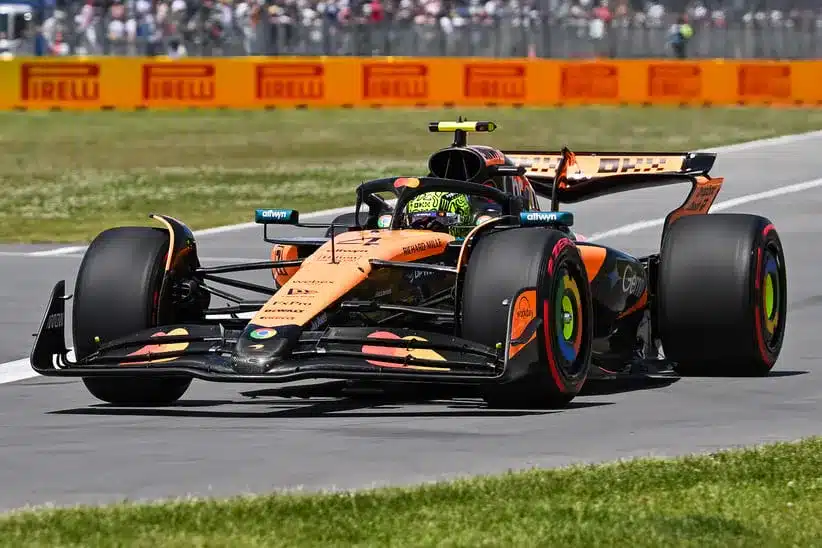
There are few gut punches in professional motorsports as brutal as a double DNS. You spend months grinding in the shop, mechanics wrench until their knuckles split, engineers stare at telemetry until the numbers blur, and the entire operation hauls itself across the world only for both cars to die before the race even begins.
That was McLaren’s reality in Shanghai. Two unrelated electrical failures struck at the worst possible moment, leaving the team stranded on pit road while everyone else thundered into Turn 1. The emotional swing from anticipation to devastation was immediate, and the silence in the garage afterward said more than any debrief ever could.
Yet beneath that disappointment, the team knows the story of their weekend is far more complex than a pair of dead cars. On paper, it was a disaster. In the garage, it felt even worse. But beneath the frustration and heartbreak, something important was hiding in plain sight.
McLaren is finally finding real speed. The team’s internal data, driver feedback, and qualifying pace all point to a program that is beginning to click. The cruel irony is that the public never saw the progress because the cars never made it to the grid.
Wrestling With Raw Horsepower
Switching engine suppliers is never as simple as bolting in a new power unit and firing it up. Modern racing engines are temperamental, high‑strung machines. They demand precise cooling, tight aerodynamic packaging, and engine mapping that borders on sorcery to keep the rear tires from lighting up under throttle.
Every manufacturer has its own quirks, and learning those quirks takes time, patience, and a willingness to tear apart assumptions that worked with previous engines. McLaren has spent the early part of the season doing exactly that, relearning how to build a car around a completely different heartbeat.
But in Shanghai, during Saturday qualifying, it became clear that McLaren has taken a major step forward in understanding how to extract performance from the Mercedes unit. The improvement wasn’t theoretical. It showed up on the timing sheets.
Down in Melbourne, the leading McLaren qualified 0.862 seconds off the factory Mercedes pole time. In high‑downforce racing, that’s an eternity. It’s the difference between fighting for points and getting swallowed by the field on a long green‑flag run.
In Shanghai, that gap shrank to 0.486 seconds, a massive leap in such a short span. That kind of gain doesn’t happen by accident. It happens when every department, from aero to powertrain to simulation, starts rowing in the same direction.
Team principal Andrea Stella shed light on the effort, explaining that the crew has finally begun to understand how the power unit behaves under heavy load and how to manage its complex power delivery.
He emphasized that the Mercedes engine rewards precision but punishes even minor setup miscalculations. Stella’s comments made it clear that the team is still learning, but they’re learning fast, and the results are beginning to show.
The Bold Wheelbase Gamble
Of course, horsepower is only half the battle. Straight‑line speed means nothing if the car refuses to rotate through the center of the corner. That’s where McLaren’s wheelbase philosophy comes into play. Choosing a wheelbase is one of the most consequential decisions a team can make because it dictates the car’s personality long before it ever hits the track.
It’s a commitment that affects suspension geometry, aero balance, and even how the car behaves on worn tires. A shorter wheelbase gives razor‑sharp rotation but can turn the car into a handful at high speed.
A longer wheelbase offers stability, but risks understeer in tight corners. McLaren’s engineers have committed to a specific aerodynamic and mechanical footprint this season, one that pairs their chosen wheelbase with the aggressive torque curve of the Mercedes engine.
They’re building a car designed to stay consistent over long stints, not just flash speed over a single lap. That philosophy reflects a team thinking about racecraft, tire life, and driver confidence, not just raw numbers. This is where McLaren’s approach is starting to pay off.
The car is no longer snapping unpredictably or washing out mid‑corner. It’s becoming something drivers can lean on, especially when the race settles into a rhythm. A predictable chassis is a fast chassis, and McLaren is finally giving its drivers a platform they can trust.
What This Means
So what does all this progress actually mean for the rest of the season? It means Mercedes needs to start checking their mirrors. McLaren is no longer wandering in the dark trying to understand their own machinery. They’re beginning to show the kind of consistency that separates midfield teams from genuine contenders.
The qualifying gains alone suggest that the team’s development direction is finally aligned with the demands of the new power unit. By cutting the qualifying deficit in half, they’ve shown that their simulation tools are finally aligning with real‑world performance.
The electrical failures in Shanghai were painful, but they were reliability issues. Not pace issues. And in motorsports, it’s always easier to make a fast car reliable than to make a reliable car fast. The papaya‑orange crew now has a baseline setup that works. They understand how to extract power from the engine.
They understand how their wheelbase interacts with tire wear. And they understand how to tune the car for both short‑run aggression and long‑run stability. Once the electrical issues are sorted, this team has the potential to be a weekly podium threat. The pieces are there. They just need to stay bolted together long enough to show it.
What’s Next
Motorsports is unforgiving. It drains budgets, tests patience, and exposes every weakness. Leaving China without completing a single competitive lap is the kind of setback that could break a fragile team. But McLaren isn’t fragile. They’re stubborn, gritty, and relentless. Instead of sulking over a DNS, they’re looking at the qualifying data and seeing how close they are to a breakthrough.
They’ve begun to tame the Mercedes power unit. They’ve committed to a wheelbase philosophy that’s showing real promise. And they’ve proven that their development path is finally pointing in the right direction. The speed is there. The foundation is there. Now it’s about execution when the lights go out.
