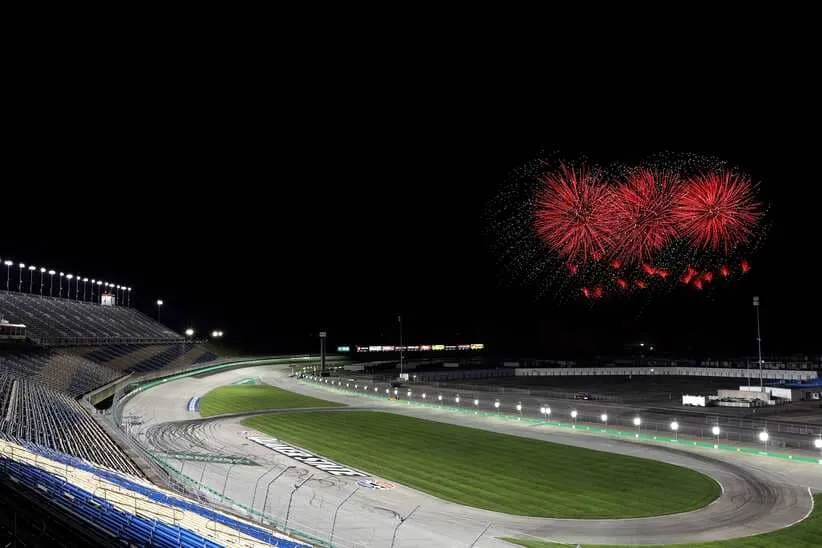
The Silence at Kentucky Speedway: Gallatin County Weighs In On Shocking Possible Future Without Racing

If you close your eyes and stand near the fence line, you can almost still hear it. The echo of 40 stock cars screaming into Turn 1, the smell of spent Sunoco fuel hanging heavy in the humid summer air, and the roar of thousands of fans who used to pack the grandstands.
But open your eyes, and the reality of Kentucky Speedway today is a much quieter, more somber picture. The engines have been cold for years, and now the community faces the hard truth that they might never fire up again. Gallatin County is currently standing at a massive crossroads.
The venue, once a crown jewel of local economic pride, has sat largely vacant since NASCAR pulled its dates. Now, local officials and residents are looking at blueprints that don’t include a start and finish line. The conversation has shifted from increasing horsepower to expanding housing, manufacturing, and small-business footprints.
A Crossroads for Kentucky Speedway
It is no secret that a 1,000-acre facility sitting dormant is a drain on a community. It’s a massive footprint of concrete and steel that demands a purpose. This week, the Northern Kentucky Area Development District hosted a pivotal meeting to solicit input from the people who live in the shadow of the grandstands. The mood wasn’t just about zoning; it was about identity.
Ryan Morris, the Judge-Executive for Gallatin County, put it bluntly during the discussions. “We’ve got one chance to get it right,” he said. And he is absolutely correct. The decisions made in these planning and zoning meetings will define the landscape of Sparta and Gallatin County for the next fifty years.
The county is actively looking to rezone the property. The proposals on the table are a far cry from the high-octane history of the track. We are talking about mixed-use development, a blend of manufacturing jobs, residential housing, and small commercial enterprises.
From Roaring Engines to Silent Acres
For a racing purist, seeing a track lose its date is like losing an old friend. But seeing it turned into a parking lot is even harder. In 2021, the infield that once hosted victory lane celebrations was used to store thousands of Ford trucks during the global microchip shortage. It was a jarring visual: the temple of speed turned into a static storage unit.
More recently, the lack of activity has invited trouble. Last summer, over 30 individuals were charged after breaking onto the property to film videos, treating the private facility like a public domain. It is a symptom of a larger problem: when a facility this large loses its primary function, it becomes a target.
Morris emphasized the urgency of the situation, noting the goal is to get “Gallatin County on the map” by leveraging the massive infrastructure already in place. The roads, the utilities, the space, it is all there, ready for a tenant. But finding a buyer who needs a complex of that magnitude is the current hurdle.
The Community Perspective on Kentucky Speedway
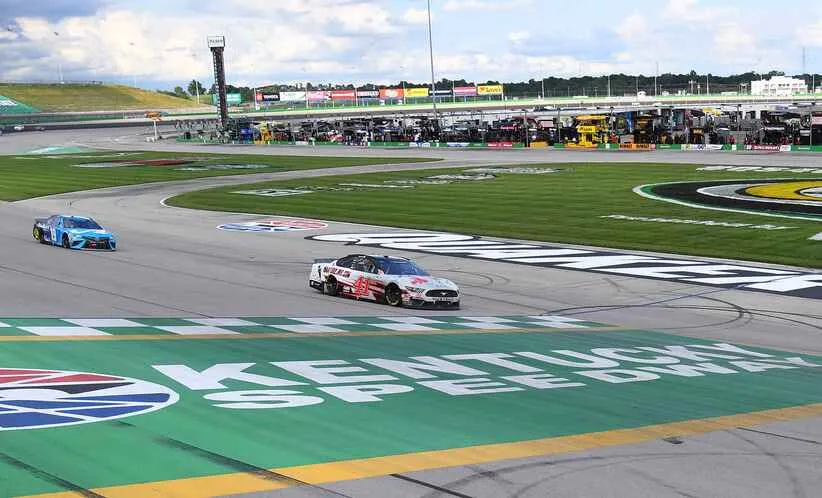
The local residents are caught between nostalgia and economic necessity. At the recent meeting, the room was standing-room only, a testament to how much this site matters to the locals. Mike Warren, a neighbor to the track, voiced a sentiment that likely resonates with many race fans.
“I was hoping they’d bring back the Speedway, myself,” Warren admitted. “I think they work on it, they probably could.”However, Warren also acknowledged the reality of the situation. If racing isn’t coming back, jobs must take precedence.
“Small industrial, maybe even a trucking company or something, you know. Create jobs,” he added. That is the tug-of-war happening in Gallatin County. There is a deep-seated love for the sport and the track’s history, but there is a greater need for economic vitality. A vacant track doesn’t pay the bills or put food on the table for local families.
The Reality of Revitalizing a Ghost Track
While fans hold onto hope, the officials are looking at the ledger. The county says the current ownership could be interested in selling, but they need the right buyer. They aren’t looking for a specific tenant yet. They are essentially putting up a massive “Open for Business” sign to the manufacturing and industrial world.
Future updates on the fate of the Kentucky Speedway will be trickling out during the monthly Planning and Zoning Commission meetings. For now, the asphalt remains quiet, a monument to speed that is slowly being steered toward a future of utility and industry.
What This Means for Racing Fans and Locals
The rezoning discussions signal a definitive shift away from the idea of NASCAR returning to the Kentucky Speedway. For the sport, it is likely the final chapter for a facility that had a tumultuous but passionate run. For the locals in Gallatin County, this transition represents a vital economic lifeline.
While the roar of the engines may be gone for good, the transformation of this 1,000-acre site into a manufacturing or housing hub offers a different kind of stability, one that doesn’t rely on a once-a-year event to sustain the local economy. It is the end of an era for race fans, but potentially the beginning of a sustainable future for Sparta’s residents.