
How Gustafson’s Short‑Pit Decision Turns Martinsville In Hendrick’s Favor

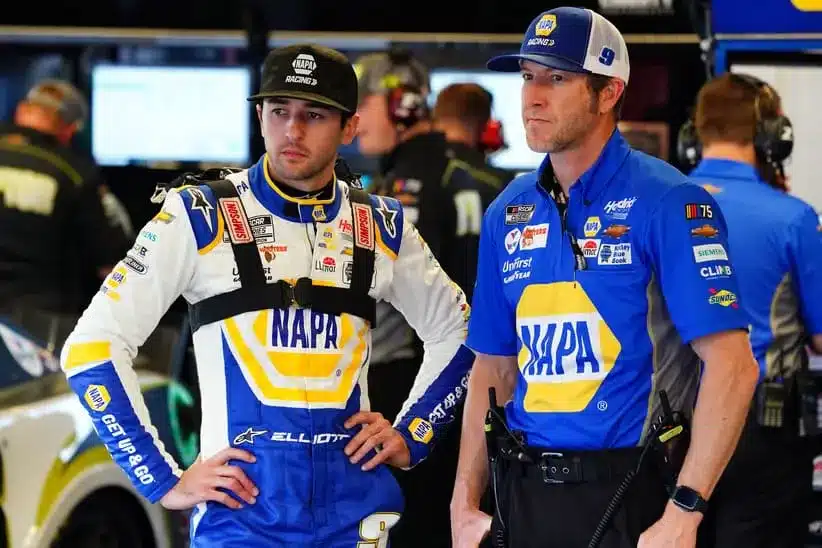
Martinsville Speedway exposes every strength and weakness a team brings to the track. The tight half‑mile demands precision, discipline, and clean execution from the opening lap. When Chase Elliott and the No. 9 Hendrick Motorsports Chevrolet claimed the win, the result reflected more than raw speed.
The race turned on strategy, timing, and a critical decision made on the pit box. Alan Gustafson read the conditions, controlled the variables, and put Elliott in position to dictate the finish long before the checkered flag.
Why Martinsville Magnifies Every Decision
Martinsville is a 0.526‑mile oval with long straightaways and tight, flat corners. Drivers spend the afternoon managing brake heat, tire wear, and traffic. Rotor temperatures routinely exceed 1,000 degrees. Tire falloff is immediate. Contact is constant. The only way to advance is to out‑brake someone or move them out of the groove.
Elliott entered the weekend with five top‑five finishes at the track and more than 500 laps led in his Martinsville career. The No. 9 team unloaded with speed, but speed alone doesn’t win here. The race rewards discipline, clean execution, and the ability to stay ahead of trouble. That’s where Gustafson’s experience mattered most.
The Short‑Pit Call That Shifted Control
As the final stage unfolded, pit road turned into a chessboard. Crew chiefs were calculating tire falloff, fuel windows, and the likelihood of a late caution. Fresh tires were worth nearly four‑tenths of a second per lap in the opening laps of a run. That advantage fades quickly, but the early burst can flip the running order if timed correctly.
Short‑pitting and coming to pit road before the leaders is one of the most powerful tools in a crew chief’s arsenal. It can gain a driver several seconds over a full cycle. But it carries a harsh penalty if mistimed. A caution during the cycle traps the car a lap down, and at Martinsville, recovering from that is nearly impossible.
The Lap-Time Strategy That Paid Off
Gustafson studied the lap times, the tire wear, and the rhythm of the race. He brought Elliott to pit road early, trusting his crew to deliver a clean stop and trusting Elliott to maximize the out‑lap. The No. 9 team executed a 10.8‑second four‑tire stop, one of their quickest of the afternoon.
Elliott returned to the track with clean air and fresh Goodyears. The lap times validated the call. Elliott immediately ran laps in the low‑20‑second range, nearly four‑tenths faster than the leaders on worn tires. By the time the field completed its cycle, Elliott had taken control of the race.
Why Short Pitting Was The Safer Option
Short‑pitting looks aggressive on paper, but Gustafson viewed it as the most controlled path forward. Staying out on old tires would have left Chase Elliott vulnerable to drivers behind him who had nothing to lose. One misjudged dive into Turn 3 could have undone an entire afternoon of work. A late restart could have buried the No. 9 in traffic.
Short‑pitting removed those variables. It gave Elliott a clean racetrack, predictable lap times, and the ability to dictate the pace. Gustafson also nailed the fuel window, ensuring the team had enough margin to push without concern. It wasn’t a gamble. It was a calculated move based on data, pace, and track position.
Driver And Crew Chief In Complete Alignment
Wins like this don’t happen without trust. Elliott and Gustafson have been paired since 2016. They’ve won 19 races together, including a championship. They’ve weathered slumps, injuries, and high‑pressure moments. That history creates a level of communication that shows up on days like this.
When Gustafson called Elliott to pit road, Elliott didn’t hesitate. He hit pit road at the exact speed, stopped on the marks, and let the crew handle the rest. Their radio communication was crisp. Their execution was clean. The strategy only works when both sides commit fully, and the No. 9 team did exactly that.
What The Win Signals For The No. 9 Team
This Martinsville victory is more than a trophy. It’s a statement. It shows that the No. 9 team still has the strategic sharpness and raw pace to dictate races rather than react to them. For Hendrick Motorsports, it adds another grandfather clock to a collection that already includes wins from Jeff Gordon, Jimmie Johnson, and Kyle Larson.
For the rest of the field, it’s a reminder of what this group looks like when everything aligns. Gustafson reads the race as well as anyone on pit road. Elliott remains one of the cleanest, most efficient short‑track drivers in the series. When they have a car capable of running up front, they don’t need luck. They can simply out‑execute the competition.
What’s Next
NASCAR races are often decided by decisions made in seconds. At Martinsville, those decisions carry even more weight. The No. 9 team handled the moment with precision. Gustafson made the call. Elliott delivered the laps.
The pit crew executed under pressure. Together, they turned a strategic decision into a commanding win. Smart planning. Clean execution. A driver and crew chief operating in complete sync. That combination is why the No. 9 team remains a championship threat every time they hit the grid.
