
The Future of Greenville‑Pickens Hangs On A Choice That Can’t Be Undone

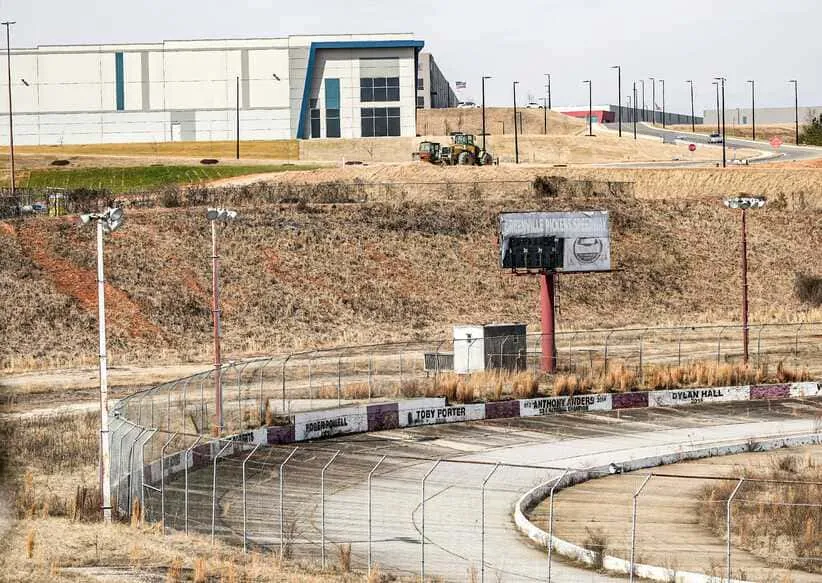
PICKENS COUNTY, S.C. — The long‑running debate over the future of Greenville‑Pickens Speedway shifted again Monday night when the Pickens County Planning Commission rejected a major development proposal tied to the historic racing property. Commissioners reviewed an updated Phase 5 application calling for seven warehouse buildings totaling more than 500,000 square feet of industrial space.
The hope was to support a revised traffic impact study aimed at addressing congestion concerns along U.S. 123 and nearby feeder roads. A steady turnout of residents underscored how closely the community continues to follow the property’s fate, and the discussion made clear that the divide between industrial expansion and preservation remains firmly in place.
After deliberation, the commission ruled the proposal did not meet the standards outlined in the county’s comprehensive land‑use plan. The final vote was 6–1 against approval, halting the application and signaling that similar projects may face steep challenges under current zoning expectations.
Commissioners cited infrastructure strain, long‑term compatibility issues, and conflicts with the county’s growth strategy as reasons for the denial. The decision also reinforced that any future proposal will need to address transportation impacts far more thoroughly than previous submissions. Monday’s vote resets the development timeline and leaves the property’s direction unresolved.
Preservation Efforts Gain Momentum In County Response
The rejection came just days after county officials agreed to form an ad hoc committee to evaluate preservation options for the speedway and surrounding land. That move followed a separate pause in demolition discussions, which stalled when developers failed to provide a required two‑mile traffic study projecting conditions over a 20‑year horizon.
County leaders requested the expanded analysis to better understand long‑term impacts on intersections, school zones, and commercial corridors, and without it, the earlier review could not proceed. Preservation advocates have long argued that the track’s cultural and historical significance warrants deeper consideration before any large‑scale redevelopment moves forward.
Their position gained traction as Pickens County officials acknowledged the need to balance economic growth with the region’s heritage. The new committee will examine whether portions of the facility can be restored, repurposed, or incorporated into a mixed‑use plan. It gives preservation a real foothold in the process.
The shift in tone shows that preservation is no longer a fringe argument but a central part of the county’s planning conversation. It also signals that the speedway’s legacy will carry real weight in whatever comes next. It’s clear the track’s history is now shaping the decisions around its future.
Speedway’s Deep Local History
Greenville‑Pickens Speedway carries more than eight decades of history. Built in the 1940s, the track became a fixture in the Southeast’s racing scene and hosted NASCAR Cup Series events from 1951 through 1971, including the first nationally televised NASCAR race in 1971.
It later became a regular stop for regional series such as the CARS Tour and served as the long‑time home of the Upper South Carolina State Fair beginning in 1964. For generations of fans, the facility functioned as both a racing venue and a community gathering point, creating a legacy that extends well beyond motorsports.
The track officially ceased operations in 2022, but its closure did little to quiet debate about its future. Supporters continue to highlight its role in early NASCAR history and its importance to the region’s identity. Many locals still see the speedway as a landmark worth fighting for, even if its racing days are behind it.
Even dormant, the property remains a landmark for fans who grew up attending weekly shows, touring‑series events, and fairground activities. That emotional connection has become a driving force behind calls to preserve at least part of the site. The speedway’s history is now a central factor in the county’s decision‑making process.
Vote Extends Uncertainty Over Site’s Direction
Monday’s vote adds another layer of uncertainty to an already complicated situation. Developers can revise and resubmit their plans, but the 6–1 rejection suggests that large‑scale industrial projects may struggle to gain traction without significant changes.
The decision also slows any immediate redevelopment timeline tied to warehouse construction, as no new submission date has been announced. For now, the property remains in limbo while both sides reassess their next steps. Meanwhile, the newly formed preservation committee is preparing to begin its review of potential uses for the remaining structures.
Their work will include evaluating whether portions of the track can be saved, restored, or incorporated into a broader redevelopment plan. The committee’s findings could shape the county’s long‑term vision for the site and influence how future proposals are received.
The next several months may determine whether the property leans toward preservation, redevelopment, or a hybrid approach. The uncertainty underscores how pivotal this moment is for one of South Carolina’s most recognizable short‑track venues.
What This Means
For now, the Greenville‑Pickens property sits at the center of a widening divide between economic redevelopment and historical preservation. Monday’s vote did not settle the issue, but it did clarify that the county expects any future proposal to align more closely with its long‑term land‑use strategy.
Preservation advocates gained momentum with the formation of the new committee, while developers face renewed pressure to address infrastructure and compatibility concerns. The situation remains fluid, and both sides are preparing for additional public meetings and reviews.
What happens next will likely determine the long‑term identity of the site and how the community chooses to balance growth with heritage. The decisions made in the coming months will set the boundaries for what’s possible. They’ll also reveal whether compromise is truly on the table or just an idea people talk about when the pressure rises.
The stakes feel higher now because each step forward carries consequences that will shape how future generations remember the speedway and the choices made around it. Every option on the table comes with trade‑offs that won’t be easy to unwind later. And once a direction is chosen, it will define the site far longer than any single vote or meeting.
What’s Next
Monday’s decision does not end the conversation around Greenville‑Pickens Speedway, but it does shift the direction of the debate. With the development plan rejected and preservation efforts gaining structure, the future of the historic track now depends on how both sides adjust their next moves.
The property remains one of the most recognizable landmarks in Pickens County, and its next chapter will be shaped by decisions made in the coming months. The path forward is still uncertain, but the stakes surrounding the site have never been clearer.
For More Great Content
Stay plugged in with more race analyses, features, and behind‑the‑garage storytelling. Follow Sarah on Facebook, LinkedIn, and X at Sarah Talker, where the conversation keeps rolling long after the checkered flag drops.
