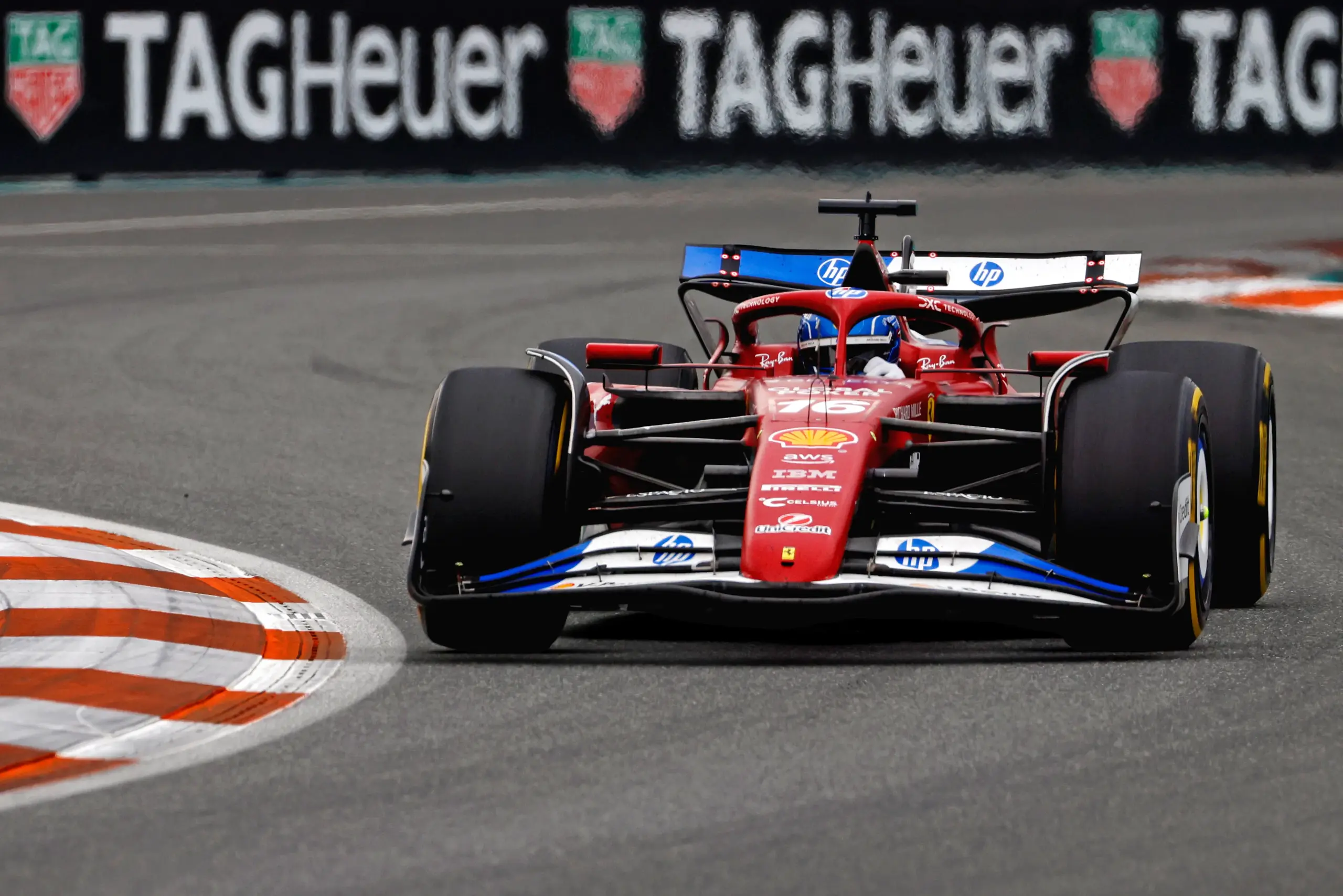
Ferrari’s Project 678 Remains Untouched by Abu Dhabi Experiments

Fred Vasseur has made one thing abundantly clear: the experiments run by Charles Leclerc at the 2025 Abu Dhabi Grand Prix were just that, experiments for the moment, not a blueprint for the future.
The Ferrari team principal was quick to shut down any notion that Leclerc’s setup choices at the season finale would bleed into the development of Project 678, the internal code name for Ferrari’s highly anticipated 2026 challenger.
It’s easy to understand why the question was asked. When a driver of Leclerc’s caliber tinkers with a setup and finds a spark, even a small one, observers naturally wonder if that data will reshape the team’s long-term philosophy.
But Vasseur offered a sobering reality check. With the sport heading into a massive regulation overhaul in 2026, looking backward at 2025 solutions is a fool’s errand. The slate isn’t just being wiped clean. The entire chalkboard is being replaced.
Project 678: A New Beast for a New Era
The 2026 season represents a seismic shift for Formula 1. We are talking about chassis and engine regulations that are being completely rewritten. The sport is embracing 50 percent electrification, sustainable fuels, and active aerodynamics. Vasseur noted that “half the car” will be completely different under these new rules.
This means Project 678 isn’t an evolution of the current machinery; it is a revolution. The specific handling characteristics, the tire wear issues, and the aerodynamic sensitivities that defined the 2025 campaign will likely vanish, only to be replaced by an entirely new set of engineering headaches.
“The philosophy of the car will be completely different,” Vasseur explained to the media. “The issue that we have all [2025] won’t be there next year, but we’ll have other issues for sure.”That is the brutal nature of motorsports.
You spend years solving one puzzle, only for the FIA to dump a completely different box of pieces on your table. For Ferrari, the gap to McLaren, a staggering 435 points in the constructors’ standings, is a painful reminder of how crucial it is to get this new puzzle right from day one.
The Drama of Tenths
Vasseur offered a fascinating glimpse into the razor-thin margins that defined Ferrari’s struggles in 2025. He described the situation as a “drama,” a word that perfectly encapsulates the pressure cooker of modern F1. When you miss the setup window on a Friday morning, you aren’t just fighting for a slightly better lap time.
You are fighting to save your entire weekend.”When you start, and the setup is not perfect, you quickly move from P4 or P5 to P14,” Vasseur admitted. “We are speaking about tenths of seconds, but it’s becoming a drama regarding position.”This context is vital for understanding Leclerc’s Abu Dhabi experiment. It wasn’t a strategic play for 2026.
It was a desperate and immediate response to a slow start in the desert. The team was on the back foot, bleeding lap time in specific corners, and they needed a Hail Mary to get Leclerc back into the fight. And to their credit, the recovery was solid. Leclerc managed a fourth-place finish, pressuring the newly crowned world champion, Lando Norris.
But Vasseur knows that in this game, “solid” recoveries don’t win championships. Missing the mark by a tenth of a second is the difference between starting on the front row and getting swallowed up in the midfield. It’s a game-changer for drivers like Leclerc and his teammate, Lewis Hamilton, who endured a tough debut season in Red.
Looking Ahead to Barcelona
The focus now shifts entirely to the future. Ferrari has announced that Project 678 will officially break cover on January 23. This launch will precede the first pre-season test in Barcelona, a critical window in which the team will finally see whether their simulations match reality.
The testing plan is aggressive. Ferrari is expected to roll out a “launch-spec” version of Project 678 in Barcelona to verify fundamental design choices, engine packaging, electronics, and cooling, before introducing a more refined “B-spec” version for the final tests in Bahrain.
Technical rumors are already swirling. Reports suggest Ferrari will adopt a pushrod suspension at both the front and rear, a configuration not seen on a Ferrari rear end since 2010. It’s a bold design choice, mirrored by rivals at Red Bull with their RB22, signaling that suspension geometry will be a key battleground in the new era.
For Leclerc, Hamilton, and the Tifosi, the hope is simple: that Project 678 is born fast. Because, as Vasseur rightly points out, in F1, you don’t get points for fixing problems you created yourself. You get points for not having them in the first place.