2026 Rolex 24 at Daytona: Drama, Darkness, and the Drive to Survive

Night has settled over Daytona International Speedway, and with it comes the most demanding stretch of the 64th Rolex 24. The warm afternoon has given way to cooler air, changing grip levels, and the long hours where concentration becomes as important as outright speed.
The race has already taken several unexpected turns, and the storylines are shifting as quickly as the conditions on the 3.56‑mile circuit. The opening hours were anything but a warm‑up.
Teams are already adjusting strategies, repairing damage, and recalibrating expectations. The tension in the garages is noticeable. This is the point in the race where the field begins to separate into those who can adapt to the night and those who will fall victim to it.
Porsche Penske Shows Early Strength
As darkness takes hold, Porsche Penske Motorsport has emerged as one of the early forces in GTP. After six hours, the No. 7 Porsche 963 with Laurin Heinrich behind the wheel has taken control of the class.
Heinrich’s move for the lead came in a firm, committed pass on the No. 85 JDC‑Miller MotorSports Porsche of Tijmen van der Helm into Turn 1, a moment that underscored the team’s confidence.
The No. 7 has been working through GT traffic at the Rolex 24 with precision, showing a level of comfort that suggests the team arrived with a well‑prepared package. Heinrich’s onboard footage has already circulated through the paddock, showing a driver fully settled into the race rhythm.
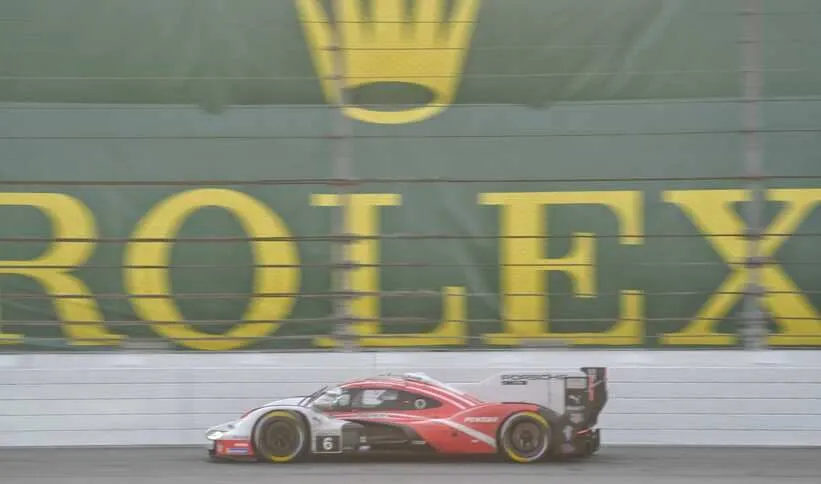
Not everything has gone smoothly for Porsche, though. The No. 6 car, which showed strong pace early, is dealing with damage that has slowed its progress. It’s a reminder that speed alone doesn’t guarantee anything in a 24‑hour race like the Rolex 24.
Heartbreak and Havoc in the GT Field
The GT categories have produced their usual mix of close racing and early attrition. In GTD Pro, the No. 9 Pfaff Motorsports Lamborghini currently leads, but the No. 3 Corvette with Antonio Garcia at the controls remains close enough to apply pressure. Corvette Racing has been steady, waiting for opportunities rather than forcing them.
Several teams have already seen their race end. The No. 16 Myers Riley Ford, driven by Romain Grosjean, is out after mechanical trouble. The No. 83 AF Corse LMP2 entry has also retired, another example of how quickly Daytona can end a team’s hopes.
Incidents have been frequent. The No. 81 DragonSpeed Corvette brought out a full‑course yellow after Matteo Cairoli spun at the International Horseshoe and made light contact with the barriers.
And in one of the more unusual moments of the race, three GTP cars driven by Ohta, Zilisch, and Rast nearly collided at pit entry during a sudden check‑up. It was a close call that could have dramatically reshaped the running order.
The Night Shift: Where the Race Changes
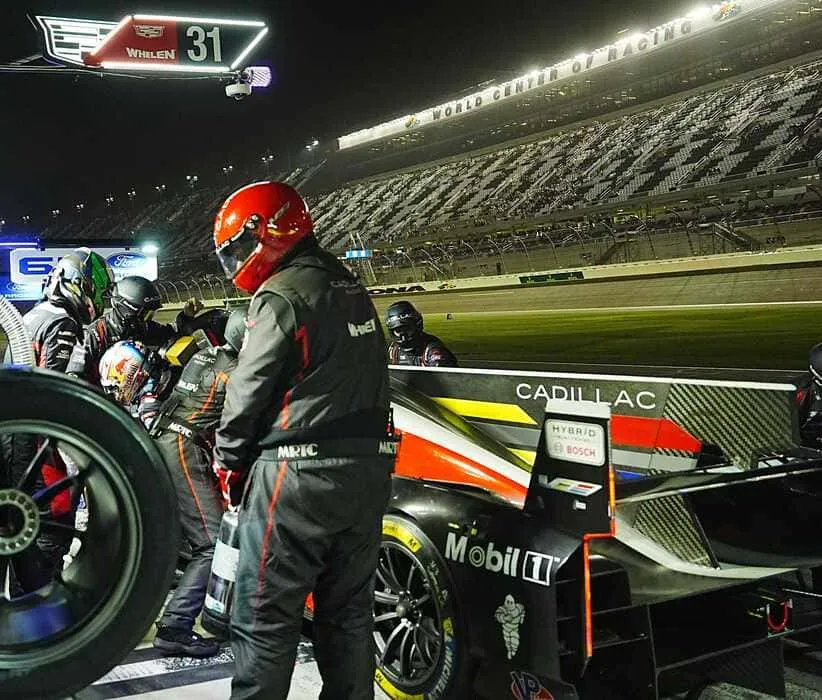
As the race settles into the overnight hours, the focus shifts to the drivers taking on the most difficult stints. Connor Zilisch, now in the No. 31 Whelen Cadillac, is one of the standout stories. This is his first official race stint in a GTP car, and he’s been thrown into a field filled with experienced professionals. His pace and composure are being watched closely.
In LMP2, the No. 99 AO Racing Rolex 24 entry, known as “Spike,” continues to set the tone. Dane Cameron, fresh out of the car, reported that everything is working as expected. In endurance racing, a predictable, stable car is often more valuable than one with outright speed.
What This Means for the Hours Ahead
The race is entering a critical phase. The middle hours are where fatigue begins to influence decisions, and where small mistakes can turn into major setbacks. Tire management is becoming a central storyline. A.J. Allmendinger admitted he pushed too hard during a double stint in the No. 60 Meyer Shank Acura, and with track temperatures dropping, teams must adjust their approach.
The difference between a well‑managed set of tires and an overworked one can be several seconds per lap. Traffic is another growing concern. With 55 cars still running, navigating slower classes in the dark becomes a constant challenge.
Depth perception changes, debris becomes harder to spot, and the margin for error shrinks. The drivers who can maintain pace while avoiding unnecessary risks will be the ones in contention on Sunday afternoon.
Reliability is also creeping into the conversation. The No. 23 Aston Martin GTP has stalled multiple times, raising concerns about electrical issues. At this stage of the race, even minor problems can derail a 24‑hour effort.
A Long Night Still Ahead
The 2026 Rolex 24 at Daytona remains wide open. Porsche looks strong but not untouchable. Cadillac and Acura are close enough to apply pressure. The GT classes are locked in battles that show no signs of easing. And the night in Daytona’s most unpredictable variable is far from over.
There are many hours left, and the race will continue to evolve. Strategy, patience, and reliability will matter as much as raw speed. The darkness has already reshaped the running order once, and it will likely do so again before sunrise. The most defining moments of this race are still ahead.