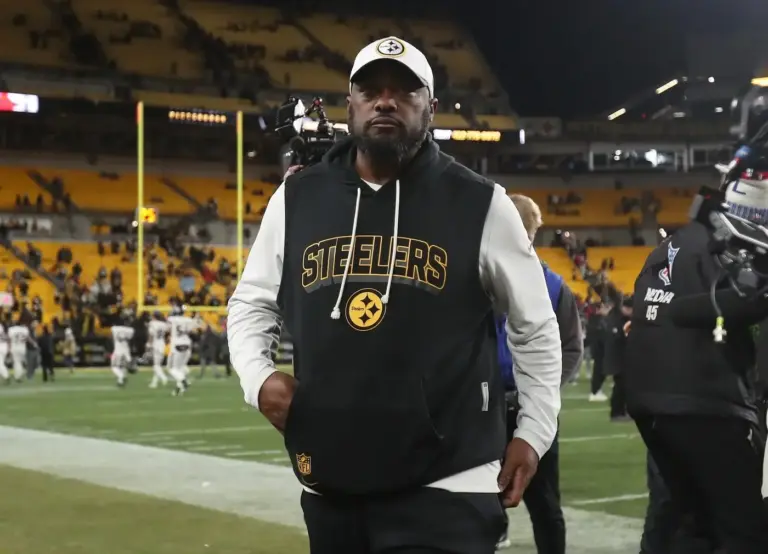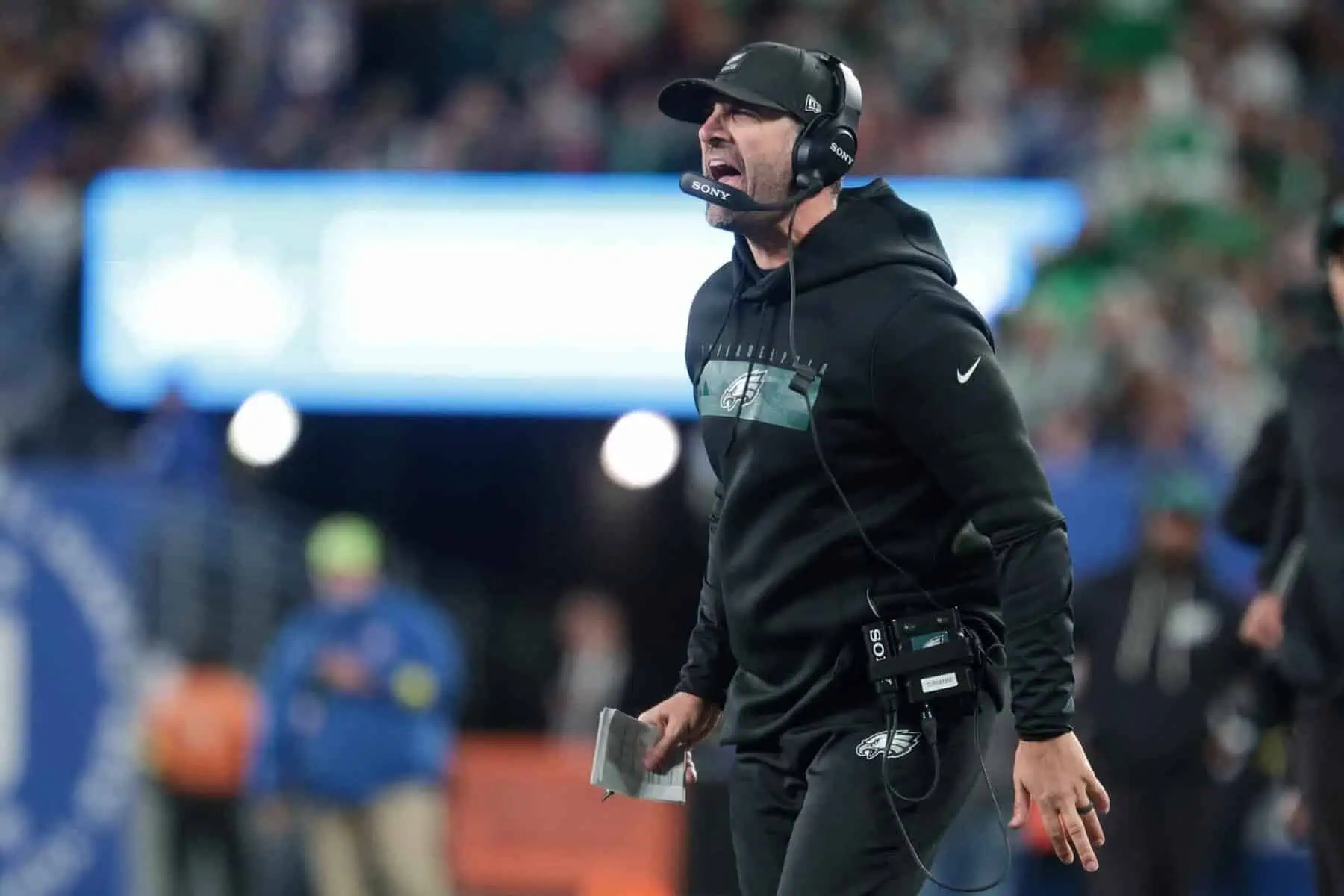
Nick Sirianni’s Week 7 Wednesday Press Conference After Horrible 2 Game Stretch

When you’re watching the Philadelphia Eagles stumble through this disappointing stretch, you can’t help but wonder if Nick Sirianni has lost his grip on reality, or if he’s just really good at playing poker with the media.
After watching his team drop back-to-back games and look increasingly dysfunctional on offense, Sirianni rolled out his usual collection of coach-speak platitudes Wednesday.
Sirianni’s Philosophy Under Fire
The Eagles head coach loves talking about his “players before plays” philosophy, a cute little mantra he picked up from his college coach at Mount Union back in 2004. It’s the kind of thing that sounds profound in coaching clinics but feels pretty hollow when your offense can’t move the ball against teams they should be demolishing.
“Well, ‘players before plays,’ but that doesn’t mean you’re separating out plays,” Sirianni explained, probably realizing how that might sound when his offense is struggling. “You still gotta think about the defense they’re running, and how you get guys open, and how you help them get open themselves.”
The whole philosophy boils down to this: talent trumps scheme, which isn’t exactly groundbreaking stuff. Every Pop Warner coach knows you’d rather have better players than better plays. But when you’re sitting at 4-2 with two straight losses and your offense looks like it’s running plays drawn up in crayon, maybe it’s time to examine whether your philosophy is working or just giving you something to hide behind.
The Jalen Hurts Autonomy Experiment
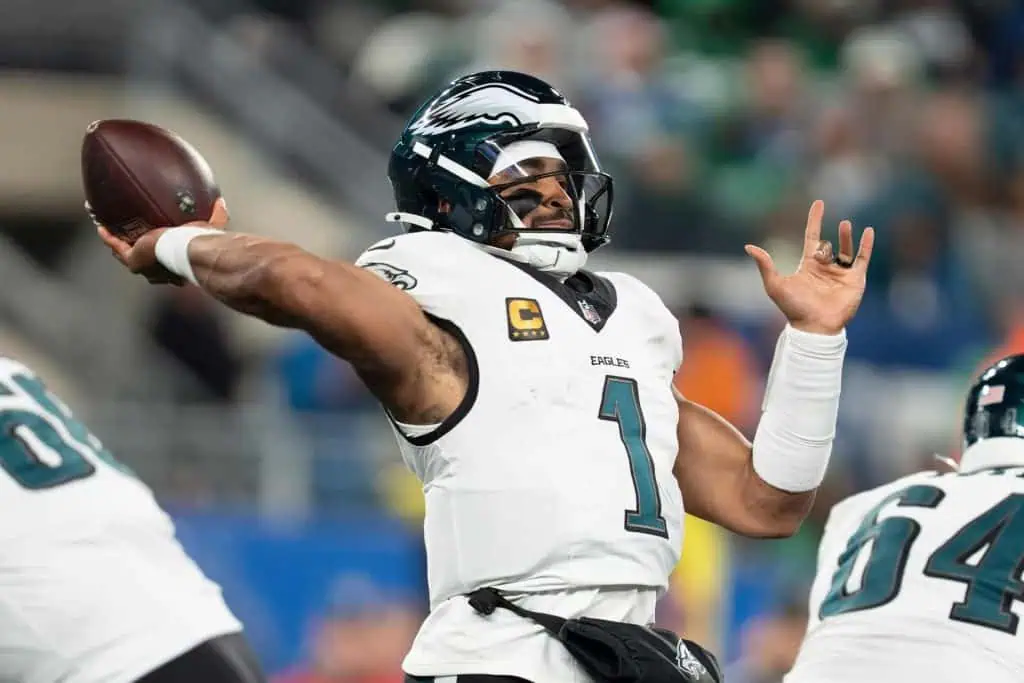
One of the more interesting revelations from Sirianni’s latest media session was his explanation of Jalen Hurts’ role at the line of scrimmage. Apparently, the quarterback has carte blanche to audible whenever he sees fit.
“He’s our quarterback, so he’s got ability to do things he needs to do, whether that’s with the protection, whether that’s with a run-game check, whether that’s with a pass-game check, or a route checked off to something that he sees,” Sirianni said.
This sounds great in theory: empower your franchise quarterback, let him take ownership of the offense. But it also raises some uncomfortable questions. If Hurts is changing two to five plays per game based on what he’s seeing, and the offense is still struggling, what does that say about either his reads or the original play calls?
Sirianni was quick to note that Hurts is “often right with what he’s seeing,” but “often” isn’t “always,” and in the NFL, being wrong at the wrong time can cost you games. It’s the kind of arrangement that works beautifully when things are clicking, but becomes a potential scapegoat factory when they’re not.
The Cornerback Conundrum
While most of the focus has been on offensive struggles, Sirianni also addressed the team’s issues at cornerback, where inconsistency has been the only consistent thing.
“I think there have been elements, and periods of good football. And, I believe in those guys. I believe in our scheme. I believe in those guys to go out there and compete and be in coverage,” he said, sounding like a man trying to convince himself as much as the media.
The problem with “periods of good football” is that games last 60 minutes, not just the good periods. When you’re giving up big plays because your CB2 situation is shakier than a three-legged table, those brief moments of competence don’t mean much.
The Accountability Theater
Perhaps the most eye-rolling moment came when Sirianni was asked about accountability. He assured everyone that his “accountability program” is still in place, but conveniently doesn’t assign blame publicly. How wonderfully diplomatic.
“It’s never just one thing,” he explained. “It’s not like you identify issues and then you stay quiet about it, right? That’s the accountability piece going in there.”
This is where the corporate double-speak gets thick. Real accountability means someone takes responsibility when things go wrong. But Sirianni has mastered the art of spreading blame so thin that it essentially disappears. Everyone’s accountable, which means no one really is.
The Adversity Sales Pitch
The most telling part of Sirianni’s Wednesday performance was his discussion of adversity. He talked about how these difficult moments can make you stronger, referencing past experiences and the importance of process over panic.
“You can really think back on your old experiences, you look back at the adversities we’ve had, I’m thankful for those,” he said.
Here’s the thing about adversity in professional sports: it’s only valuable if you learn from it and don’t keep repeating the same mistakes. The Eagles have been down this road before; the late-season collapse in 2023 is still fresh in everyone’s memory. But they also had the 2024 adversity as well, and look what the results were of that. If you’re grateful for adversity but keep finding yourself in the same situations, maybe the lesson hasn’t been learned.
The Bottom Line on Sirianni’s Leadership
Nick Sirianni is clearly a bright guy who understands football at a high level. His ability to navigate press conferences without saying anything particularly damning is actually impressive from a public relations standpoint. But Eagles fans didn’t sign up for smooth talking; they want results.
The coach’s Wednesday session revealed a man who’s confident in his process but increasingly unable to explain why that process isn’t producing better outcomes. His philosophy sounds good on paper, his explanations are reasonable, and his demeanor suggests everything is under control.
The problem? The scoreboard tells a different story.
When your team consistently underperforms expectations and your response is to double down on the same approaches that got you here, you’re either displaying admirable conviction or stubborn denial. The next few weeks will probably tell us which one it is.
Until then, Eagles fans are left to wonder whether their head coach is the solution to their problems or just really good at explaining why those problems aren’t his fault. As an Eagles fan, I think I’ll lean into the solution until proven otherwise.