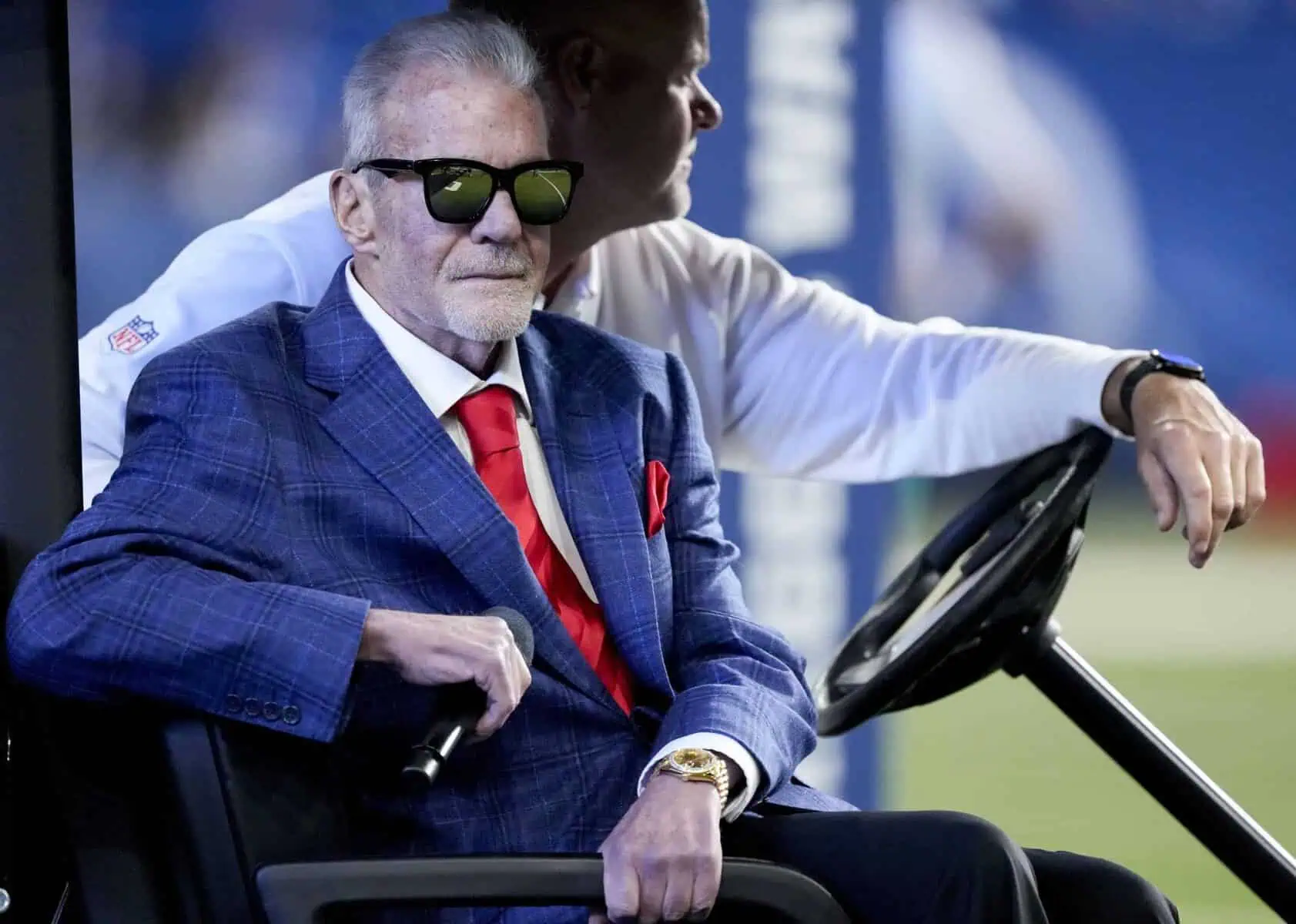
Jim Irsay’s Hidden Struggle: A Tragic End To a Complex Legacy

The news hit like a freight train in May. Jim Irsay, the colorful owner of the Indianapolis Colts who has become as famous for his rock-and-roll persona as his football team, was gone at 65. But as the dust settled on his passing, whispers began circulating through NFL circles about what really happened in those final months.
Those whispers have now become a thunderous revelation, thanks to a bombshell report from The Washington Post that pulls back the curtain on a tragedy that was apparently years in the making.
The Man Behind the Public Image
Irsay wasn’t your typical NFL owner. He collected guitars like some people collect stamps, hosted elaborate charity concerts, and spoke openly about his battles with addiction and mental health. His “Kicking the Stigma” initiative wasn’t just corporate philanthropy. It felt personal, raw, and authentic. Here was a billionaire who wasn’t afraid to show his scars.
But according to five anonymous sources who spoke to the Post, the transparency Irsay preached publicly was nowhere to be found in his private struggle. The same man who championed openness about addiction was allegedly living behind a wall of secrecy that may have cost him his life.
A Pattern Of Hidden Relapses
The details emerging from the Post’s investigation paint a heartbreaking picture. Three overdoses in five years. February 2020, December 2023, then another just 12 days later. Each time, according to sources, the organization scrambled to keep the incidents under wraps.
When you think about it, the math is staggering and sobering. That is one overdose every 20 months for a man who was publicly advocating for addiction awareness. The cognitive dissonance is almost too painful to contemplate.
The December 2023 incident particularly stands out. Colts COO Pete Ward made the 911 call, describing Irsay as “unresponsive” and “bluish in color,” suggesting possible heart failure. Notably absent from that emergency call? Any mention of pills or Irsay’s documented history with overdoses.
The Doctor and the Questions Left Unanswered
Enter Dr. Harry Haroutunian, described as a “luxury recovery doctor” who was caring for Irsay in his final months. The doctor prescribed opioids and eventually ketamine. A treatment that’s gained attention for depression but remains controversial in addiction recovery circles.
When Irsay died in California, Beverly Hills police found him in a hospital bed setup. Dr. Haroutunian signed the death certificate, attributing the death to cardiac arrest caused by acute pneumonia. No autopsy. No toxicology testing. Just a piece of paper that closed the book on one of the NFL’s most enigmatic figures.
“I dedicated 18 months of my life to try to care for him… as a brother,” Dr. Haroutunian told the Post before citing privacy laws and ending the conversation. It is a statement that raises more questions than it answers.
The Culture Of Secrecy
Perhaps most troubling is what the Post describes as an atmosphere of extreme confidentiality surrounding Irsay. Employees signed strict non-disclosure agreements. His personal staff, cooks, nurses, and even romantic partners were bound by confidentiality clauses that would make a CIA operative blush.
This culture of secrecy stands in stark contrast to everything Irsay claimed to represent. How do you champion transparency while demanding silence? How do you fight stigma while perpetuating it?
Colts General Counsel Dan Emerson’s response to the Post speaks volumes: “We handled everything in an appropriate, professional, ethical and moral fashion. . . . I really wish everybody would let my friend rest in peace.”
The plea to “let him rest in peace” feels hollow when you consider that Irsay himself wouldn’t have wanted his struggle to remain hidden. This was a man who understood that secrecy kills.
The Broader Implications For Mental Health and Addiction
Irsay’s story isn’t just about one wealthy man’s private demons. It is a cautionary tale about how stigma persists even among those who claim to fight it. When someone with Irsay’s resources and platform can’t get the help he needs, or chooses secrecy over transparency, what hope do ordinary people have?
The NFL has made strides in addressing mental health and substance abuse, but Irsay’s case suggests we’re still failing our most vulnerable members. The same league that celebrates toughness and playing through pain creates an environment where admitting weakness feels impossible.
Legacy In Question
Irsay’s daughters, now the team’s owners, defended their father in an email to the Post, noting that he “never claimed to be perfect” and was “open about his battles.” But they declined interviews that could have provided the context they claim is missing.
Their response feels like another layer of the same secrecy that may have contributed to their father’s death. How do you honor someone’s memory while hiding the very struggles they tried to illuminate? The tragedy isn’t just that Irsay died. It is that he died the same way so many others do—in silence.