Jaw-Dropping Vic Fangio Press Conference: Updates on Jalen Carter, Rams Week 3 Matchup, and More

Look, I hate to be the bearer of bad news, but sometimes the truth stings worse than a Nick Foles playoff run. Philadelphia Eagles defensive coordinator Vic Fangio just served up some brutally honest commentary about his own player that would make even the most stone-faced coaching veteran wince. When your defensive coordinator goes public about a player needing to “round into better shape,” you know we’re not talking about missing a few wind sprints after practice. We’re talking about a first-round talent who’s apparently treating NFL conditioning like it’s optional; spoiler alert: it’s not.
Fangio Drops the Conditioning Bombshell on Carter

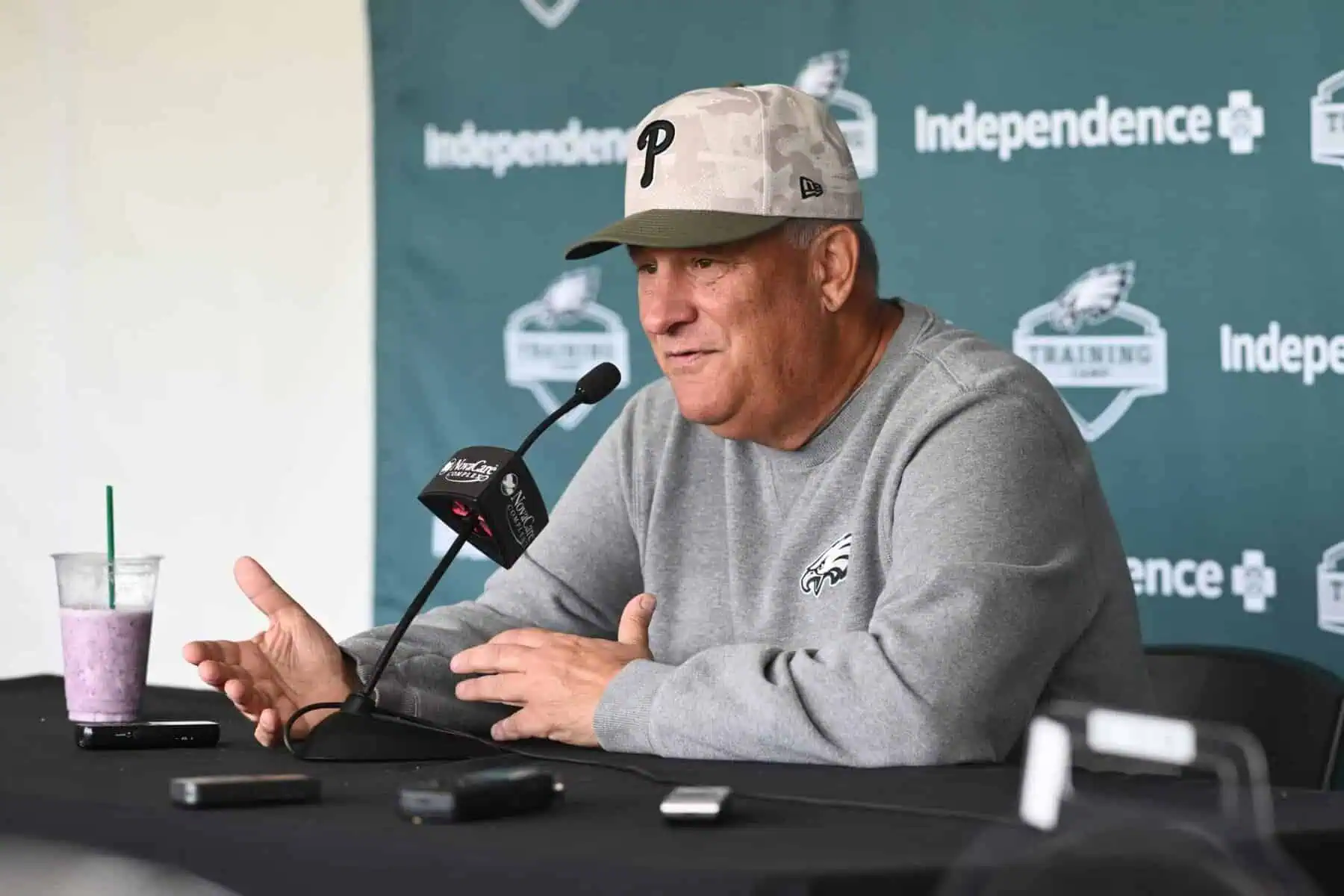
Here’s where things get uncomfortable for Eagles fans who thought their 2023 first-round pick, Jalen Carter, was ready to dominate. Fangio didn’t just hint around the issue during his Tuesday press conference; he went full transparency mode. “I think he needs to round into better shape, both he and I have talked about that,” he stated with the kind of directness that makes PR departments nervous. “He readily admits that, and I think we’ll get more.”
Now, before we start planning Carter’s fitness intervention, let’s acknowledge what Fangio saw in the Eagles’ 20-17 victory over Kansas City. The defensive coordinator noted some positives from Baby Rhino’s performance, but those silver linings came with a pretty significant cloud hanging overhead. When you’re talking about conditioning issues two weeks into the season, that’s not exactly the championship-caliber preparation Eagles fans were hoping for.
The timing couldn’t be more awkward either. The former Georgia Bulldog missed significant action in the season opener thanks to an ejection after the opening kickoff; yes, you read that correctly. So Sunday’s Chiefs game was essentially his season debut, and apparently, it revealed some concerning truths about his physical readiness.
The Injury Excuse Doesn’t Hold Much Water
Fangio attempted to provide some context for Carter’s conditioning concerns, pointing to a shoulder issue that limited practice time. “He has had a shoulder issue that has limited his time on the practice field. The shorter practices that we do, the lack of reps that he’s gotten for multiple reasons, all of that,” the coordinator explained.
Look, shoulder injuries are legitimate concerns, and modern NFL practice schedules aren’t exactly marathon training sessions. But here’s the thing about professional athletes making millions of dollars—finding ways to maintain peak physical condition despite setbacks is literally part of the job description. Elite players figure out how to stay in shape even when they can’t participate in full-contact drills.
The “shorter practices” excuse particularly raises eyebrows. NFL teams have been operating under collective bargaining agreement practice limitations for years now. Every team deals with the same constraints, yet somehow other defensive tackles manage to show up in game-ready condition. Carter’s conditioning issues suggest either a fundamental misunderstanding of professional preparation or a concerning lack of personal accountability.
Fangio’s “All-Day Sucker” Philosophy Meets Reality
This conditioning controversy becomes even more interesting when you consider Fangio’s defensive philosophy. The veteran coordinator recently described opposing offenses as “all-day suckers”, challenges that require sustained effort and peak physical performance for four full quarters. His comments about the Rams‘ balanced attack exemplify this mindset: when facing versatile offenses, defensive players need the stamina to execute at full capacity from the opening snap to the final whistle.
Carter’s conditioning issues directly undermine this approach. You can’t effectively defend “all-day sucker” offenses when your defensive tackle is running on fumes by the third quarter. The irony is almost painful. Fangio understands exactly what his defense needs to succeed, but his first-round investment isn’t physically prepared to deliver it.
The defensive coordinator’s public comments suggest he’s already exhausted private conversations about the issue. When coaches start airing conditioning concerns publicly, it usually means behind-the-scenes discussions haven’t produced the necessary changes. This isn’t subtle motivation; it’s a direct challenge to Carter’s professionalism.
Championship Windows Don’t Wait for Conditioning Programs
Here’s what makes this situation particularly frustrating for Eagles supporters: championship windows are precious, and they don’t pause for individual players to figure out basic professional requirements. Philadelphia’s defense has the talent and scheme to compete with any offense in the league, but only if every player fulfills their responsibilities.
Fangio acknowledged the team has “enough depth to allow Carter time to work himself back to top form,” but that’s hardly a ringing endorsement of organizational confidence. Depth pieces are supposed to complement elite talent, not serve as insurance policies against first-round conditioning failures.
The Eagles’ investment in Carter reflected belief in his game-changing potential. First-round picks, especially defensive tackles with his skill set, are expected to be foundational pieces, not projects requiring extended development time. When your defensive coordinator is essentially managing expectations about getting a full season’s worth of production from a premium draft selection, something has gone seriously wrong.
Championship-caliber teams rely on their best players being physically and mentally prepared for the grind. Carter’s conditioning issues don’t just affect his individual performance; they create ripple effects throughout the defensive game plan and force coaches to account for reduced effectiveness from a position of strength.
The Eagles have Super Bowl aspirations, and those dreams require every player, especially premium draft picks, to meet professional standards. Fangio’s public comments represent more than coaching feedback; they’re a wake-up call that championship-level preparation isn’t negotiable, regardless of draft position or potential.