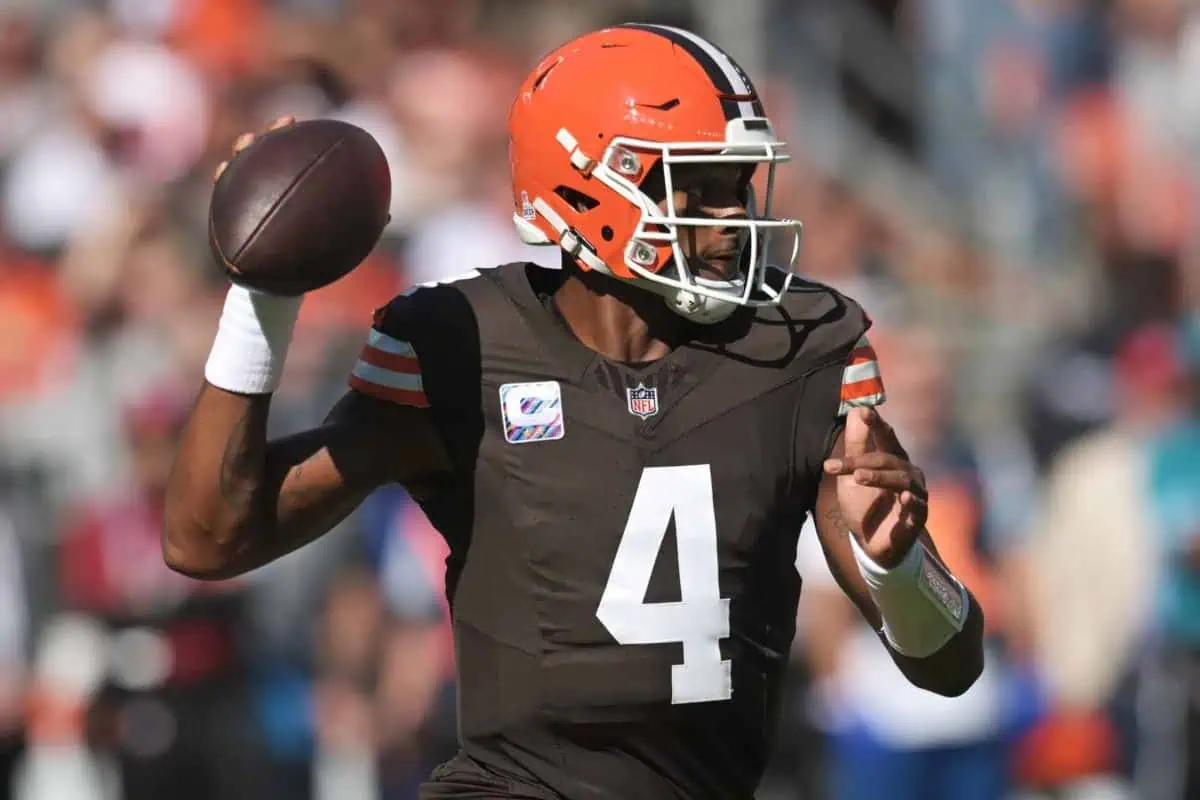
Cleveland Browns Deshaun Watson Contract: A Full Breakdown On Where We Stand In 2025

When the Cleveland Browns traded for Deshaun Watson in 2022, they didn’t just acquire a quarterback; they took on one of the most unique and talked-about contracts in NFL history. The deal was unprecedented in its structure and has massive implications for the team’s roster-building capabilities for years to come. For fans, understanding this contract is key to understanding the team’s financial situation.
This article will provide a clear explanation of the Deshaun Watson contract details with the Cleveland Browns. We will break down the numbers, the guarantees, the salary cap implications, and a little-known insurance policy that could provide the team with a surprising financial lifeline.
The Landmark Deal: What Did the Cleveland Browns Sign?
In March 2022, the Browns signed Deshaun Watson to a five-year, $230 million contract extension. What made this deal historic was not just the dollar amount, but the fact that every single cent of it was fully guaranteed. This is extremely rare in the NFL, where contracts are often complex and contain non-guaranteed money in later years.
Here are the key components of the deal in simple terms:
- Total Value: $230,000,000
- Contract Length: 5 years (2022-2026)
- Average Salary: $46,000,000 per year
- Total Guaranteed Money: $230,000,000
By fully guaranteeing the entire contract, the Browns took on an immense financial risk. It means that no matter what happens—poor play, injury, or another suspension—the team is on the hook for the full $230 million. This decision has shaped every financial move the team has made since.
Understanding the Salary Cap and Restructures
The NFL salary cap is a limit on the total amount of money a team can spend on player salaries in a given year. A player’s “cap hit” is the amount of their salary that counts against this limit for that season. While Watson’s average salary is $46 million, his cap hit has been much lower in the initial years of the deal. This is thanks to a common NFL accounting trick: the contract restructure.
How a Restructure Works
To create immediate cap space, teams can convert a player’s large base salary for a given year into a “signing bonus.” While the player still gets all their money upfront, the team is allowed to spread the salary cap charge for that bonus over the remaining years of the contract (up to a maximum of five years).
The Browns have restructured Watson’s contract multiple times. For example, instead of paying him a $46 million base salary in one year, they might pay him a minimum salary of around $1 million and convert the other $45 million into a bonus. That $45 million cap charge is then spread out over the next five years, at $9 million per year.
This is how the Browns have been able to afford other players while carrying such a large contract. However, it’s essentially like kicking the can down the road. Restructuring provides short-term relief but creates massive cap hits in the future.
Watson’s Cap Hits by Year
Thanks to these restructures, Watson’s cap hits have been relatively manageable so far, but they are set to explode. Here’s a look at his cap hit for each year of the deal:
- 2022: ~$9.4 million
- 2023: ~$19.1 million
- 2024: ~$27.9 million
- 2025: ~$36 million
- 2026: ~$80.7 million
The cap hit in 2026 is astronomical, projected to take up over 26% of the team’s entire salary cap. Furthermore, because of the restructures, the contract now includes “void years” through 2029. These are placeholder years that allow the team to spread out the bonus money even further, but it means Watson will still have a cap hit for the Browns three years after his contract is supposed to end. This is what is known as “dead money”—a cap charge for a player who is no longer on the team.
The Insurance Policy: A Silver Lining?
Given Watson’s injury history, including a season-ending shoulder surgery in 2023 and a re-torn Achilles in 2025, the Browns made a shrewd decision to take out an insurance policy on his massive contract. This policy is designed to protect the team financially if Watson is unable to play due to a significant injury.
How Does the Insurance Work?
The policy reportedly allows the Browns to recoup a significant portion of the salary they pay to Watson while he is injured. While the exact terms are private, reports suggest the team could collect a large sum if an injury prevents him from fulfilling his contractual duties. ProFootballTalk reported that the Browns could potentially collect on half of his 2024 salary and the entirety of his 2025 compensation due to the timing and severity of his Achilles injury.
What Does This Mean for the Salary Cap?
This is the most important part for fans. If the insurance company pays out, the Browns don’t just get a check. They receive a salary cap credit for the amount paid out by the policy.
Let’s say the insurance payout amounts to $55 million. That $55 million would be credited back to the Browns’ salary cap, likely in the 2026 season. This would be a game-changer. The team is currently projected to be well over the salary cap in 2026, largely due to Watson’s massive $80.7 million cap hit. A $55 million infusion of cap space would give them breathing room to build a competitive roster, whether Watson is part of it or not.
In essence, the insurance payout would function like a massive reduction in the financial burden of Watson’s contract. It minimizes the long-term damage of the deal and provides General Manager Andrew Berry with crucial flexibility. However, it’s important to note that insurance companies are often reluctant to pay out large claims, so this salary cap relief is not guaranteed until the check clears.
Conclusion: A Complex Future
The Deshaun Watson contract details for the Cleveland Browns are not great. The deal is a high-risk, high-reward proposition that has defined the franchise’s direction. Through clever restructures, the Browns have navigated the initial years, but the true financial reckoning is fast approaching with the massive cap hits in the later years of the deal.
The contract makes it nearly impossible to cut or trade Watson before 2026 without incurring a crippling dead money charge. The team is financially tied to him for the duration of the deal.
The existence of an insurance policy provides a potential lifeline, a “silver lining” as some have called it. A successful claim would provide a massive salary cap credit that could help the Browns transition into their next chapter, whatever that may be. For now, the team and its fans can only hope that Watson returns to his elite form or, failing that, that the insurance policy provides the financial relief needed to build a winner in the future.