Chicago Bears Ben Johnson Will Have To Work Around Glaring Weakness In The Offense

The Chicago Bears are entering the 2025 NFL season with plenty of optimism. After head coach Ben Johnson revamped the offense and young quarterback Caleb Williams showed steady development, there’s a feeling that this team has finally turned a corner. Yet, as the dust settles on free agency and the draft, one glaring question remains — did the Bears make a crucial mistake by not upgrading at running back?
According to Pro Football Focus (PFF), the running back position could be the Achilles’ heel of an offense expected to take a leap forward this season. With lingering concerns about consistency and durability, the decision to largely stand pat in the backfield feels like a gamble. Here’s why Chicago’s lack of action might hold its offense back.
The Chicago Bears’ Running Backs Are a Question Mark
PFF Sounds the Alarm
PFF recently called out the Bears’ running backs as the weakest unit on their roster, citing lackluster performance metrics from 2024. Chicago’s runners ranked 26th in rushing grade and dead last in yards after contact per attempt last season. Those aren’t just numbers—they’re red flags for a team that relies heavily on the ground game to complement its quarterback.
“Running back is the only offensive position where the Chicago Bears didn’t make a major addition this offseason,” Dalton Wasserman of PFF noted. Even with promising upgrades along the offensive line, the Bears’ backfield doesn’t project as particularly explosive or dynamic heading into 2025. It’s an uncharacteristic oversight for a team trying to equip Justin Fields with every possible tool for success.
Who’s in the Room?
Currently, the Bears’ running back room consists of D’Andre Swift, Roschon Johnson, and rookie Kyle Monangai. While there’s potential here, none of these players has proven to be the answer.
Swift, signed in free agency last year, offers versatility but has battled inconsistency throughout his career. Questions about his durability and fit in Johnson’s scheme linger after inconsistent usage when Swift was in Johnson’s offense in Detroit.
Roschon Johnson has flashed in spurts but has struggled to stay on the field. Injuries have set back his development, leaving his ceiling uncertain. Meanwhile, Monangai is a rookie who brings fresh legs and enthusiasm but remains untested against NFL-caliber defenses.
Between Swift’s reliability concerns, Johnson’s health issues, and Monangai’s lack of experience, the Bears’ running backs are more of a question mark than a strength. And in an NFC North loaded with talent, that’s a gamble that could backfire.
Why Running Back Matters in Ben Johnson’s Offense
A Vision That Requires Versatility
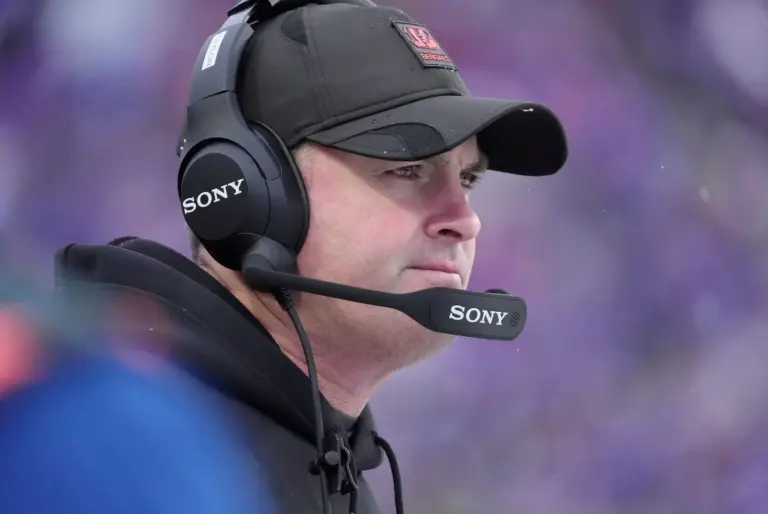
Ben Johnson’s offensive philosophy leans on creativity, versatility, and balance. During his time in Detroit, the Lions thrived with a backfield by committee approach, using multiple running backs in both the run and pass game to keep defenses guessing. However, that system also depended on having backs who could execute consistently and create mismatches.
Johnson’s offense is at its best when the running backs dominate. Caleb Williams will be at his best when defenses are forced to account for the run, opening up opportunities for play-action and even designed quarterback runs. If opposing defenses aren’t threatened by the backfield, they’ll key in on stopping Williams, disrupting the offense’s rhythm.
The Risks of Standing Pat
Can the Defense Shoulder the Burden?
The Chicago Bears made significant investments in their defense during the offseason, hoping to alleviate some of the pressure on the offense. However, banking on the defense to consistently hold opponents in check is a risky strategy.
If Chicago finds itself in shootouts—an all-too-common scenario in the modern NFL—the lack of a reliable ground game could be the difference between wins and losses. Running backs aren’t just there to keep balance; they’re crucial in late-game scenarios where controlling the clock is key.
Comparisons Around the League
Contrast the Bears’ approach with NFC North rivals such as the Detroit Lions and Minnesota Vikings, both of whom bolstered their backfields heading into 2025. Detroit added depth behind Jahmyr Gibbs, while Minnesota reinvested in its ground game to complement its aerial attack. If Chicago’s backs can’t keep pace, it could leave them at a competitive disadvantage in one of the league’s tightest divisions.
Is There Hope for Internal Growth?
Silver Linings in Chicago
While the Bears’ running back situation seems precarious, there is potential for internal development. An improved offensive line should create better running lanes, giving backs like Swift and Johnson every opportunity to succeed. Swift’s versatility as a receiver offers intriguing options in Johnson’s playbook, while Monangai’s youth and energy could inject some unpredictability into the lineup.
But banking on potential is a risky bet, particularly in a league where margins are razor-thin. If the Bears want to establish themselves as contenders, they’ll need their running backs to outperform expectations—or face the consequences.
Final Thoughts
The Chicago Bears are undeniably a team on the rise. Yet, their decision not to address their running back situation in the offseason feels like a conspicuous oversight. For all the strides they’ve made under Ben Johnson’s leadership, ignoring PFF’s warning signs could derail their offensive progress in 2025.