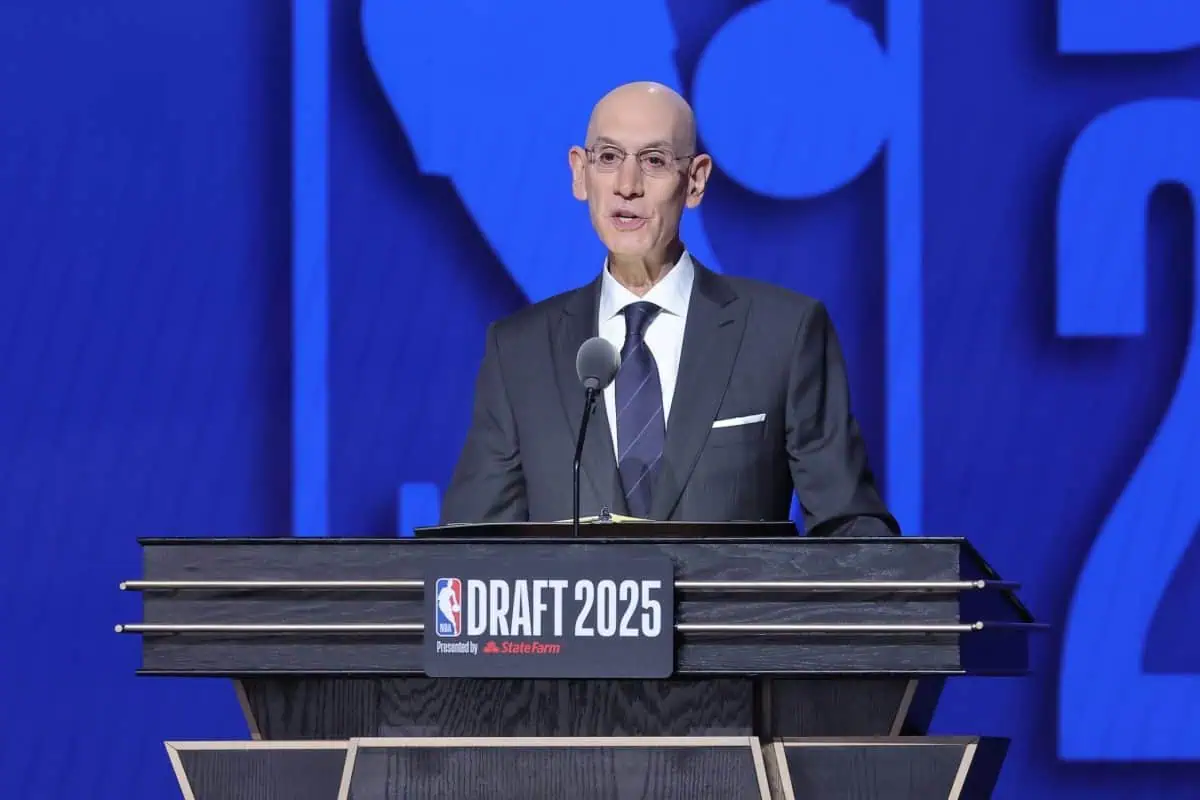
Adam Silver Calls For More Regulation On Sports Gambling

The rapid expansion of legalized sports betting has transformed how fans engage with professional sports, creating a multi-billion dollar industry in just a few years. The NBA, once cautious, became a vocal proponent and significant beneficiary of this new landscape. However, a recent string of gambling-related controversies has prompted a notable shift in tone from the top. Commissioner Adam Silver is now sounding the alarm, calling for stricter regulations and acknowledging the inherent risks that come with the league’s deep ties to the betting world.
This article will break down the latest Adam Silver NBA gambling comments, exploring his concerns about market manipulation, the specific dangers posed by prop bets, and his renewed push for federal oversight. We will examine the events that led to this change in perspective and what it means for the future of sports betting and the integrity of the game.
Adam Silver Addresses The Prop Bet Problem
The most pointed part of Silver’s recent commentary has been his focus on player proposition bets, commonly known as prop bets. These wagers allow fans to bet on specific individual statistical outcomes—such as how many points a player will score, how many rebounds they will grab, or how many three-pointers they will make. While they offer a highly engaging way for fans to invest in a game, they also represent the league’s greatest vulnerability.
This vulnerability was laid bare by the Jontay Porter scandal. The former Toronto Raptors forward received a lifetime ban from the NBA after an investigation revealed he had manipulated his own on-court performance to influence the outcome of prop bets. Porter was found to have limited his playing time and feigned illness to ensure that his “under” prop bets would hit for bettors he was associated with.
Speaking on “The Pat McAfee Show,” Silver directly addressed this issue, revealing that the league is taking proactive steps to mitigate the risk. “We’ve asked some of our partners to pull back some of the prop bets, especially when they’re on two-way players, guys who don’t have the same stake in the competition, where it’s too easy to manipulate something that seems otherwise small and inconsequential,” Silver explained.
The focus on two-way players is critical. These athletes are on lower-paying contracts and have less job security, which, in theory, could make them more susceptible to the financial temptations of match-fixing. By removing or limiting props on these players, the NBA is attempting to close a loophole that the Porter case so starkly exposed. Silver’s concern is clear: a player intentionally missing a shot or grabbing one less rebound is much harder to detect than throwing a game, but it can be just as damaging to the integrity of the competition.
Protecting Players from a Toxic Culture
Beyond the risk of internal corruption, Silver’s comments also highlighted a growing and toxic side effect of the betting boom: player harassment. The proliferation of prop betting has created a culture where fans are often rooting for a specific stat line rather than a team victory. When a player fails to reach a certain number of points or assists, bettors who lose money are increasingly taking their frustration directly to the players via social media.
This trend has been reported by numerous athletes across different sports, who describe receiving hateful and threatening messages from disgruntled bettors. “We want to protect the competitors,” Silver said, acknowledging the hostile environment that can arise. “It’s often the case that your team wins, and a player scores 25 points, but the bettor had them scoring 28 or 30. We want to protect the environment in the arena and make sure people aren’t getting out of hand.”
This issue has become so prevalent that other organizations, like the NCAA, have pushed for and successfully banned prop bets on college athletes in several states. The NBA is now grappling with the same problem. The league, which has long promoted its players as partners and its brand as player-friendly, recognizes that it has a responsibility to shield them from this new form of digital abuse. The Adam Silver NBA gambling comments signal that the league is no longer willing to ignore this dark side of its partnership with betting operators.
The Call for Federal Oversight
For years, Adam Silver has been an advocate for a federal framework to govern sports betting. When the Supreme Court overturned the Professional and Amateur Sports Protection Act (PASPA) in 2018, it left regulation up to individual states. This has created a patchwork of different laws, rules, and advertising standards across the country. Silver believes this state-by-state approach creates vulnerabilities and makes comprehensive oversight nearly impossible.
He reiterated this stance forcefully in his recent appearances. “I think there should be more regulation, frankly,” Silver stated. “I wish there was federal legislation rather than state by state. You’ve got to monitor the amount of promotion and advertising around it.”
A federal bill could create uniform standards for all betting operators, including:
- Advertising Restrictions: It could limit the volume and nature of sports betting ads, which have saturated sports broadcasts.
- Data Sharing: A federal framework could mandate data-sharing agreements between sportsbooks and leagues to help identify suspicious betting patterns more effectively.
- Standardized Prohibitions: It could create a national list of prohibited wagers, such as banning all prop bets on minor league or lower-contract players, rather than leaving it to individual states.
Silver pointed out that the legalization of betting does have one major advantage: transparency. “With this regulated structure, we can monitor it in ways that were unimaginable years ago,” he said, noting the ability to track aberrational behavior and geotarget where bets are coming from. However, he clearly feels that this transparency is not enough without a unified regulatory body to enforce consistent rules.
A Necessary Reckoning for the NBA
Adam Silver was one of the first major sports commissioners to embrace legalized gambling, foreseeing the immense financial and fan engagement opportunities it presented. His 2014 op-ed in The New York Times is widely seen as a foundational text that helped pave the way for legalization. Now, a decade later, he is leading the charge for a course correction.
The league has undoubtedly profited from its partnerships with betting companies, but the Jontay Porter scandal and the rise in player harassment have served as a stark wake-up call. The integrity of the game and the well-being of its players are paramount, and the current regulatory landscape has proven to be insufficient to protect them fully.
Silver’s evolving stance reflects a necessary maturation. The initial gold rush is over, and the league is now confronting the complex and challenging reality of its relationship with the gambling industry. The call for stricter rules, limitations on prop bets, and federal oversight is not a retreat from sports betting but an attempt to build a more sustainable and secure foundation for its future. The coming months will be critical in determining whether lawmakers and betting operators will heed his warning and work with the leagues to protect the sports we love.