Did the Yankees Just Botch Their Offseason with the Trent Grisham Deal?

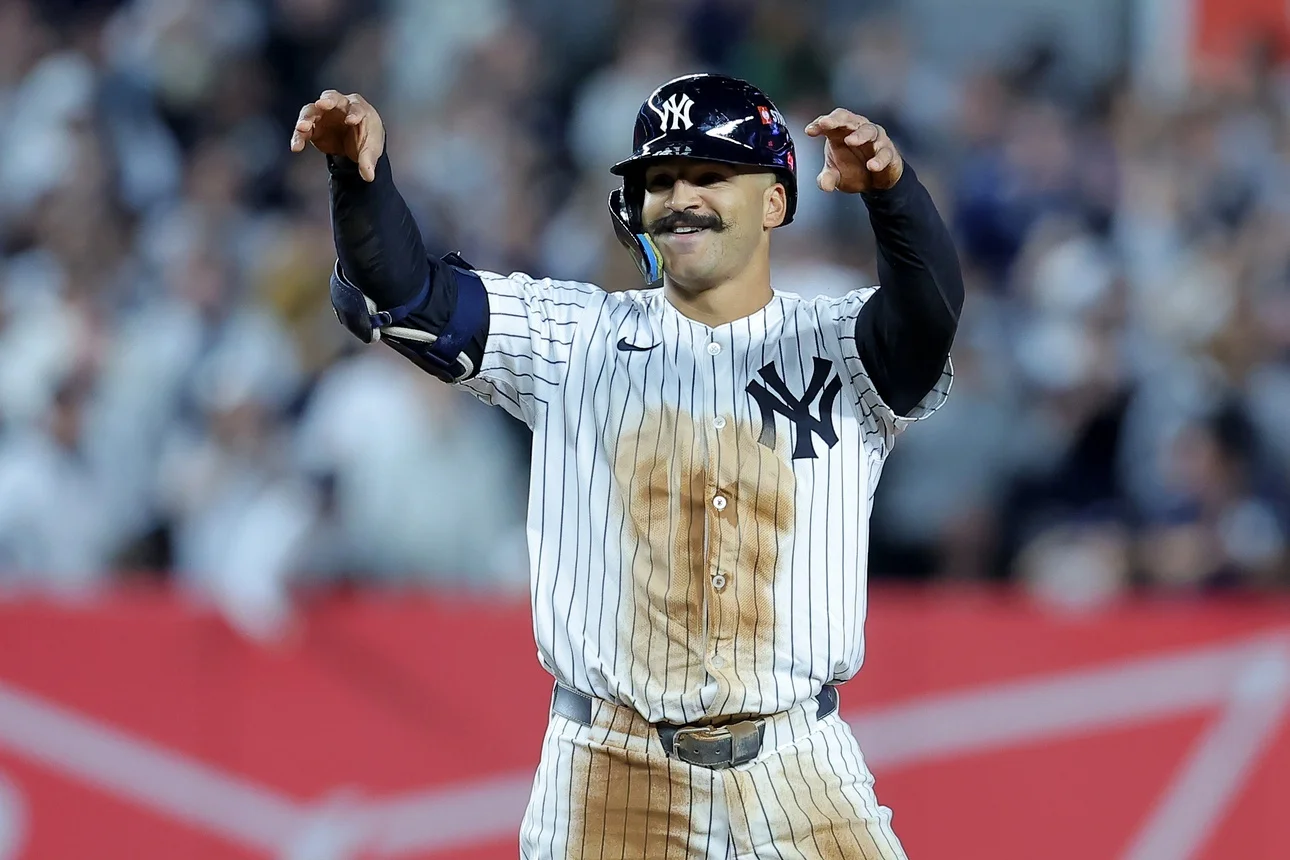
Well, the first major domino of the Yankees’ offseason has fallen, and it landed with all the grace of a lead balloon. Trent Grisham, fresh off a career year that still saw him bat a less-than-inspiring .235, has decided to accept the one-year, $22.025 million qualifying offer from the New York Yankees. And just like that, what should have been a simple strategic move has morphed into a head-scratching conundrum that could throw a wrench into the entire offseason.
Let’s be real: no one actually expected Grisham to take this deal. The common wisdom was that the Yankees were dangling this offer hoping he’d reject it, test the waters of a thin free-agent market, and net them a nice compensatory draft pick when he signed elsewhere. It was a calculated gamble. The problem is, they lost. Now, they’re on the hook for a hefty $22 million for a player who, despite his 34 home runs last season, still feels like a massive question mark.
So, What’s the Big Deal with Grisham?
The Yankees’ front office, particularly GM Brian Cashman, is putting on a brave face. “He had a hell of a year for us,” Cashman said, sounding like a man trying to convince himself as much as the press. “We’d be happy if he accepted and came back.” Happy? Are you sure about that, Brian? Because this move just made your outfield situation a whole lot messier and your payroll a whole lot tighter.
Let’s break down the chaos this “happy” accident has caused. First, there’s the Cody Bellinger situation. Re-signing Bellinger was supposed to be the top priority. Now, with Grisham’s $22 million salary on the books, the Yankees‘ projected luxury tax payroll is creeping dangerously close to the $300 million mark that owner Hal Steinbrenner finds “not sustainable.” Can they still afford Bellinger? Maybe. But it puts them in a much tougher negotiating position and might force them to make sacrifices elsewhere.
WFAN Sports Radio’s Brandon Tierney didn’t mince words, calling the move a “colossal mistake.” He argues the Yankees either completely misjudged Grisham’s intentions or, even worse, were actually okay with the possibility of him returning at that price. “This could be the first potential domino to a horrendous offseason by the Yankees,” Tierney declared. It’s hard to argue with his logic. For a team that needs to be making smart, decisive moves, this feels like an unforced error.
The Outfield Logjam Just Got Worse
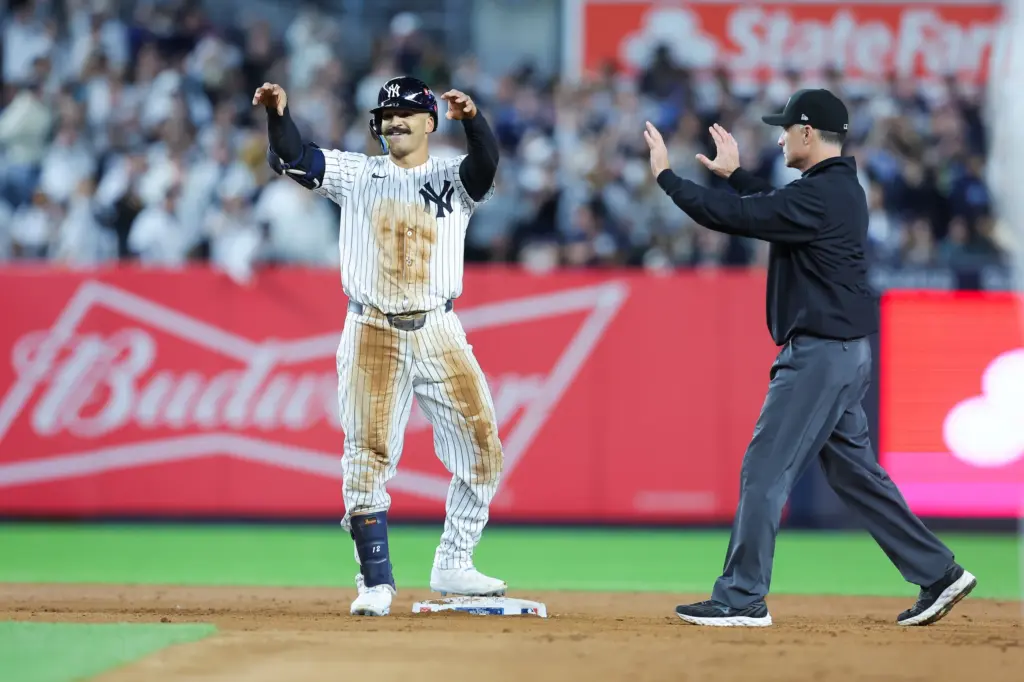
If the Yankees somehow manage to re-sign Bellinger, their outfield suddenly looks like a clown car. You’d have Grisham, Bellinger, and promising prospects Jasson Domínguez and Spencer Jones all vying for playing time. Cashman tried to spin this as “trade flexibility,” but let’s call it what it is: a roster-building headache. You can’t even trade Grisham without his consent until June 15th, so that “flexibility” is handcuffed for half the season.
And what about Grisham’s actual performance? Sure, the 34 homers were great, but this is the same player who hit a dismal .190 in his first 76 games in pinstripes. His defense, once Gold Glove-caliber, has also taken a nosedive, posting a -11 Defensive Runs Saved last season. So, the Yankees just committed $22 million to a defensively declining, streaky hitter who now clogs up their roster. Brilliant.
This move feels less like a strategic masterstroke and more like a front office that got too clever by half. They played a game of chicken with Trent Grisham and he didn’t swerve. Now, the Yankees are left to deal with the consequences: a bloated payroll, a crowded outfield, and an offseason that has started on a decidedly awkward and expensive note. They wanted a draft pick and instead got a $22 million problem. Good luck spinning that one, Cashman.