Trinidad Chambliss vs. NCAA: Inside the Battle for 2026 Eligibility

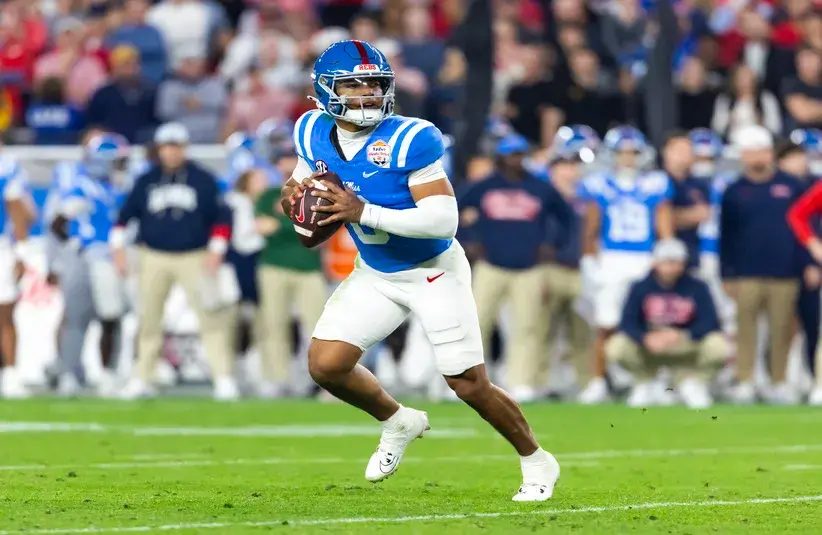
Trinidad Chambliss isn’t going down without a fight. Just days after the NCAA denied his waiver for a sixth year of eligibility, the Ole Miss quarterback and his legal team have announced a bold countermove: they are taking the association to court.
The denial threatens to prematurely end the collegiate career of a player who just led the Rebels to the College Football Playoff (CFP) semifinals. For Ole Miss fans, the news was a gut punch. Chambliss had publicly signaled his intent to return, and the program was building its 2026 hopes around his leadership. But where the NCAA saw a closed case, Chambliss’s camp sees a legal opening.
This isn’t just a paperwork dispute anymore; it’s a full-blown legal showdown in Mississippi state court. Here is a breakdown of why the waiver was denied, the legal “Hail Mary” being thrown by Chambliss’s team, and what this means for the future of Ole Miss football.
The “Medical Hardship” Dispute
At the heart of this conflict is a specific timeline from 2022, back when Chambliss was on the roster at Ferris State. He missed that season due to respiratory issues that required treatment, which is the basis for his request for a medical hardship waiver to grant him an extra year of play.
However, the NCAA operates on strict bureaucratic standards. On January 9, the association officially denied the request, stating that Ole Miss and Chambliss failed to provide sufficient “contemporaneous medical documentation.”
The NCAA’s refusal hinges on the paperwork—or lack thereof—from the time of the illness. According to the NCAA, the documentation submitted didn’t prove a season-ending hardship. Especially with the physician’s note from December 2022 that described Chambliss as “doing very well”. In the eyes of the NCAA, this note contradicts the claim that he was medically unable to compete.
The Legal Strategy
Chambliss has retained high-profile attorney named Tom Mars to lead the charge. Mars is no stranger to NCAA eligibility battles, and his strategy is aggressive. The plan is to file a lawsuit in the Mississippi state court immediately.
The legal team isn’t just asking for a trial that could drag on for years; they are seeking a preliminary and permanent injunction. In sports law terms, this is the equivalent of a hurry-up offense. A preliminary injunction, if granted by the judge, would force the NCAA to pause its ruling and allow Chambliss to play in the 2026 season while the actual lawsuit proceeds.
The filing venue is in the state of Mississippi. His lawyers are likely hoping for a favorable reception with Chambliss’s reputation in the community. Adding to the home-field advantage, Mississippi trial lawyer William Liston is joining the legal effort.
Stakes for Ole Miss and the 2026 Season
The impact of this legal battle cannot be overstated for the Ole Miss Rebels. Chambliss emerged as a legitimate national star last season, finishing among the vote-getters for the Heisman Trophy.
Quarterback stability is the most valuable currency in college football. If the courts grant the injunction, Ole Miss retains a proven leader who knows the system and has played on the biggest stages. If the injunction is denied and the NCAA ruling stands, Chambliss’s college career is effectively over, forcing him to pivot immediately to NFL draft preparations.
What to Watch This Week
The clock is ticking. Chambliss’s lawyers are expected to file the complaint this week. Once filed, all eyes will turn to the Mississippi state court judge assigned to the case.
The timeline will move fast. The court will need to decide quickly whether to grant the temporary relief needed to keep Chambliss on the roster. While Ole Miss will likely pursue standard administrative appeals through the NCAA, the courtroom is where the real decision will be made. For now, Trinidad Chambliss’s football future rests in the hands of a judge, not a coach.