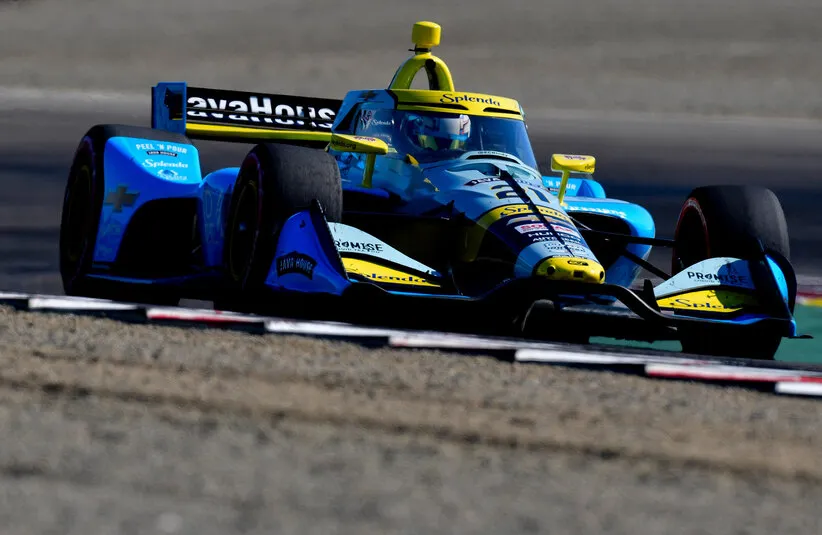
Inside Ed Carpenter Racing’s Bold Restructure Ahead of the 2026 IndyCar Season

In IndyCar, standing still is basically the same as moving backward. If you aren’t finding speed every single week, the competition will swallow you whole. For Ed Carpenter Racing (ECR), the last few seasons have felt like a long run on a treadmill—plenty of sweat and effort, occasional flashes of brilliance, but very little forward movement toward the top of the standings.
That narrative might be about to flip.
With the 2026 IndyCar campaign on the horizon, ECR has pulled the trigger on a massive organizational restructuring. This isn’t just about swapping out a tire changer or hiring a new spotter. We are looking at a fundamental overhaul of their engineering and leadership ranks. The team is placing a massive bet that streamlining how they process data and make decisions will be the secret weapon to unlocking the consistency that has eluded them for years.
If you’ve been scratching your head wondering why ECR often struggles to convert raw qualifying speed into race-day wins, this restructuring is the answer. Let’s break down what is changing, why the team owner felt it was necessary, and what it actually means for the car when the green flag drops.
A Calculated Rebalance, Not a Reset Button
When race teams hit a slump, the knee-jerk reaction is often to fire the house and start fresh, or conversely, to throw a blank check at a single “star” engineer hoping for a miracle. Ed Carpenter Racing has taken a smarter, more nuanced approach. The team announced a strategic mix of internal promotions and external hires designed to fortify their race engineering, data analysis, and vehicle performance departments.
Think of this as a strategic rebalancing act rather than a demolition. By promoting from within, Ed Carpenter Racing protects its institutional knowledge. These are the people who know the culture, the history of the chassis, and the team’s specific quirks. But by bringing in outside talent, they fill specific capability gaps that have likely held the team back in recent years.
The goal here isn’t just to crowd the room with smarter people. It is to fix the structure of the room itself. The team has been transparent about the fact that this move is designed to force better collaboration between race engineers (the folks turning wrenches and calling shots at the track) and performance engineers (the data crunchers working on long-term development).
Escaping the IndyCar “Midfield Trap”
To understand the weight of this move, you have to look at where Ed Carpenter Racing currently sits in the pecking order. They are a classic midfield team. They are capable of brilliance—especially on ovals—but they are often out-gunned by the massive engineering armies of teams like Penske or Ganassi.
For teams in this bracket, efficiency is the only way to survive. When engineering departments are siloed—meaning the data group isn’t talking effectively to the setup group—development stalls. In a series as tight as IndyCar, if your development cycle is even a fraction slower than your rivals, you lose tenths of a second every weekend.
Ed Carpenter Racing’s leadership identified that friction between departments was acting like a parachute, slowing down their ability to turn telemetry data into actionable setup changes. This restructuring is arguably less about “better engineering” and more about “faster decision-making.”
What This Means For The 2026 Season For Ed Carpenter Racing
Strategy and HR moves are interesting, but fans ultimately want to know one thing: Will the car be faster?
The theoretical outcome of this restructuring is a more responsive car. In the short term, improved communication structures should pay massive dividends during race weekends. When practice sessions are short and track conditions change rapidly, the team that can analyze data and adjust the setup the fastest usually takes the checkered flag.
If the new hires and promoted leaders can integrate quickly, drivers should feel the difference in consistency. A tighter engineering loop means better feedback, which leads to better qualifying setups. Crucially, it leads to race strategies that don’t fall apart when tire degradation kicks in—a specific area where Ed Carpenter Racing has struggled to maintain pace against the “Big Three” teams.