Selling Speed Like No One Else: Wheeler’s Promoter Legacy Cemented with Landmark Award

It’s almost impossible to picture Charlotte Motor Speedway without hearing the echo of Humpy Wheeler somewhere in the background. His voice, his ideas, his fingerprints they’re woven into the place. Wheeler wasn’t just a promoter. He was stock car racing’s P.T. Barnum, a showman who understood something fundamental about this sport: fans don’t just come for the laps. They come for the feeling. They come for the spectacle.
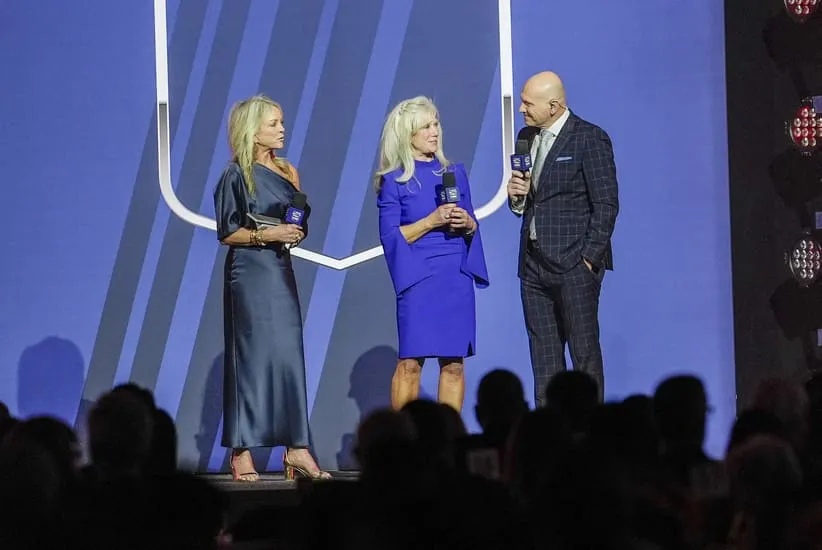
Friday night at the Charlotte Convention Center felt different without him. A little quieter. A little heavier. But his presence hung in the air as the industry gathered to honor him with the NASCAR Hall of Fame’s Landmark Award which is a recognition that somehow feels both overdue and perfectly timed.
Wheeler passed away in August 2025 at 86, leaving behind a void no amount of fireworks or fanfare could ever fill. Jim France, NASCAR’s Chairman and CEO, summed it up simply: Wheeler’s name became synonymous with promotion and innovation. For more than three decades, he didn’t just run Charlotte Motor Speedway. Wheeler transformed the venue into a cathedral of speed and showmanship.
The Man Who Made Racing a Show
To understand why Wheeler earned this honor, you have to remember what race weekends looked like before he took over and what they became under his watch. He believed in the “wow” factor long before the sport knew it needed one. If you were around in those golden years, you remember. Forty‑three cars taking the green flag wasn’t enough.
Wheeler gave fans school bus jumps. He gave them fireworks displays that could outshine major holidays. He gave them Robosaurus, a fire‑breathing mechanical dinosaur devouring cars in the infield. It sounds outrageous now, but at the time, it was revolutionary. Wheeler understood that NASCAR wasn’t just a race. It was a show. And he was the ringmaster.
But he wasn’t all flash. Wheeler had a sharp mind for infrastructure and fan experience. He looked at a racetrack and saw a destination. He built the first trackside condominiums, letting fans live the sport year‑round. He elevated hospitality with fine dining and premium experiences long before “VIP” became a buzzword.
Lighting Up the Night
His boldest gamble and arguably his greatest triumph came in 1992. Wheeler believed NASCAR’s future included racing under the lights. Short tracks had done it for decades, but no one had dared attempt it on a 1.5‑mile superspeedway at the sport’s highest level. People said it couldn’t be done. Wheeler proved them wrong.
“One Hot Night,” the 1992 All‑Star Race, changed everything. Under the lights, the cars looked faster. The action looked wilder. The entire sport looked electric on television. That single event didn’t just succeed but reshaped the Cup Series entirely. Every time fans tune into a Saturday night race, they’re watching Humpy Wheeler’s vision come alive.
From Grassroots to the Big Time
Wheeler’s influence didn’t stop at the top. He helped create the Legends car program, giving young drivers an affordable way to break into the sport. Today, at short tracks across America, you’ll still find Legends cars being tuned by fathers and sons, mothers and daughters as a living piece of Wheeler’s legacy.
His own path to Charlotte was winding. He arrived in 1975, became VP and General Manager a year later, and eventually rose to president of both the speedway and Speedway Motorsports Inc. He retired in 2008 after the Coca‑Cola 600, closing the book on a career that spanned NASCAR’s most explosive era of growth.
What This Means for NASCAR
The Landmark Award honors those who elevate the sport beyond the racetrack. Wheeler did that and more. He understood that while drivers and crew chiefs make the racing great, promoters make the racing unforgettable. He filled grandstands. He built anticipation. He created moments that fans still talk about decades later. This award doesn’t just recognize a promote. It recognizes an architect of modern NASCAR.
A Legacy Unforgotten
Humpy Wheeler was one of a kind a dreamer, a storyteller, a showman with the courage to try ideas no one else would dare. He understood the heartbeat of the race fan better than almost anyone who ever worked in the sport. Though he’s gone, his influence is everywhere: in the lights, in the pre‑race theatrics, in the way NASCAR presents itself to the world.
The Landmark Award is more than a tribute. It’s a final lap for a man who spent his life making sure every fan left the track with a memory. And in that sense, Humpy Wheeler’s show never really ends.