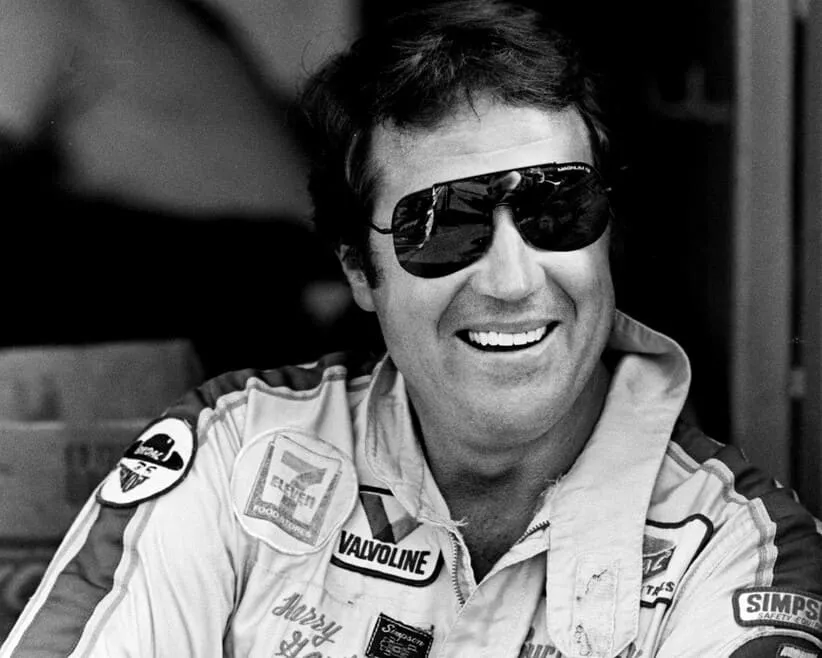
Three Turns, One Heavy Burden: Andy Petree Remembers Harry Gant’s Pocono 1990 Battle

In NASCAR’s long, thunderous history, some races are remembered for raw horsepower, others for clever strategy. And then there are the rare ones, remembered for something deeper, and the kind of race where the story isn’t written in lap times, but in the heart of the driver behind the wheel.
The 1990 Miller Genuine Draft 500 at Pocono Raceway is one of those days. Ask anyone who lived that era, and they’ll tell you the same thing: that race wasn’t defined by a dramatic finish or a spectacular wreck.
It was defined by Harry Gant, the grief he carried, and the way he chose to race through it. Decades later, Andy Petree still pauses when he talks about that overcast Father’s Day in Pennsylvania. It was June 17, 1990, a day built for celebration for most families.
But for Harry Gant, “Handsome Harry,” the quiet veteran with the easy smile, it was a day marked by loss. His father had passed away just days earlier. And yet, he strapped into the No. 33 Skoal Bandit Oldsmobile with a resolve that Petree says he had never seen before.
Andy Petree Saw a Different Kind of Focus
The bond between a crew chief and a driver is its own language with a mix of trust, instinct, and unspoken understanding. Petree knew Gant as well as anyone. Gant wasn’t flashy. He wasn’t political. He was a craftsman who showed up, did the job, and went home to his construction business. But that weekend at Pocono, Petree sensed something different.
Gant didn’t need encouragement. He didn’t need a speech. He didn’t even need to talk about what he was feeling. The grief was there, but so was a razor‑sharp focus. Petree’s role that day wasn’t to lift Gant emotionally, but it was to give him a car worthy of the weight he was carrying.
And this is exactly why Petree still brings up Pocono 1990 all these years later: because it was the clearest example he ever saw of a driver turning personal heartbreak into competitive fire. It wasn’t just a win. It was a moment that revealed who Harry Gant truly was.
The Strategy Behind a Win Fueled by Emotion
Pocono Raceway is a monster. It consists of 2.5 miles, three corners that don’t match, and long straightaways that punish engines and egos. Winning there requires a car that can survive the tunnel turn, launch off Turn 3, and stay balanced through the chaos of a long afternoon.
Petree had the No. 33 dialed in from the moment it rolled off the hauler. But race day brought the usual Winston Cup unpredictability. Gant wasn’t cruising. He was battling Rusty Wallace and trading pace with the era’s toughest competitors, and refusing to let the emotional weight slow him down.
Petree’s pit strategy kept Gant in the hunt, but strategy can only carry a team so far. The rest was up to the driver. Gant led key stretches, managed his tires, and kept the car alive through the long green‑flag runs. Petree remembers the radio being unusually quiet, but not tense, just focused. Both men knew this wasn’t a race for points. It was a tribute.
A Father’s Day Victory That Meant More Than a Trophy
When the checkered flag waved, the emotion hit everyone at once. Gant had done it. He pulled the green‑and‑white Oldsmobile into Victory Lane, but the celebration was subdued, almost reverent. There were smiles, but they were soft. There was pride, but it was quiet.
For Petree, watching Gant climb out of the car that day remains one of the defining moments of their partnership. It wasn’t just a win. It was a salute to Gant’s father, a moment of closure, and a reminder of how deeply personal this sport can be.
That victory still stands as one of the most meaningful in the history of Richard Jackson’s team. Furthermore, this is why Petree still talks about Pocono 1990. It wasn’t just a race. It was a story about a man who carried his father onto the track with him and honored him the only way he knew how.
Why This Story Still Matters in NASCAR’s Legacy
Modern NASCAR fans often get lost in the numbers, whether it be lap averages, pit-stop metrics, or aero packages. However, stories like this one remind us that the sport has always been powered by people, not data.
The 1990 Pocono win shows that drivers aren’t machines. They bring their lives into the car with them. Sometimes that weight slows them down. Sometimes, as with Harry Gant, it becomes the fuel that pushes them to greatness. It also highlights the role of a crew chief like Andy Petree.
He wasn’t just calling a strategy. He was steadying the ship, reading his driver, and giving him the tools to turn heartbreak into performance. That’s why his recollection matters because without his perspective, the emotional depth of that day would fade into the background.
A Record Unmatched
The record books will always show that Harry Gant won the 1990 Miller Genuine Draft 500. They’ll list the laps led, the margin of victory, and the purse. What they won’t show is the heartache behind the wheel. That’s why Andy Petree’s memories are so important. He preserves the part of the story that the statistics can’t capture.
With his insight, Pocono 1990 becomes more than a win. It becomes a timeless reminder of a son honoring his father in the most Harry Gant way possible by being the fastest man on the track, even on the hardest day of his life.