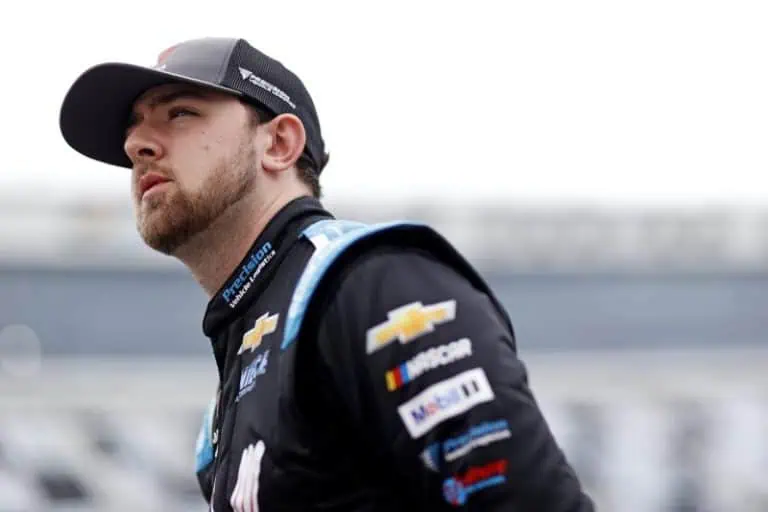
Inside The 2026 NASCAR Hall of Fame Induction Ceremony: Honoring The Soul of Stock Car Racing

The air inside the Crown Ballroom in Charlotte felt different today. It wasn’t just the anticipation of a trophy presentation or the glitz of the broadcast lights. Throughout the 2026 induction ceremony, there was a palpable sense of weight, the kind that comes when the past meets the present. The NASCAR Hall of Fame has always served as the sport’s memory bank.
Yet, on induction night, it transforms into a living, breathing reunion of the families, mechanics, crew chiefs, and drivers who built this sport from the dirt tracks up. This year, the spotlight fell on a class that perfectly encapsulates the chaotic, beautiful timeline of stock car racing: Kurt Busch, Harry Gant, and Ray Hendrick.
Alongside them, the sport honored legendary promoter Humpy Wheeler with the Landmark Award. It was a night where the polished, corporate era of the 2000s collided beautifully with the gritty, grease-stained knuckles of the 1980s and the modified madness of the pioneer days.
The Atmosphere Before the Ceremony
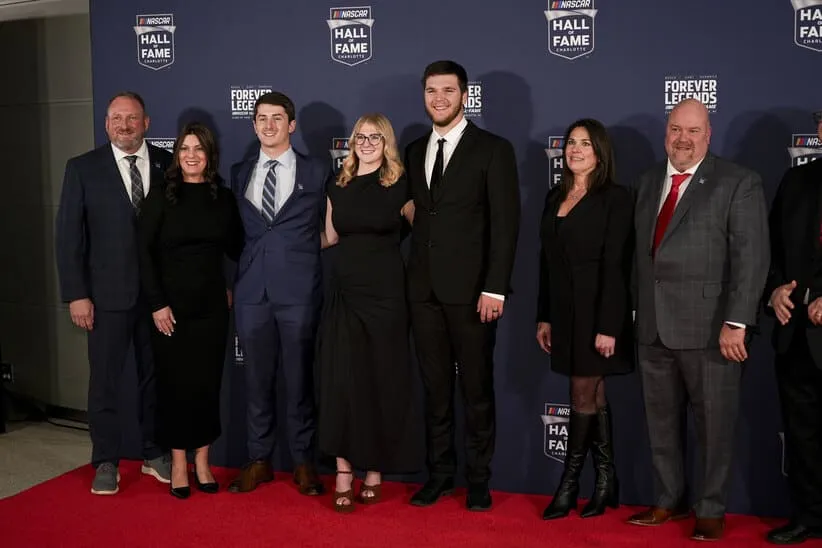
Long before the cameras rolled for the main event at 8 p.m., the energy in the building was already climbing. The Hall of Fame proceedings kicked off with the Red Carpet arrivals at 4:45 p.m., a moment that felt less like a media obligation and more like a family barbecue.
However, everyone happened to be wearing tuxedos.You saw former NASCAR rivals sharing laughs and crew members reconnecting after years apart.By the time the Fireside Chats began at 6:30 p.m., the theater was packed.
This portion of the evening often provides the most genuine moments, stripping away the teleprompters and allowing the inductees and their representatives to speak candidly. It set the emotional tone for the official ceremony, bridging the gap between the fans in the seats and the legends on the stage.
Kurt Busch: The Evolution of a Champion
Kurt Busch’s induction into the Hall in his first year of eligibility was never really in doubt, but seeing it happen felt like the closing of a complex chapter. His speech wasn’t just a victory lap; it was a reflection on a career that saw high peaks and deep valleys.
Busch arrived in the Cup Series as a fiery, often polarizing talent, winning the 2004 championship with a driving style that bordered on aggressive genius. But the man who stood on stage tonight was the elder statesman and the mentor who eventually garnered immense respect across the garage.
He spoke to the 20-plus years of competition, the Daytona 500 victory, and the sheer grit required to stay relevant in a sport that chews up talent. The applause he received wasn’t just for the trophies; it was for the resilience of a driver who constantly reinvented himself.
Harry Gant: The Working Man’s Hero
If Busch represented the modern era, Harry Gant reminded everyone of a time when drivers spent as much time under the hood as they did behind the wheel. When “Handsome Harry” was called up, the room erupted with a specific kind of warmth reserved for the guys who did it the hard way.
Gant’s career, highlighted by 18 Cup Series wins and that legendary run in September 1991, was defined by durability. His speech transported the audience back to the 1980s, an era of long nights in the shop and a mechanical connection to the car that is rare today.
He didn’t just drive. He survived and thrived in an era of constant adaptation. Seeing Gant honored was a nod to every mechanic and fabricator who ever turned a wrench, and an honor very well deserved.
Ray Hendrick and Humpy Wheeler: Pioneers and Showmen
The induction of Ray Hendrick via the Pioneer Ballot was a moment of long-overdue justice for short-track racing. With over 700 estimated victories, Hendrick was a titan of the modifieds and late-model sportsman ranks. His family’s acceptance of the honor underscored a vital truth: NASCAR wasn’t built solely on superspeedways.
The honor was built on Saturday nights at local tracks across the Southeast. Balancing out the driver talent was the recognition of Humpy Wheeler. As the former president of Charlotte Motor Speedway, Wheeler didn’t just host races, but created spectacles.
Wheeler’s Landmark Award acceptance highlighted the promotional genius that turned race weekends into must-see entertainment. He understood that fans wanted a show, and he delivered it with a flair that changed the business of racing forever.
How the Ceremony Is Reinforcing a Continuum
This Hall of Fame ceremony did more than just hand out rings and jackets. It reinforced the idea that NASCAR is a continuum. You cannot have the data-driven engineering of Kurt Busch’s era without the mechanical intuition of Harry Gant’s time. You also don’t have either without the foundation laid by Ray Hendrick or the stage built by Humpy Wheeler.
The event served as a necessary pause. In a racing world now dominated by simulation data and corporate partnerships, tonight forced the industry to look in the mirror and remember its DNA. It reminded everyone that, despite the technology, the heart of this sport is still the people, the personalities, the fighters, and the innovators.
Wrapping Things Up
As the lights dimmed and the crowd filtered out into the Charlotte night, the 2026 NASCAR Hall of Fame induction ceremony left a lingering impression. It wasn’t just about the stats on a plaque. It was about the stories shared between old friends and the respect paid to those who paved the asphalt. NASCAR is a sport that moves at 200 miles per hour, but tonight, it was at its best when it stood still to honor the giants who gave it life.