Did D.J. Moore Quit? Why Terrell Owens Says the Bears’ Star Cost Caleb Williams the Game

It was supposed to be the drive that defined a rookie career. Instead, it ended in disaster, finger-pointing, and a fresh controversy that has NFL legend Terrell Owens taking shots at one of the Chicago Bears’ most reliable players.
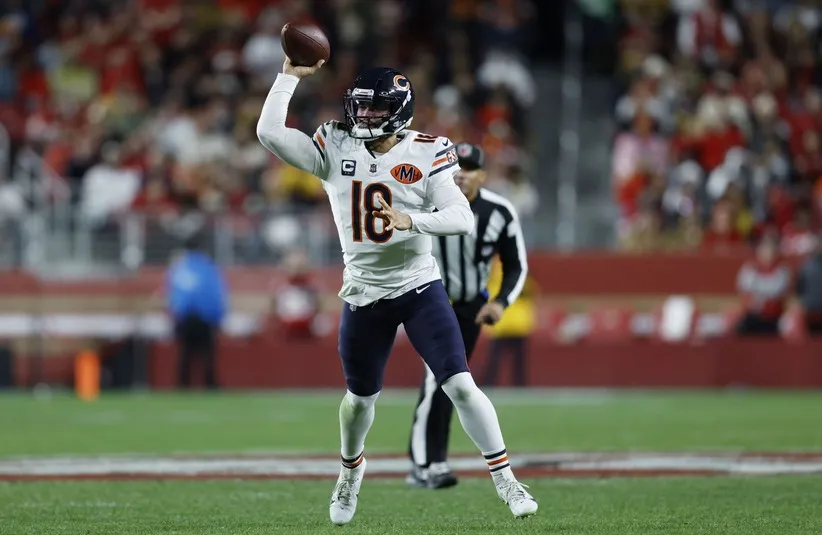
When the Chicago Bears and the Los Angeles Rams headed into overtime, the tension at Soldier Field was palpable. Caleb Williams, the rookie quarterback carrying the weight of the franchise on his shoulders, had a chance to seal a victory. He dropped back, looked for his favorite target, and let the ball fly. But the connection never happened. The Rams intercepted the pass, the game ended, and the criticism of Williams began almost instantly.
But if you ask Terrell Owens, everyone is blaming the wrong guy. The Hall of Famer isn’t looking at the rookie arm; he’s looking at the veteran legs of D.J. Moore.
What Happened Between Caleb Williams and Moore?
To the casual observer, the interception looked like a classic case of a rookie trying to do too much. The ball didn’t find its target, and the defense capitalized. However, replays tell a more complicated story, one that has ignited a fierce debate about effort and accountability in professional football.
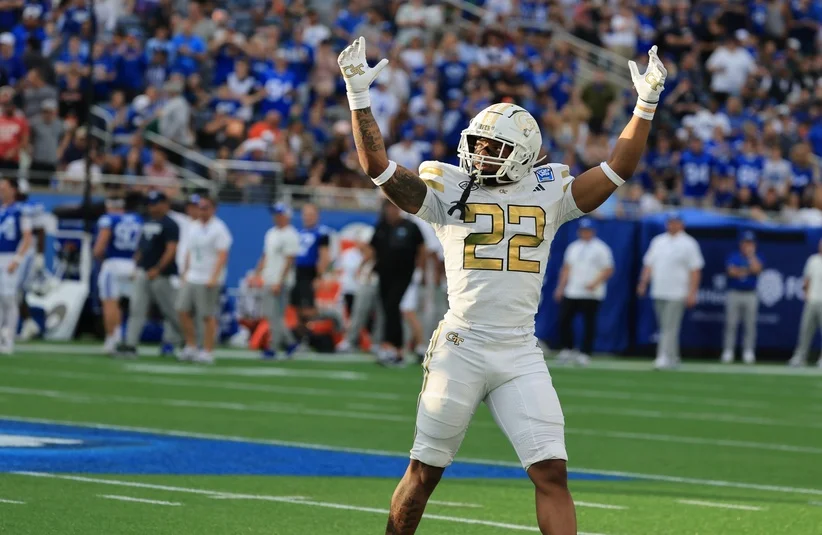
Terrell Owens, who knows a thing or two about playing wide receiver at an elite level, didn’t hold back his assessment. He publicly accused Moore of “quitting” on the route. According to Owens, the interception wasn’t a result of a bad throw by Williams, but rather a lack of execution by Moore. T.O.’s argument is simple: if the receiver keeps running through the play with full intensity, that ball is either a catch or an incompletion—not an interception that costs the team the game.
Owens Claims Moore Gave Up on the Play
It is a heavy accusation to level against a player like Moore, who has largely been seen as the offensive anchor for Chicago. Owens suggests that the body language on the field told the whole story. In his view, Moore slowed down, perhaps misreading the coverage or assuming the ball wasn’t coming his way.
When a quarterback anticipates a receiver being at a specific spot at a specific speed, timing is everything. If Moore decelerated even slightly, Williams’ throw—which relies on that anticipation—would look terrible, even if the decision was technically correct. Owens is essentially shifting the narrative from “rookie mistake” to “veteran failure.”
Is Moore Usually a Liability?
This is where the situation gets murky for Bears fans. Since arriving in Chicago, Moore has been nothing short of stellar. He is the guy who makes the contested catches, stretches the field, and usually bails out the offense when things break down. He isn’t known for taking plays off.
However, the dynamic between a seasoned veteran and a rookie quarterback is always fragile. Caleb Williams is still learning the speed of the NFL. He needs to know, without a shadow of a doubt, that his guys are going to be where he expects them to be. If Moore did indeed hesitate or give up on the route, it does more than just lose one game against the Rams; it shakes the foundation of trust between the team’s most important duo.
The Fan and Analyst Debate
Owens’ comments have thrown gasoline on an already burning fire within the Bears fanbase. Social media is currently split down the middle.
On one side, you have fans agreeing with T.O., arguing that highly-paid veterans like Moore need to set the standard for effort, especially in overtime. They argue that Williams can’t develop if his safety valves aren’t giving 100% until the whistle blows.
On the other side, defenders of Moore argue that Owens is being too harsh. They point out that Williams’ ball placement has been inconsistent all season and that asking a receiver to adjust to every errant throw is unfair. They believe the rookie simply made a bad read, and blaming the receiver is a convenient way to protect the “golden boy” quarterback.
What This Means for the Bears’ Season
Regardless of who was actually at fault, the reality is that the Bears took an L in the column that matters most. But the internal loss might be greater.
Head coaches lose sleep over situations like this. If the locker room begins to divide—with some players siding with the rookie and others backing the veteran—the season can spiral out of control quickly. The coaching staff now has the difficult task of reviewing that tape, determining if Moore actually did quit on the route, and addressing it without alienating their star receiver.
For Caleb Williams, the lesson is brutal but necessary: the margin for error in the NFL is nonexistent. For Moore, the pressure is now on to prove that T.O. is wrong and that his commitment to the play—and his quarterback—is unwavering. The Bears need to regroup fast, because in the NFL, nobody feels sorry for you, and the next opponent is already watching the tape.
FAQ Section
Q: What happened in the Bears vs. Rams game?
A: Caleb Williams threw a costly overtime interception intended for D.J. Moore, leading to a Rams victory.
Q: Who is involved?
A: Rookie quarterback Caleb Williams, wide receiver D.J. Moore, and NFL legend Terrell Owens, who criticized Moore’s effort.
Q: Why is this news important?
A: It highlights the Bears’ ongoing offensive struggles, the pressure on Williams as a rookie, and Owens’ influence as a respected former player.
Q: What are the next steps?
A: The Bears must improve communication between Williams and Moore while preparing for upcoming games to salvage their season.