Eagles Add Power to Backfield: Why the Carson Steele Signing Matters for 2026

The NFL season may be in the rearview mirror, but for the Philadelphia Eagles front office, the work is just ramping up. While fans are debating mock drafts and free agency splash signings, General Manager Howie Roseman and his staff are already churning the bottom of the roster to find hidden gems for the 2026 campaign.
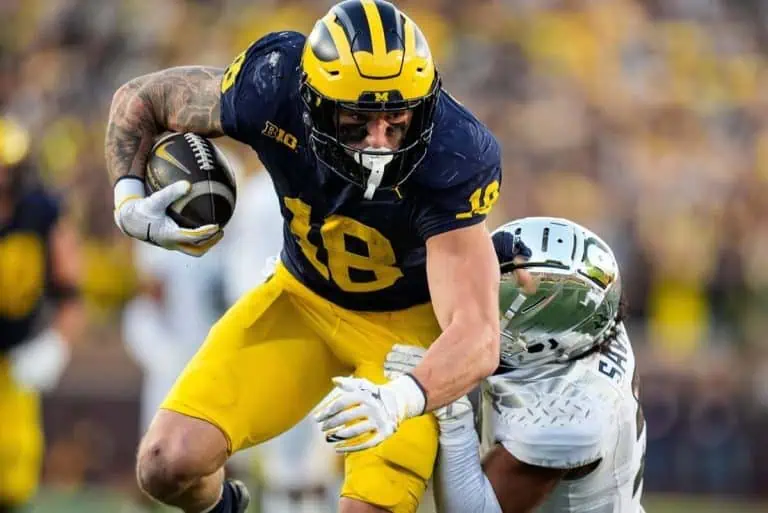
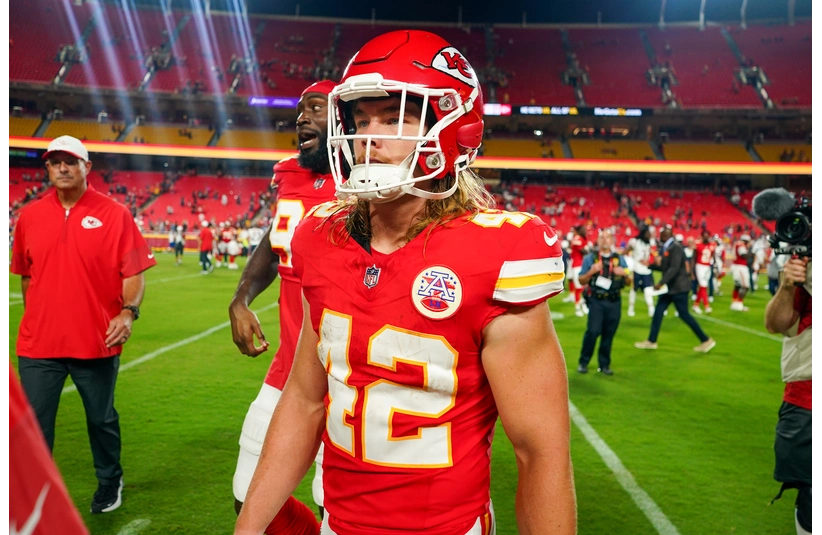
On Tuesday, the team announced the signing of former Kansas City Chiefs running back Carson Steele to a reserve/future contract. Alongside Steele, the Eagles also locked up tight end E.J. Jenkins and tackle John Ojukwu. While these moves might fly under the radar for the casual observer, they signal a clear strategy: bolster depth with players who have legitimate NFL experience.
Steele, in particular, is an intriguing addition. He isn’t just a standard “camp body.” He brings a unique physical skillset that could offer the Eagles flexibility in short-yardage situations, an area where Philadelphia is constantly looking for an edge.
The Carson Steele Profile: More Than Just a Runner
Carson Steele enters the NovaCare Complex in 2026 with a resume that suggests he can handle the pressure of being on a team with expectations. The UCLA product originally broke into the league as an undrafted free agent with the Kansas City Chiefs in 2024.
Making the 53-man roster as a rookie on a Super Bowl-contending team is no small feat, especially when Steele managed to appear in 17 games during his rookie season. That level of trust from a coach like Andy Reid speaks volumes about a player’s preparation and football IQ. Although he spent the 2025 season on Kansas City’s practice squad, his rookie tape shows a player willing to do the dirty work.
The Fullback Factor
The most interesting aspect of this signing is Steele’s positional versatility. He isn’t limited to taking handoffs out of the shotgun. During his time in Kansas City and college, Steele demonstrated the ability to line up as a fullback.
Modern NFL offenses have largely phased out the traditional fullback, but having a player who can block in the I-formation, catch passes in the flat, and grind out tough yards between the tackles is a luxury. For an Eagles offense that prides itself on dominating the line of scrimmage, Steele offers a “Swiss Army Knife” utility. He could be a potential answer for special teams coverage units or specific goal-line packages where a lead blocker is necessary to clear the way.
Bolstering the Trenches and Tight End Room
While Steele is the headline name due to his skill position, the additions of E.J. Jenkins and John Ojukwu are classic depth-building moves.
E.J. Jenkins (TE): The Georgia Tech product brings intriguing size and athleticism to the tight end room. The Eagles have a history of valuing athletic tight ends who can create mismatches in the passing game. Jenkins will likely compete for the third tight end spot or a practice squad role, looking to prove he can contribute on special teams—a prerequisite for backup tight ends in Philadelphia.
John Ojukwu (T): You can never have enough offensive linemen. It’s a cliché because it’s true. Ojukwu, out of Boise State, adds another body to the offensive line room. Developing tackle depth is crucial for surviving the attrition of an 18-week season. Ojukwu will get a chance to work with offensive line coach Jeff Stoutland, widely regarded as the best in the business. If anyone can extract maximum potential from a developmental tackle, it’s Stoutland.
Understanding the “Future Contract” Strategy
For fans wondering what a “future contract” actually implies, it’s essentially a head start on the 2026 season. These contracts allow teams to secure players who were not on an active roster at the end of the previous season.
By signing now, Steele, Jenkins, and Ojukwu are officially part of the 90-man roster that will enter offseason workouts and training camp. It guarantees them a shot to compete. For the team, it protects these players from being poached by other franchises looking to fill their own camp rosters.
This is a low-risk, high-reward proposition for Philadelphia. There is zero guaranteed money typically attached to these deals that would cripple the salary cap. If one of these three players makes the final 53-man roster, it’s a massive win for the scouting department. If not, the team simply moves on with minimal financial penalty.
What’s Next for the New Additions?
The path forward is simple but difficult: competition.
Steele, Jenkins, and Ojukwu will report for the offseason conditioning program, where they will try to make a first impression on the coaching staff. For Steele, the goal will be to show that his rookie season in Kansas City wasn’t a fluke and that his hybrid running style translates to the Eagles’ scheme.
Fans should keep an eye on OTA reports later in the spring. If Steele is getting reps with the second-team offense or looked at in goal-line drills, he might just force his way onto the active roster come September. Until then, these signings serve as a reminder that roster building is a 365-day job, and the talent search never stops.