Mark Martin Sounds Off on NASCAR’s TV-Focused Playoffs and Changing Priorities

If you ask any long-time fan to name the best driver to never win a Cup Series championship, one name usually rises above the rest: Martin. But defining Mark Martin by what he didn’t win does a disservice to one of the most brilliant mechanical minds to ever sit inside a roll cage. Recently, the Hall of Famer sat down with Paul Tracy for a raw, no-holds-barred conversation on Racers Unchained.
It wasn’t your standard PR-fluff interview. It was a deep dive into the psyche of a competitor who built his legacy not just on aggression, but on an obsession with building a better, faster car. For those of us who remember seeing the Valvoline No. 6 tear up tracks in the 90s, Martin’s reflection on his career offers a bittersweet look at how much the sport has changed and not always for the better.
When the Mind Slows Down Before the Car
There is a heartbreaking moment for every elite athlete when they realize the spirit is willing, but the biology is lagging. Martin opened up about the specific moment he knew it was time to walk away. It wasn’t about fear. It wasn’t about losing the physical strength to wrestle a 3,400-pound stock car around a banked oval. It was about processing speed.
At 200 miles per hour, decisions happen in milliseconds. Martin explained that elite drivers operate on a level where reaction is instinct. When that mental processing speed ticks down even a fraction of a second, the edge is gone.
Hearing a legend admit this vulnerability adds a layer of humanity to a sport often dominated by bravado. It explains why, despite a brief return to the wheel at Laguna Seca years later, Martin remains at peace with his decision to hang up the helmet. He respects the sport too much to run at anything less than 100 percent.
The Lost Art of “Eyeball Engineering”
Perhaps the most nostalgic portion of the conversation centered on his tenure at Roush Racing. In the modern era, cars are built in wind tunnels and optimized by simulations long before they ever touch asphalt. But Martin comes from the era of “eyeball engineering.”
He described a time when a driver’s feedback was the most critical data point a team had. Martin wasn’t just a pilot; he was deeply involved in the setup, working alongside crew chiefs to dial in the car mechanically.
There is a palpable sense of loss when he compares that hands-on era to today’s data-driven landscape. For Martin, the magic wasn’t just in driving the car. It was in building the car. That connection between man and machine is something he feels has eroded as engineering has moved from the garage floor to the computer screen.
Martin on the Next Gen Car and Artificial Parity
Martin didn’t shy away from critiquing the current state of the Cup Series, specifically regarding the Next Gen car. His perspective is one that many purists have echoed quietly for years: closer fields do not inherently equal better racing.
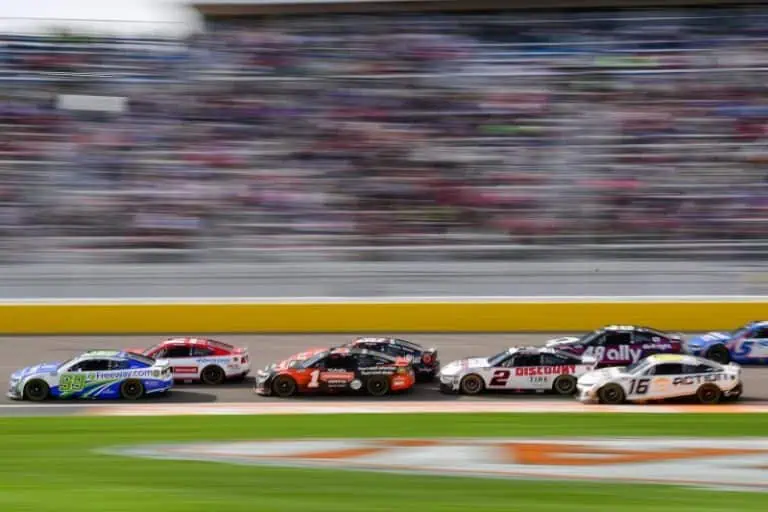
NASCAR has pushed hard for parity, designing a car that effectively standardizes performance across the grid. The theory is that if everyone is running the exact lap times, the racing will be tighter. Martin argues the opposite. He suggests that when every car is equal, passing becomes nearly impossible.
You end up with gridlock at high speeds. True racing, according to Martin, requires variables. It requires one team to get the setup right and another to get it wrong. That differential in speed is what creates comers and goers, passing zones, and genuine on-track drama.
Why the Look Matters
Beyond the mechanics, Martin touched on an aesthetic point that often gets overlooked: the cars need to look right. To a legend who spent decades staring at the lines of a race car, the visual appeal matters to fans and drivers alike. It’s about the romance of the sport. When the cars look like appliances rather than beasts, something intangible is lost in the translation.
Listening to Martin speak, you’re reminded of why he remains such a revered figure. He isn’t just an old pro yelling at clouds. He’s a craftsman mourning the industrialization of his art. His insights serve as a reminder that while technology moves the sport forward, the heart of racing will always belong to the humans who dare to build, drive, and push the limits.